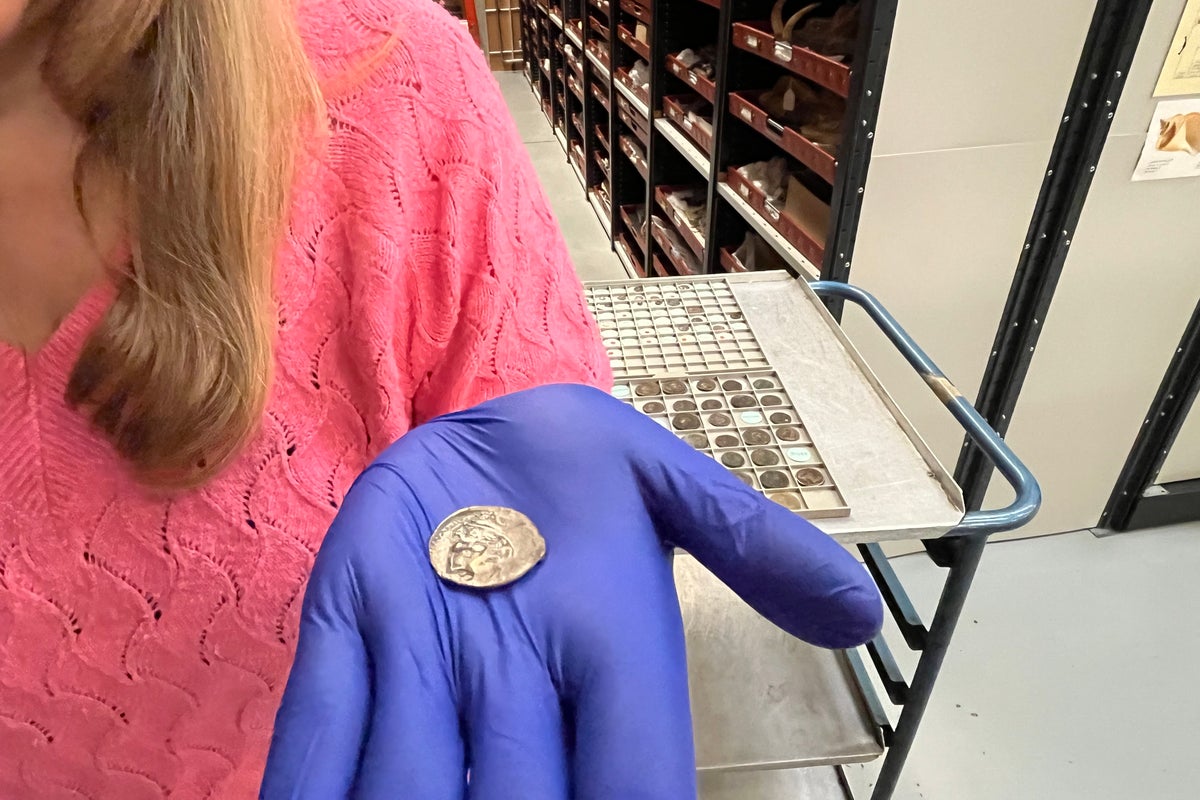
A bus driver in Leeds received an unusual coin as payment in the 1950s that could not be spent. James Edwards, a chief cashier with Leeds City Transport, kept the coin and later gave it to his grandson Peter, who preserved it in a wooden chest for more than 70 years. Archaeologists from the University of Leeds recently examined the coin and identified it as originating from the Carthaginians, a Phoenician culture based in the Spanish city of Cadiz during the 1st century BC. The grandson, now 77 years old, recalls receiving various foreign coins from his grandfather after World War II, believing soldiers had brought them back from countries where they were stationed. Both were fascinated by the coins' origins and imagery rather than being serious collectors.
"Archaeologists from the University of Leeds have now found that it came from the Carthaginians, part of the Phoenician culture, in the Spanish city of Cadiz during the 1st century BC. The coin, handed to a local bus driver decades ago, came into the hands of James Edwards, former chief cashier with Leeds City Transport, who gathered fares and counted them at the end of each day."
"My grandfather would come across coins which were not British and put them to one side, and when I went to his house, he would hand me a few, the now 77-year-old grandson said. It was not long after the war, so I imagine soldiers returned with coins from countries they had been sent to."
"Neither of us were coin collectors, but we were fascinated by their origin and imagery to me, they were treasure, he said. Since it couldn't be spent, Mr Edwards took home and gifted the ancient coin to his young grandson, Peter, who kept it in a small wooden chest for over 70 years."
Read at www.independent.co.uk
Unable to calculate read time
Collection
[
|
...
]