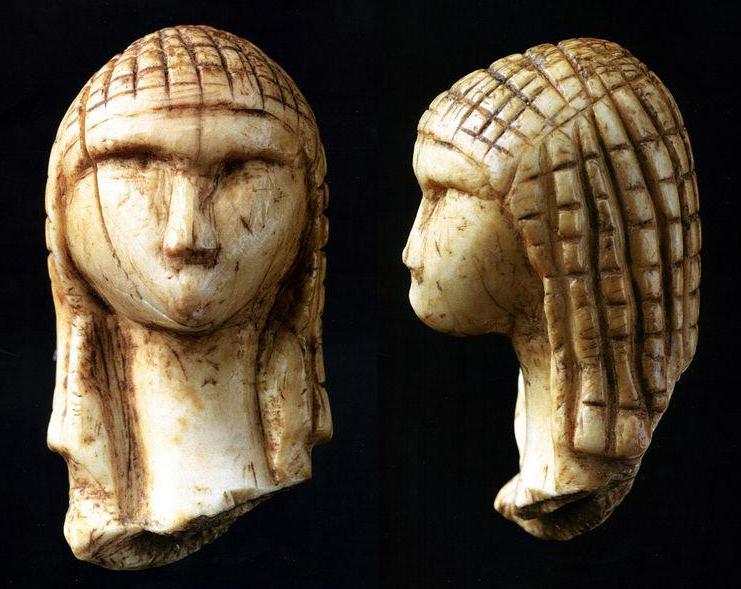
"The Venus is carved from mammoth ivory, likely using a stone flint, and stands just 3.65 cm tall. For some, it marks a major development in figurative art. Or, as historian Simon Schama has suggested, this figurine may well be the "dawn of the idea of beauty" in human culture."
"Unearthed in southwestern France and dating to around 25,000 BCE, this carving represents the earliest realistic depiction of a human face. The figure's forehead, nose, and brows are carefully carved in relief, as is the hair, arranged in a neat geometric pattern."
The Venus of Brassempouy, discovered in 1894 in southwestern France, dates to approximately 25,000 BCE and stands as the earliest realistic depiction of a human face. Carved from mammoth ivory using stone flint, this tiny figurine measures just 3.65 cm tall. The sculpture features carefully carved relief work showing the forehead, nose, brows, and hair arranged in geometric patterns, though the mouth and eyes remain incomplete or unclear. Historians regard this artifact as a significant development in figurative art, with some scholars suggesting it represents the emergence of the concept of beauty in human civilization.
#paleolithic-art #venus-of-brassempouy #ancient-sculpture #human-face-representation #prehistoric-figurines
Read at Open Culture
Unable to calculate read time
Collection
[
|
...
]