#federal-circuit
#federal-circuit
[ follow ]
#patent-law #claim-construction #patent-litigation #patent-eligibility #inter-partes-review #ptab #uspto

#patent-litigation



Intellectual property law
fromIPWatchdog.com | Patents & Intellectual Property Law
16 years agoCallaway Golf Loses Jury Verdict at the Federal Circuit
Federal Circuit vacated the district court verdict and remanded Callaway v. Acushnet, concerning alleged infringement of the Sullivan golf ball patents.
Intellectual property law
fromIPWatchdog.com | Patents & Intellectual Property Law
1 day agoCAFC Reiterates 'Exceptional Case' Awards Don't Apply to IPRs
Downstream effects of an inter partes review on district court litigation do not make the IPR part of the district court case for attorney-fee recovery under Sullivan.
Intellectual property law
fromGlobal IP & Technology Law Blog
1 month agoFederal Circuit Finds that Antivirus Software is Abstract and Remands for Alice, Step Two
Columbia University lost a Federal Circuit appeal of its $185 million patent verdict against Gen Digital, raising significant questions about subject matter eligibility and damages in modern patent litigation.

#patent-law


Intellectual property law
fromIPWatchdog.com | Patents & Intellectual Property Law
1 week agoFederal Circuit Vacates PTAB Obviousness Determination and Holds Real Party in Interest Challenge Unreviewable
The Federal Circuit vacated the PTAB's decision on Federal Express's patent, emphasizing jurisdictional limits on IPR reviews.
Intellectual property law
fromIPWatchdog.com | Patents & Intellectual Property Law
1 week agoCAFC Affirms PTAB Ruling That DraftKings Failed to Prove Unpatentability of Gaming Patent Claim
The CAFC upheld the PTAB's decision that DK Crown Holdings failed to prove claim 18 of U.S. Patent No. 9,978,205 unpatentable.
Intellectual property law
fromIPWatchdog.com | Patents & Intellectual Property Law
1 week agoFederal Circuit Vacates PTAB Obviousness Determination and Holds Real Party in Interest Challenge Unreviewable
The Federal Circuit vacated the PTAB's decision on Federal Express's patent, emphasizing jurisdictional limits on IPR reviews.
Intellectual property law
fromIPWatchdog.com | Patents & Intellectual Property Law
2 weeks agoGamevice Considers SCOTUS Cert Petition Over Alleged Procedural Improprieties in Nintendo Switch Patent Case
Gamevice contests Nintendo's motion to vacate a judgment invalidating its patent claims related to handheld computing accessories.
fromPatently-O
3 weeks agoBarry v. DePuy Returns: En Banc Petition Tests EcoFactor's Reach on Rule 702 Gatekeeping
Judge Stark's majority treated the challenged testimony as a permissible application of the court's claim construction and treated the survey expert's methodological problems as questions of weight for the jury.
Intellectual property law
#trade-secrets
fromIPWatchdog.com | Patents & Intellectual Property Law
3 weeks agoIntellectual property law
Other Barks & Bites for Friday, April 17: CAFC Reverses District Court Rulings in Penile Implant Patent Case; CJEU Clarifies Scope of 'Pastiche' Copyright Exception; Stanford AI Index Shows Tech Gap Between U.S. And China Nearly Gone


Intellectual property law
fromIPWatchdog.com | Patents & Intellectual Property Law
3 weeks agoOther Barks & Bites for Friday, April 17: CAFC Reverses District Court Rulings in Penile Implant Patent Case; CJEU Clarifies Scope of 'Pastiche' Copyright Exception; Stanford AI Index Shows Tech Gap Between U.S. And China Nearly Gone
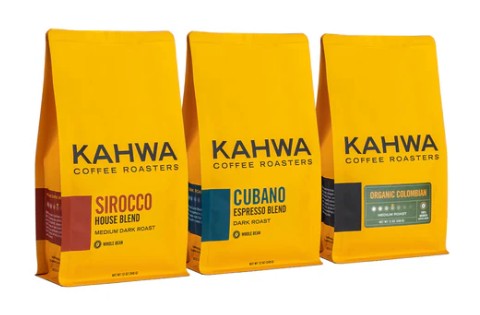
The Federal Circuit reversed a California court's denial of JMOL on trade secret and patent inventorship claims regarding a cosmetic penile implant.


#patent-eligibility
Intellectual property law
fromPatently-O
1 month agoTwo Voices on 101: Agency Guidance Meets Judicial Skepticism
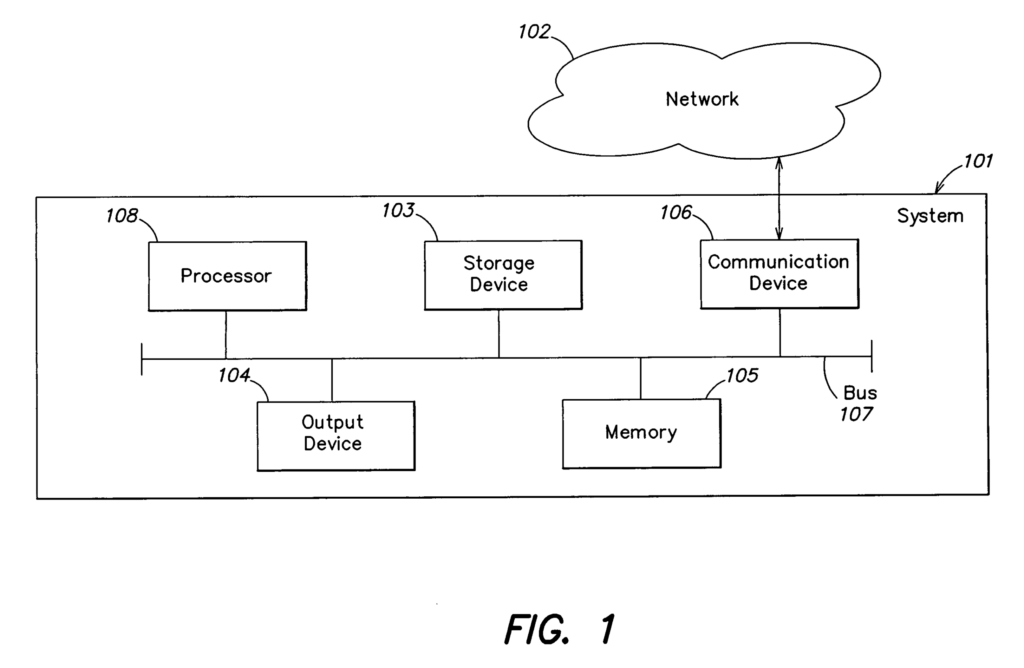
The case addresses patent eligibility and procedural authority in the context of rideshare vehicle identification technology.

Intellectual property law
fromIPWatchdog.com | Patents & Intellectual Property Law
3 months agoCAFC Agrees Content Sharing Patents are Ineligible in Win for Walmart
CAFC affirmed that Q Technologies' content-sharing patents are patent-ineligible as directed to an abstract idea lacking an inventive concept.
Intellectual property law
fromIPWatchdog.com | Patents & Intellectual Property Law
2 months agoCAFC Reverses District Court's Finding of Eligibility for Columbia Antivirus Software Claims
The Federal Circuit reversed Columbia's patent infringement verdict, finding claims for virus protection software directed to abstract ideas ineligible under patent law, lacking meaningful technical improvement.
Intellectual property law
frompatentlyo.com
2 months agoThe Razor Returns: AIPLA Tells the Supreme Court That Alice Step Two Has Revived the Pre-1952 'Invention' Requirement
AIPLA urges Supreme Court to review Federal Circuit's patent eligibility framework, arguing it revived subjective standards the 1952 Patent Act eliminated.

Intellectual property law
fromGlobal IP & Technology Law Blog
1 month agoFederal Circuit Strikes Down Millions in Damages Tied to Foreign Sales, with a Lesson for Future Litigants
The Federal Circuit's decision limits patent damages for software sales outside the U.S., emphasizing geographic restrictions on patent eligibility.
#prosecution-laches
Intellectual property law
fromIPWatchdog.com | Patents & Intellectual Property Law
1 month agoThe Supreme Court Must Revisit Prosecution Laches-And the Industry Should Speak Up
Inventor Gil Hyatt's Supreme Court petition challenges whether prosecution laches doctrine exists in patent law, arguing it conflicts with the Patent Act of 1952 and Supreme Court precedent establishing laches cannot apply when statutory timeframes exist.

fromPatently-O
2 months agoFrom Graham to Gramm: A New Deere Case Arrives at the Federal Circuit
Gramm v. Deere & Company, No. 2024-1598 (Fed. Cir. Mar. 11, 2026), involves neither obviousness nor the Graham factors. Instead, it offers an illustration of means-plus-function claiming under § 112(f) and the doctrinal hazards.
Intellectual property law
Law
frompatentlyo.com
2 months agoJudge Newman Asks the Supreme Court to Intervene: Framing Judicial Independence as a Constitutional Imperative
Judge Pauline Newman, barred from judicial duties since 2023 without impeachment or disability finding, petitioned the Supreme Court to challenge the Judicial Conduct and Disability Act's bar on reviewing judicial council orders.
US politics
fromIPWatchdog.com | Patents & Intellectual Property Law
2 months agoNCLA Revives Newman Case Against Moore with Supreme Court Petition
The NCLA petitions the Supreme Court to review Judge Newman's removal from the Federal Circuit, arguing the judicial conduct proceedings violated constitutional due process and separation of powers principles.
#patent-infringement
Intellectual property law
fromIPWatchdog.com | Patents & Intellectual Property Law
2 months agoOther Barks & Bites for Friday, March 6: WIPO Issues PCT Filing Study; CAFC Affirms Use of Unaccused Devices in Royalty Determination; USTR Notorious Markets List Highlights Live Sports Piracy
The Federal Circuit ruled that noninfringing features can be considered in reasonable royalty determinations, allowing damages experts to include unaccused virtual machines in royalty base calculations when causally connected to accused features.
Law
fromAbove the Law
2 months agoFederal Circuit Dissents Plummet After Pauline Newman's Ersatz Impeachment - Above the Law
Dissenting opinions reveal judicial disagreement and can vindicate alternative legal reasoning over time, as demonstrated by Judge Pauline Newman's dissents on the Federal Circuit being later affirmed by the Supreme Court.

Intellectual property law
fromPatently-O
2 months agoFederal Circuit Dissent Rates Collapse After Newman's Departure
Judge Pauline Newman's removal from the Federal Circuit caused the court's dissent rate to plummet from 19% to 6%, transforming it into one of the most consensus-oriented appellate courts in the federal system.
Intellectual property law
fromPatently-O
2 months agoExtolling the Virtues: 'Space-Efficient' Preamble Fails to Limit
The Federal Circuit reversed an indefiniteness ruling while affirming dismissal of breach-of-contract claims in NimbeLink Corp. v. Digi International Inc., with the patent issue centering on whether claim preambles impose substantive limitations.
Intellectual property law
fromIPWatchdog.com | Patents & Intellectual Property Law
2 months agoCAFC Vacates Summary Judgment on Inequitable Conduct and Walker Process Claims in Coiled Tubing Patent Dispute
The Federal Circuit vacated summary judgment on inequitable conduct and Walker Process fraud claims, finding genuine disputes of material fact requiring trial over whether Tenaris withheld prior art documents from the USPTO.
fromIPWatchdog.com | Patents & Intellectual Property Law
2 months agoSony Prevails at CAFC in Decision Faulting Patent Owner's Means-Plus-Function Analysis
"Though we articulated a component-by-component analysis was unnecessary in Odetics, the patentee must still account for each element of the claimed structure in its equivalence analysis." - CAFC opinion The U.S. Court of Appeals for the Federal Circuit (CAFC) on Thursday issued a precedential decision finding Sony's Playstation controllers and consoles did not infringe Genuine Enabling Technology's (GET's) patent for computer input devices. GET alleged that Sony directly and indirectly infringed its U.S. Patent No. 6,219,730 via certain Playstation products.
Intellectual property law
Intellectual property law
fromIPWatchdog.com | Patents & Intellectual Property Law
7 months agoMemo to the Supreme Court: The Enablement Requirement Needs Your Guidance-Again
Allowing after-arising technology to cure an otherwise non-enabled patent claim risks validating patents that lack enablement as of the filing date, undermining §112.
fromPatently-O
2 months agoAn Inexact Art: Willis Electric and the Limits of Damages Gatekeeping
For the past year, the Federal Circuit has been systematically tightening the screws on patent damages and particularly pro-patentee expert testimony on the issue. Beginning with EcoFactor, Inc. v. Google LLC, 137 F.4th 1333 (Fed. Cir. 2025), the court vacated a $20 million reasonable royalty award for insufficient apportionment. Then came Jiaxing Super Lighting Electric Appliance Co. v. CH Lighting Technology Co., 146 F.4th 1098 (Fed. Cir. 2025), where the court vacated another award and suggested (in dicta) that experts must quantify their Georgia-Pacific adjustments.
Intellectual property law
fromIPWatchdog.com | Patents & Intellectual Property Law
2 months agoOther Barks & Bites for Friday, February 13: CAFC Says NHK-Fintiv is General Policy Statement; Second Circuit Adopts Rule on Waiver of DMCA Safe Harbor; and Daren Tang Nominated for Second Term as WIPO Director
Bites (noun): more meaty news to sink your teeth into. Barks (noun): peripheral noise worth your attention. Want to have your doggie(s) featured in one of our future Barks & Bites Columns? Send your dogs photo(s) along with their name, breed (if you know it) and their age to info@ipwatchdog.com. All photos will be added to the IPWatchdog Dog Wall at IPWatchdog Studios and will be added to the queue of images we select from each week.
Intellectual property law
Intellectual property law
fromIPWatchdog.com | Patents & Intellectual Property Law
3 months agoUndisputed Testimony on Portability of Setting Apparatus Dooms Orange's CAFC Appeal
Federal Circuit reversed district court on obviousness, finding Autel's prior art met every limitation and apparatus need only be portable relative to the vehicle.
Intellectual property law
fromIntellectual Property Law Blog
3 months agoThe Federal Circuit Remands for a New Trial After Finding Untimely Expert Disclosure
Federal Circuit reversed admission of D R Burton's expert testimony as untimely and unreliable, remanding for a new trial and reassigning the case.
Intellectual property law
fromIPWatchdog.com | Patents & Intellectual Property Law
3 months agoFederal Circuit Reverses PTAB on Issue Preclusion, Finds Smart Mobile Patent Claims Unpatentable
The Federal Circuit held that issue preclusion barred the PTAB from finding claims patentable when substantially similar claims were invalidated in a prior IPR.
fromIPWatchdog.com | Patents & Intellectual Property Law
3 months agoSplit CAFC Says Disputed Aspects of Testimony by Doctor's Experts are for Jury to Parse
The U.S. Court of Appeals for the Federal Circuit (CAFC) issued a precedential decision on Tuesday, January 20, concluding that a district court abused its discretion in granting motions to exclude two of Dr. Mark A. Barry's experts and granting judgment as a matter of law (JMOL) to DePuy Synthes Companies. The panel included Judges Stark, Taranto and Prost and Judge Stark dissented.
Intellectual property law

fromPatently-O
4 months agoWhen the Director Can Do Anything: Apple v. Squires and the Limits of APA Process
The Federal Circuit heard oral argument today in Apple Inc. v. Squires, 24-1864, a long-running challenge to the USPTO's Fintiv discretionary denial framework. Apple, Cisco, Google, and Intel argue that the NHK-Fintiv rule should have been adopted through notice-and-comment rulemaking under the Administrative Procedure Act (APA) rather than through precedential Board designations.
Intellectual property law
fromPatently-O
4 months agoMost Cited Fed Cir Cases 2020-2025
by Dennis Crouch Today's post takes us back in time over the past five years (2020-2025) and looks at the Federal Circuit decisions that subsequently have become the most cited. As you might guess, this list is dominated by the older cases - since they have had more time to be cited. But, the is also dominated by § 101 patent eligibility decisions, with pleading standards, enablement, and procedural doctrine also featuring prominently. What follows is a brief tour through the top eleven.
Intellectual property law
fromPatently-O
4 months agoThe Catch-22 of Court Transparency: Why Public Access Needs a Dedicated Intervention Rule
The Federal Circuit has dismissed an appeal by the Electronic Frontier Foundation (EFF) seeking to unseal summary judgment briefing in a patent dispute involving standard-essential patents for cable modem technology. Entropic Communications, LLC v. Charter Communications, Inc., No. 24-1896 (Fed. Cir. Dec. 17, 2025) (nonprecedential). The CAFed held that the district court did not abuse its discretion in denying EFF's motion for permissive intervention as untimely under Fifth Circuit law.
Intellectual property law
Intellectual property law
fromIPWatchdog.com | Patents & Intellectual Property Law
4 months agoAre State 'Anti-Troll' Laws Constitutional? The Federal Circuit Avoids the Question (For Now)
The Federal Circuit declined jurisdiction over an appeal of an $8 million bond imposed under Idaho's anti‑troll statute because no evidence showed inability to pay.
Intellectual property law
fromIPWatchdog.com | Patents & Intellectual Property Law
4 months agoFederal Circuit Reverses Car Seat Patent Injunction, Grants New Trial on Willfulness
Federal Circuit held the doctrine of equivalents must be applied to individual claim elements, reversed a permanent injunction, and ordered a new trial on willfulness.
fromIPWatchdog.com | Patents & Intellectual Property Law
4 months agoHigh Court Declines to Consider MSN's Call for Clarity on CAFC's After-Arising Technology Conflict
MSN Pharmaceuticals, Inc. subsequently filed a petition for certiorari to the Supreme Court in August of this year, arguing that there is "doctrinal chaos" surrounding the topic of after-arising technology in the context of patent infringement suits. While some Federal Circuit decisions have held "that when a patentee secures a claim construction that ensnares, as infringing, an accused device that features after-arising technology, the patentee risks invalidating its own patent on written-description and enablement grounds,"
Intellectual property law
Intellectual property law
fromIPWatchdog.com | Patents & Intellectual Property Law
5 months agoOpenSky Reply Brief Argues USPTO Concedes Noerr-Pennington Flaw in Original Sanctions Ruling
OpenSky challenges USPTO Director Vidal's sanctions ruling, alleging post-hoc rationalization and denial of opportunity to present Noerr-Pennington immunity.
Intellectual property law
fromIntellectual Property Law Blog
5 months agoFederal Circuit Upends Two Infringement Judgments
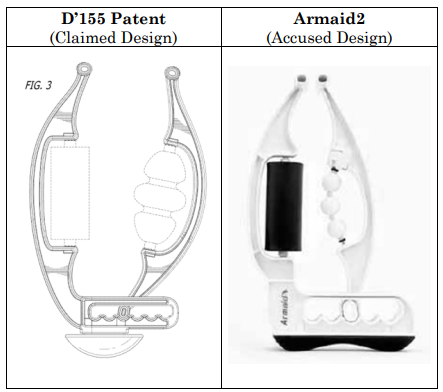
Federal Circuit vacated design-patent infringement for erroneous claim construction and reversed DOE verdict because accused integrated frame failed to perform claimed separate-frame functions.
fromPatently-O
5 months agoCan Money Talk? Latest IPR Mandamus Petitions Seek Workarounds to 314(d) Bar
Three new mandamus petitions recently arrived at the Federal Circuit, each attempting to navigate around the court's November 6 decisions that rejected challenges to the USPTO's expanded use of discretionary denials. The new petitions raise arguments their counsel contend are distinct from those already rejected in In re Motorola Solutions, Inc., No. 2025-134 (Fed. Cir. Nov. 6, 2025) (precedential).
Intellectual property law
[ Load more ]