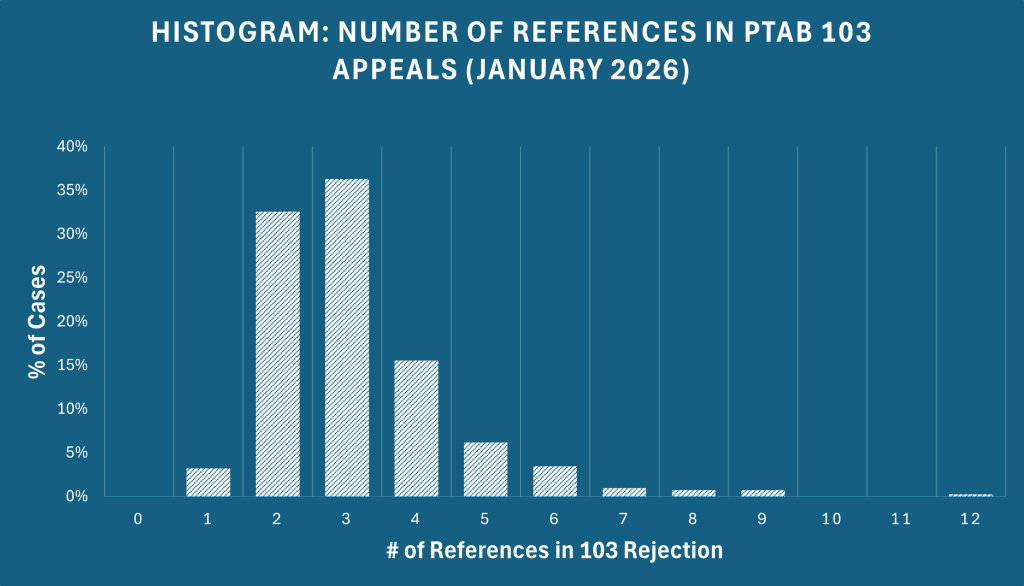
"The Federal Circuit's recent nonprecedential decision in Guardant Health v. University of Washington focuses on single-reference obviousness findings. The vast majority of obviousness cases are based upon two or more references that, when combined, teach each limitation of the claimed invention. The key question in those cases boils down to whether a person of ordinary skill in the art would have had a sufficient motivation to combine those references to form the invention as well as a reasonable expectation of success in that endeavor."
"The key question in those cases boils down to whether a person of ordinary skill in the art would have had a sufficient motivation to combine those references to form the invention as well as a reasonable expectation of success in that endeavor. In the single reference situation, the Federal Circuit in Guardant Health found that neither of those test make sense - particularly when elements appear together in a single embodiment in the prior art."
The Federal Circuit issued a nonprecedential decision in Guardant Health v. University of Washington addressing single-reference obviousness. Most obviousness challenges rely on combining multiple prior-art references and assessing motivation to combine and reasonable expectation of success. The court held that those multi-reference tests are not sensible in single-reference contexts. When all claim elements appear together in a single prior-art embodiment, the concept of motivating a person of ordinary skill to combine separate references becomes inapplicable. Single-reference embodiments can therefore be treated as complete teachings for obviousness analysis.
Read at Patently-O
Unable to calculate read time
Collection
[
|
...
]