#inter-partes-review
#inter-partes-review
[ follow ]
#patent-law #uspto #federal-circuit #ptab #prior-art #claim-construction #patent-litigation #discretionary-denial
#patent-law
Intellectual property law
fromIPWatchdog.com | Patents & Intellectual Property Law
10 months agoStewart Grants Request to Deny IPR Institution Due to Patent Owner's 'Settled Expectations'
Petitioner's delay in challenging patents led to discretionary denial of inter partes reviews despite other favorable factors.
Intellectual property law
fromIPWatchdog.com | Patents & Intellectual Property Law
1 month agoSCOTUS Denial of Lynk Labs Petition Preserves Unpublished Patent Applications as Prior Art in Pre-AIA IPRs
The Supreme Court denied Lynk Labs' petition, upholding that U.S. patent applications qualify as prior art by their filing date in IPR proceedings under pre-AIA statute.
Intellectual property law
fromPatently-O
1 month agoToo Late to Invent an Inventor: Forfeiture and 256 in IPR Proceedings
Section 256 allows patent invalidation to be prevented through inventorship correction without express timing requirements, but the Federal Circuit ruled forfeiture principles can bar delayed corrections from supporting new arguments in inter partes review.

#uspto
Intellectual property law
fromIPWatchdog.com | Patents & Intellectual Property Law
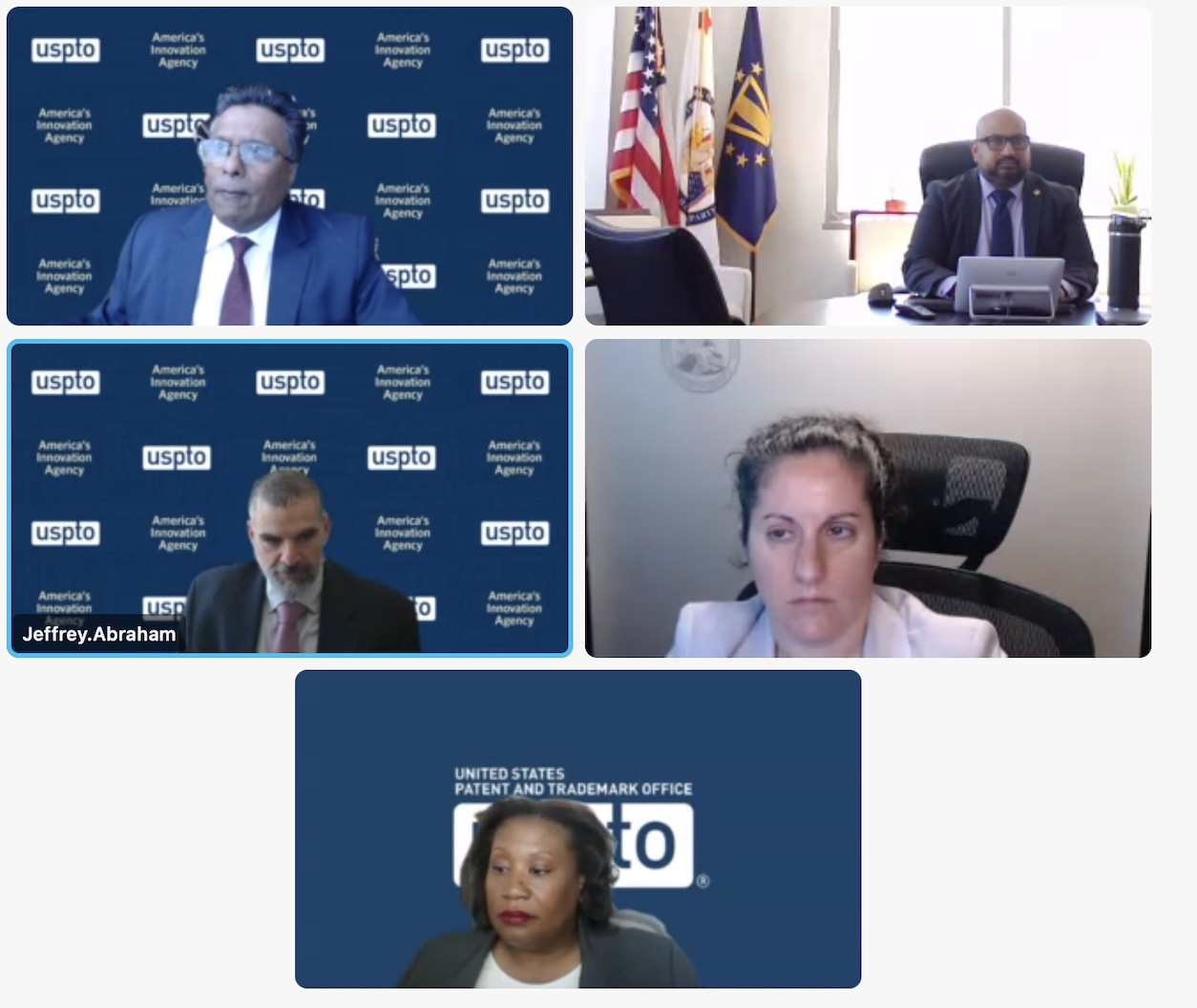
1 month agoIPWatchdog LIVE Day Three: Coke Stewart Says Reexam Surge is on Office Radar; Rep. Kiley Talks Innovation Education on the Hill; and Meet the 2026 IPWatchdog Masters Hall of Fame Inductees
The USPTO is monitoring the rise in ex parte reexamination filings, which have increased significantly in response to changes in inter partes review practices.


Intellectual property law
fromIPWatchdog.com | Patents & Intellectual Property Law
8 months agoUSPTO Director Discretionary Denials Granted Due to Trial Timing Despite Young Age of Patents
USPTO denied institution of six Samsung IPRs against GenghisComm mobile-communications patents, citing discretionary denial due to parallel district court timing and patent age.
Intellectual property law
fromIPWatchdog.com | Patents & Intellectual Property Law
8 months agoStewart Denies iRhythm's Bid to Review Decision Scrapping IPRs Based on 'Settled Expectations'
The USPTO encourages early validity challenges, as seen in Director Stewart's recent denial of institutional review in a patent dispute.
Intellectual property law
fromIPWatchdog.com | Patents & Intellectual Property Law
1 month agoIPWatchdog LIVE Day Three: Coke Stewart Says Reexam Surge is on Office Radar; Rep. Kiley Talks Innovation Education on the Hill; and Meet the 2026 IPWatchdog Masters Hall of Fame Inductees
The USPTO is monitoring the rise in ex parte reexamination filings, which have increased significantly in response to changes in inter partes review practices.


#patent-litigation

Intellectual property law
fromIPWatchdog.com | Patents & Intellectual Property Law
1 month agoSplit Federal Circuit Upholds Smart Mobile Patent Claims Against Challenge from Apple
The Federal Circuit affirmed the PTAB's decision upholding the patentability of certain claims in Smart Mobile Technologies' wireless patent against Apple's obviousness challenge.
fromPatently-O
2 months agoWho Are You? YMTC's Refusal to Identify Its Real Parties in Interest
The case sits at the intersection focal points. The first is geopolitical. YMTC is a Chinese semiconductor manufacturer founded in 2016 by the partially state-owned Tsinghua Unigroup with approximately $24 billion in initial state-backed investment. The company was placed on the Bureau of Industry and Security's Entity List in December 2022 as an organization " reasonably believed to be involved, or to pose a significant risk of being or becoming involved, in activities contrary to the national security or foreign policy interests of the United States." 15 C.F.R. § 744.11.
Intellectual property law
Intellectual property law
fromIPWatchdog.com | Patents & Intellectual Property Law
3 months agoFederal Circuit Reverses PTAB on Issue Preclusion, Finds Smart Mobile Patent Claims Unpatentable
The Federal Circuit held that issue preclusion barred the PTAB from finding claims patentable when substantially similar claims were invalidated in a prior IPR.
fromIPWatchdog.com | Patents & Intellectual Property Law
3 months agoSquires Designates as Informative Director Review Decision on RPIs
"While not the basis of today's decision, I note that inter partes review may be discretionarily denied on the basis that a petitioner is a sovereign." - USPTO Director John Squires U.S. Patent and Trademark Office (USPTO) Director John Squires on January 15 issued a Director Review decision, which he then designated as informative on January 16, in favor of Micron Technologies, vacating two Patent Trial and Appeal Board (PTAB) decisions granting institution of inter partes review (IPR) for Yangtze Memory Technologies.
Intellectual property law
#federal-circuit

Intellectual property law
fromIPWatchdog.com | Patents & Intellectual Property Law
1 year agoFederal Circuit Reverses PTAB Win for Apple, Finding Board Erred in Its Applicant-Admitted Prior Art Analysis
CAFC reversed PTAB ruling, stating AAPA cannot be solely used as a basis in determining patent unpatentability.



fromGlobal IP & Technology Law Blog
6 months agoThe USPTO Director De-Delegates - But What About the Rules?
We blogged on these decisions here, here, here, here, and here. On October 17, 2025, newly appointed Director Squires issued an open letter and memorandum to the public and to the Patent Trial and Appeal Board (Board), taking back authority previously delegated to the Board to decide whether to institute an IPR or PGR proceeding on the merits. Now, the Director will issue summary notices on whether to institute proceedings.
Intellectual property law
fromPatently-O
7 months agoUltra Vires or Policy Discretion? Federal Circuit Now Weighing 5x Discretionary Denial Mandamus
Two additional mandamus petitions have joined the Federal Circuit's growing docket challenging the USPTO's 2025 shift toward more restrictive inter partes review (IPR) institution practices under President Trump, bringing the total to five pending cases that collectively test the boundaries of appellate review under 35 U.S.C. § 314(d). The newest petitions are In re HighLevel, Inc. (No. 25-148) and In re SanDisk Technologies, Inc. (No. 25-152).
Intellectual property law
Intellectual property law
fromIPWatchdog.com | Patents & Intellectual Property Law
7 months agoLynk Labs' SCOTUS Petition Challenges CAFC's Bifurcated Approach to U.S. Patent Applications as IPR Prior Art
Federal Circuit treated an earlier-filed U.S. patent application as a printed publication in a PTAB IPR obviousness finding despite its publication after the critical date.
fromIPWatchdog.com | Patents & Intellectual Property Law
9 months agoSnap, Meta and X Defeat Xerox's Appeal of PTAB Unpatentability Ruling at CAFC
"If Xerox wanted its more limited construction, it should have written the claims as it did in the substitute claim," said the CAFC.
Intellectual property law
[ Load more ]