#early-childhood-education
#early-childhood-education
[ follow ]
#universal-child-care #new-york-city #child-care #head-start #workforce-development #child-development
fromIrish Independent
4 days agoFree My Little Library Bags available for Louth children starting school in 2026
Parents and guardians of children beginning school next September are encouraged to visit their local library branch to collect a free book bag packed with reading materials and resources designed to help children prepare for starting school.
Education
NYC politics
fromwww.amny.com
5 days agoCity Council narrows school protest buffer zone bill weeks after Mamdani's veto | amNewYork
A vetoed bill requiring NYPD protest planning near schools is being rewritten to cover early childhood centers and most K-12 schools while excluding colleges, universities, libraries, and teaching hospitals.
Fundraising
fromFortune
1 week agoThe Bezos family just donated $100 million to help achieve one of Mayor Zohran Mamdani's top campaign promises | Fortune
A $100 million Bezos family gift creates a $150 million endowment for early childhood education in New York, aligning with Mayor Zohran Mamdani’s universal 2-K goals.
#universal-child-care
New York City
fromwww.amny.com
2 months agoMAMDANI'S FIRST 100 DAYS: City operations race to catch up with mayor's child care push | amNewYork
Mayor Mamdani's universal child care initiative, backed by $1.2 billion in state funding, is accelerating but faces operational challenges in permitting systems and workforce planning.

New York City
fromwww.amny.com
2 months agoMAMDANI'S FIRST 100 DAYS: City operations race to catch up with mayor's child care push | amNewYork
Mayor Mamdani's universal child care initiative, backed by $1.2 billion in state funding, is accelerating but faces operational challenges in permitting systems and workforce planning.
#preschool-enrollment
Education
fromFortune
1 month agoAmerica actually listened to the parental childcare crisis with record number of 4-year-olds in state preschool | Fortune
State-funded preschool enrollment for 4-year-olds reached record highs, driven by universal access and significant funding, but access remains uneven across states.
Education
fromFortune
1 month agoRecord numbers of kids are enrolling in state-funded preschool as Trump pushes states to cover costs amid federal funding for wars | Fortune
State-funded preschool enrollment reached record highs, but access remains uneven across states despite significant funding and expansion efforts.


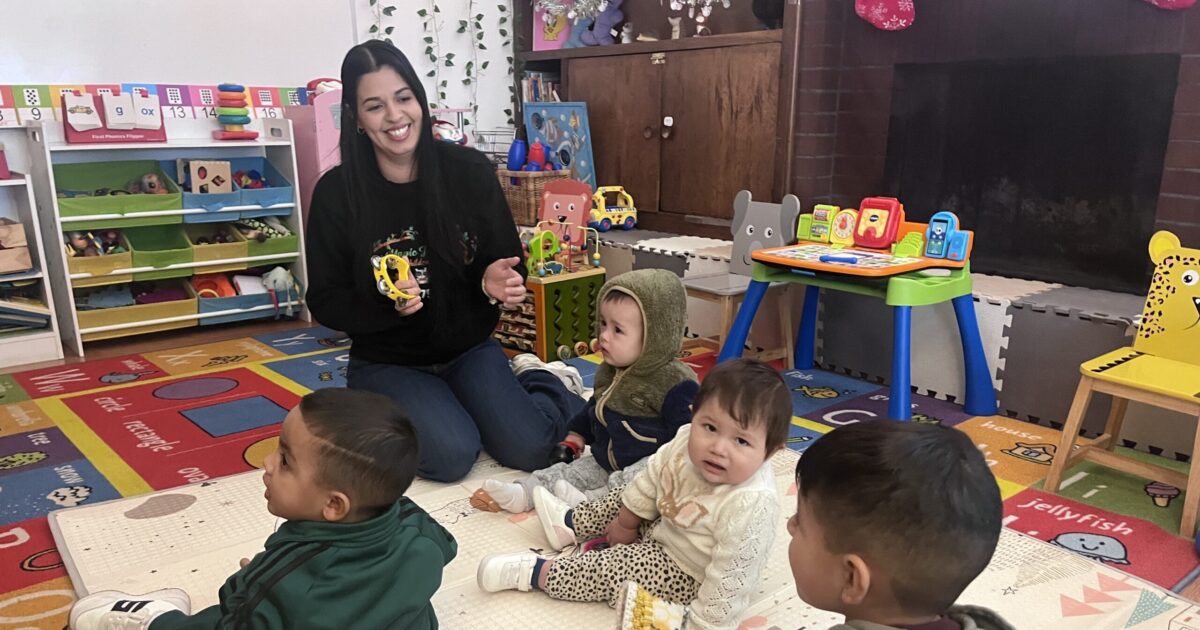
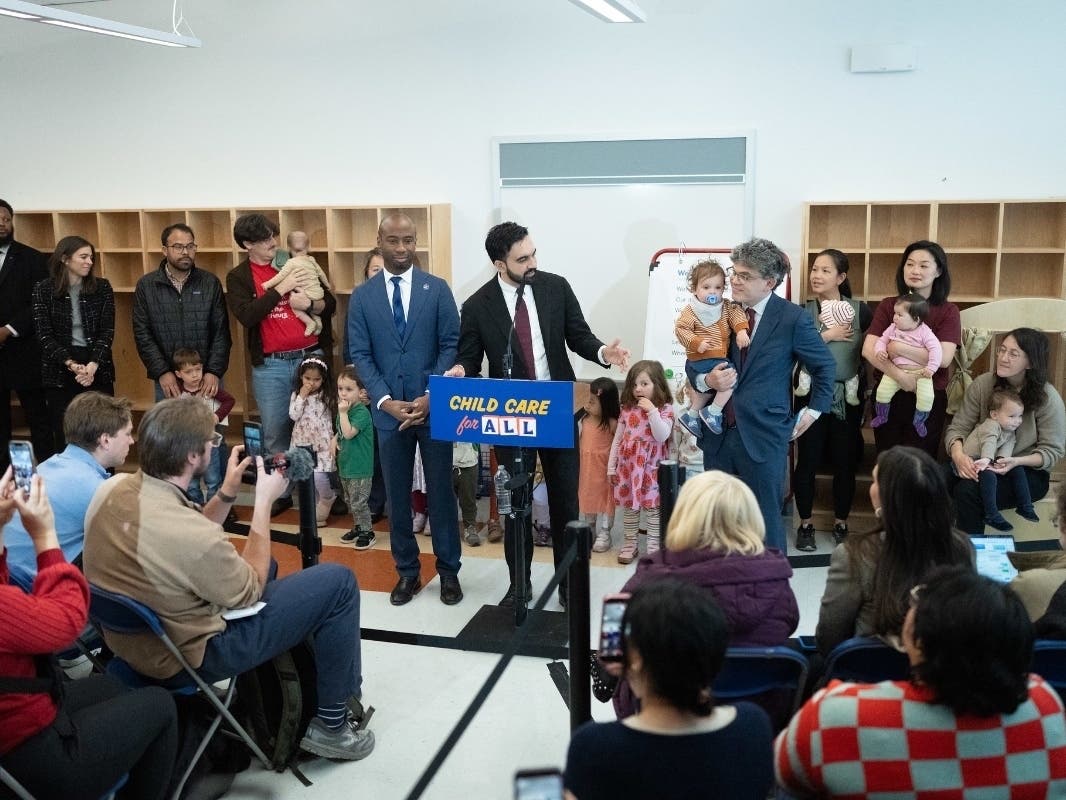

fromThe Oaklandside
1 month agoMore 4-year-olds are in publicly funded preschool than ever - in Oakland and across the state
California has achieved a significant increase in transitional kindergarten enrollment, with 62% of 4-year-olds participating in publicly funded early childhood programs, a rise from 42% in 2019-2020. However, access remains uneven, as nearly 40% of eligible children are still not enrolled, indicating a need for increased awareness and support for families.
East Bay (California)
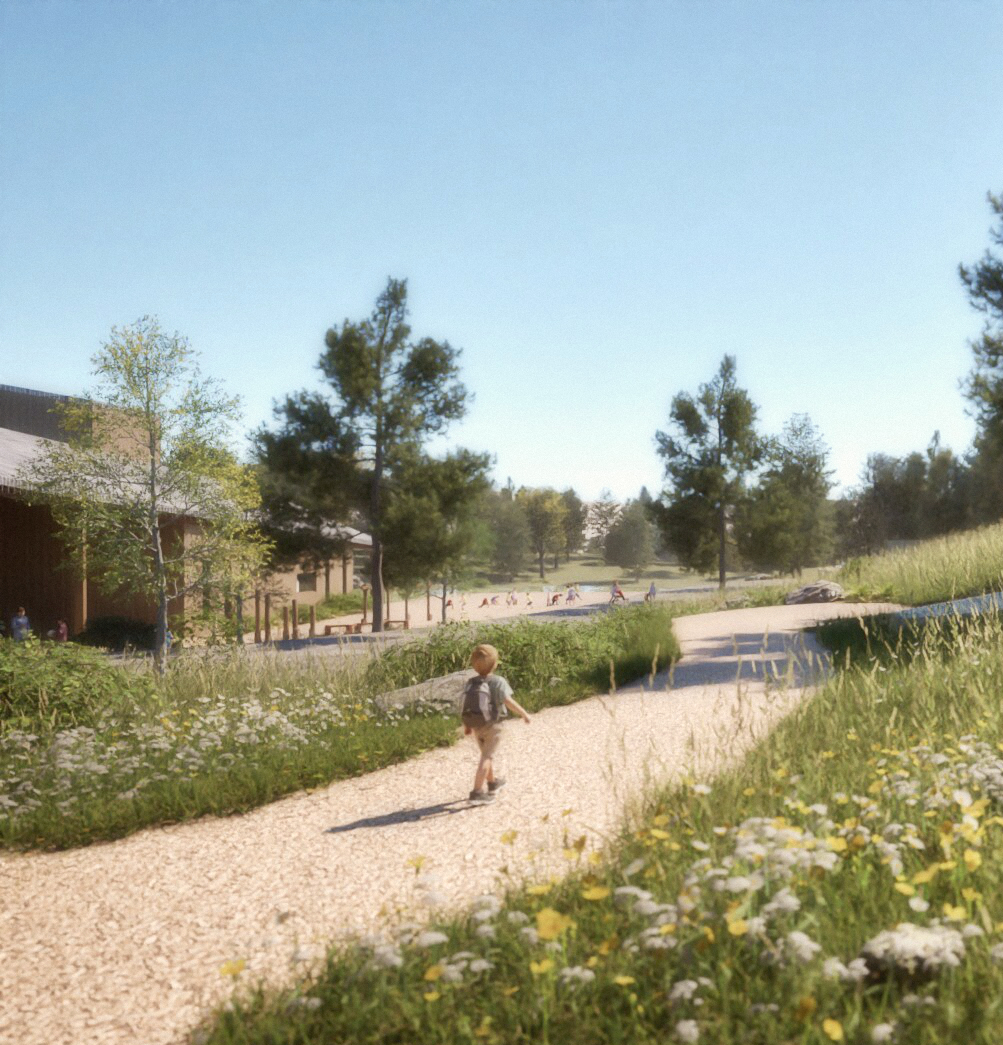
fromArchDaily
2 months agoSchool Complex of the Olive Tree / GGR architectes
An in-depth analysis of the social cost of carbon, conducted during the competition phase, led the project team to propose an entirely new construction while remaining within budget. The existing school building lacked the capacity for sustainable transformation; its demolition would free up land and allow for a reimagined urban future.
Renovation
Education
fromLos Angeles Times
2 months agoGamified math. Video read-alouds. Why parents are saying no to screens in class
Parents across California are organizing to reduce excessive screen time in schools, citing concerns that digital learning replaces hands-on instruction and peer interaction during critical developmental years.
Design
fromdesignboom | architecture & design magazine
2 months agoschool storage units transform into modular sensory furniture for early childhood education
TRIMINÓ is a modular furniture system for early childhood education that integrates sensory learning features into interactive storage units, supporting motor skills and literacy development through everyday use.
NYC parents
fromBrooklyn Paper
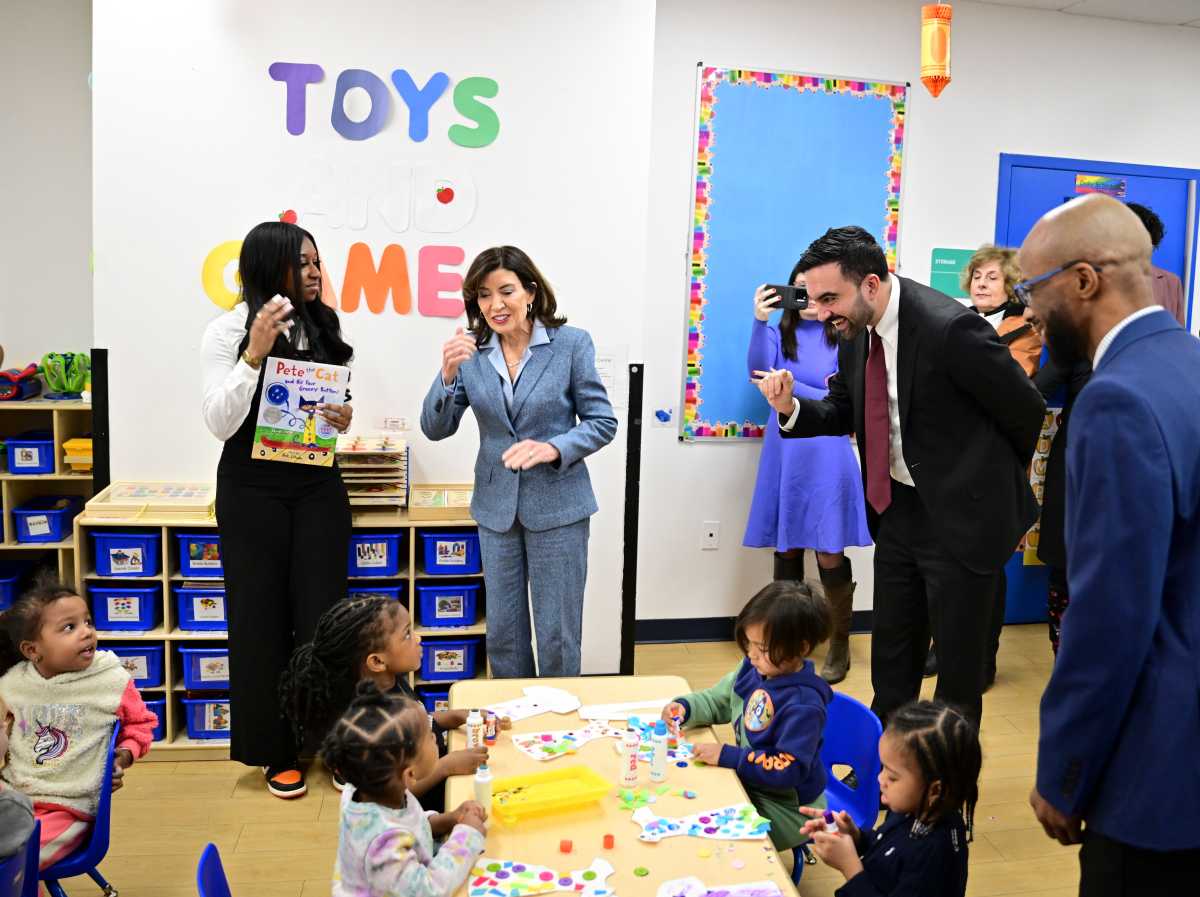
2 months agoStory time: Mayor Mamdani visits Canarsie preschool as NYC launches free 2-K * Brooklyn Paper
NYC Mayor Zohran Mamdani visited Breukelen Early Childhood Development Center to read to 3-K students, highlighting the city's commitment to expanding early childhood education with 2,000 new free 2-K seats launching this fall.
fromwww.berkeleyside.org
2 months agoRemembering Thelma Harms, who transformed evaluation of early childhood education programs
Harms was widely known as the lead co-author of the Early Childhood Environment Rating Scale (ECERS), an observational framework that transformed how educators, researchers and governments evaluate early learning settings. Developed during her tenure as Director of Curriculum Development at the Frank Porter Graham Child Development Institute at the University of North Carolina at Chapel Hill, the ECERS created with co-authors Richard Clifford and Debby Cryer became one of the most widely used measures of early childhood program quality worldwide.
Education
NYC parents
fromQNS
2 months agoMamdani celebrates Holi at South Richmond Hill child care center, welcomes rollout of free 2K care - QNS
Mayor Mamdani launched the 2K initiative providing free full-day childcare to two-year-olds, starting with 2,000 seats in South Richmond Hill and expanding to 55,000 seats within four years.
New York City
fromBusiness Insider
2 months agoMamdani launches free 2-K childcare program in New York City
NYC Mayor Zohran Mamdani launches a 2-K childcare initiative providing 2,000 free seats starting September, expanding to 12,000 by 2027, with $73 million state funding to address childcare affordability.
NYC politics
fromFOX 5 New York
2 months agoMamdani visits Trump, contends with criticism over NYPD snowball incident | Recap of NYC mayor's appearances
NYC Mayor Zohran Mamdani managed a major blizzard response, declared travel bans, kept schools open, made key administrative appointments, and promoted early childhood education enrollment.
Higher education
fromNew York Amsterdam News
2 months agoAs Mamdani expands child care, lessons from a Brooklyn early childhood center
FirstStepNYC demonstrates an integrated early education model combining school system resources, social services, and Head Start principles to support families from pregnancy through kindergarten entry.
fromwww.amny.com
3 months agoMAMDANI'S FIRST 100 DAYS: Mayor, Speaker Menin unite to open long-delayed child care center as property tax dispute loom | amNewYork
The Feb. 19 announcement marked the official opening of the District 2 Pre-K and 3-K Center at 403 East 65th St., a former parking garage completed in July 2025 that had sat unused for months under the prior administration. The center will open this fall, according to the mayor, adding more than 130 seats and becoming the first standalone, city-run early childhood education facility in the 10065 ZIP code.
New York City
fromHyperallergic
3 months agoTeaching Children Taught Me How to Be an Artist
At the end of November of 2011, I saw my dad take his last breath. I came back to the United States after participating in all the death-related rituals that helped organize my pain in México. New York City was not a place to live my mourning, and right around December of the same year, I felt an intense longing to become small again. I needed to work with children.
Arts
fromChalkbeat
3 months agoAs Mamdani expands child care, lessons from a Brooklyn early childhood center
When Maria Santana first started dropping off her son Anthony at FirstStepNYC, an early education center in Brownsville, Brooklyn, he would cry for hours, refusing to eat or nap until she picked him up. Santana, who was working as a home health aid, told the center's director that she thought she'd need to pull Anthony out. The director, Catharina Oerlemans, had a better solution: She asked Santana to come work for FirstStepNYC as a food handler.
Education
fromwww.amny.com
3 months agoMAMDANI'S FIRST 100 DAYS: Mayor open door to new 3k and 2k providers after five-year freeze | amNewYork
Mayor Zohran Mamdani announced on Thursday the first step toward a new citywide child care program for two-year-olds opening a request for information to recruit providers for both the existing 3K system and a new 2K program. The announcement took place at City Hall's Blue Room, where the mayor and Schools Chancellor Kamar Samuels were flanked by a group of District 2 pre-K students who had been invited to participate.
New York City
fromKqed
3 months agoChild Care in California Was Already Hard to Find - the Immigration Crackdown Has Made It Worse | KQED
The Trump administration's sweeping crackdown on immigrants has taken a particularly high toll on the child care industry - both for families and providers. In California, almost 40% of the workforce is foreign-born and more than a million parents - immigrant and otherwise - rely on child care providers so they can go to work.
California
fromwww.berkeleyside.org
4 months agoCrowden School has expanded to grades K-8 for young musicians
Crowden School in Berkeley has brought together music and academics for over 40 years. Once a middle school only, Crowden now admits students as young as kindergarten, with no musical experience. The school, at Sacramento and Rose streets, also receives new students in all grades, including at the start of middle school years. Music instruction at Crowden about one hour per day for the youngest students and two hours per day for third grade and up includes strings and piano.
Music
fromThe Mercury News
4 months agoHead of Children's Discovery Museum of San Jose set to retire
Jennings helped shape the museum into a nationally recognized leader in early education, family engagement and community partnership. She also helped develop programming that expanded the museum's reach to families across the Bay Area. Jennings also led the creation and growth of the museum's outdoor spaces, including Bill's Backyard: Bridge to Nature, Exploration Portal and most recently Bubbling Up, the new interactive bubble exhibit.
Education
fromwww.amny.com
5 months agoOp-Ed | Record accomplishments, historic achievements amNewYork
This was the first administration to have five women deputy mayors, the first woman police commissioner and the second woman police commissioner. We had the first Dominican deputy mayor, the first Filipino deputy mayor, the first East Indian deputy mayor, and the first Persian deputy mayor an administration that looks like the city it serves and that has delivered for our city every single day.
Brooklyn
fromThe Oaklandside
5 months agoOnce slated to close, Mills College Children's School will merge with Rockridge's Aurora School
School leaders announced last week that Aurora School, a private north Oakland school serving 76 students in kindergarten to eighth grade, would be welcoming students and educators from the Children's School beginning next year. "The more and more that we were in discussions, the more we found in common and more potential we saw in taking the best of each of our communities," said Lynsey Kamine, the head of school at Aurora School. "We also want to offer a route for the legacy of Mills' early childhood program and lab program to carry on." Aurora is expecting around 20 students to enroll from the Children's School, Kamine said.
East Bay (California)
fromLos Angeles Times
5 months agoRob Reiner used his fame to advocate for progressive causes. 'Just a really special man. A terrible day'
Rob Reiner was known to millions as a TV actor and film director. But the Brentwood resident, known for the classic films "Stand by Me" and "When Harry Met Sally," was also a political force, an outspoken supporter of progressive causes and a Democratic Party activist who went beyond the typical role of celebrities who host glitzy fundraisers. Reiner was deeply involved in issues that he cared about, such as early childhood education and the legalization of gay marriage.
California
Portland
fromPortland Mercury
5 months agoYOUR SUNDAY READING LIST: A Cop Under Arrest, Nurses Cry Foul Against ICE and Management, and Let's... Get... KRAMPY!
Local Portland institutions face accountability and change: hospital immigration enforcement policies, police domestic violence arrest, major Albina investment, and expanded universal preschool.
Portland food
fromPortland Mercury
5 months agoGood Morning, News: Multnomah County Preschool for All Could Double, Oregon Sets New Record for Whooping Cough, and US Troops Seize Venezuelan Oil Tanker
Portland leaders debate redirecting $21 million in unspent rental funds while confirming a permanent city administrator and expanding Preschool for All capacity.
fromdesignboom | architecture & design magazine
5 months agodika design shapes playful interstellar kindergarten crowned by astronaut sculpture
Fuzhou ESUO Future Kindergarten by Dika Architectural Design Center in Fuzhou, China, reimagines early childhood education through a playful, irregularly shaped building crowned with a rooftop astronaut sculpture. The structure transforms traditional kindergarten layouts into a three-dimensional exploration system that spans from ground level to corridors and rooftops. Corridors function as all-weather adventure paths, while each floor becomes an interactive playground. The astronaut sculpture atop the building serves as a visual and conceptual anchor, inviting children to imagine themselves as cosmic explorers
Design
fromThe Mercury News
5 months agoShare the Spirit: Bay Area nonprofit develops teachers amid Bay Area educator shortage
Nargiz Mammadli and Emmanuel "Manny" Morando Neri both have a passion for teaching, and in particular, teaching young learners. Early Childhood Education Substitute Teacher Empowerment & Placement (ECE STEP) is looking to provide connections and training to help them pursue both. With an eye toward careers in education, both Mammadli and Morando Neri said they have gotten a boost from resources provided by the nonprofit commonly known as ECE STEP.
Education
fromTODAY.com
6 months agoPreschool Teacher Spills the Tea on What Kids Really Say About Their Parents at School
'You know your kids love you but you don't see them talk about you,' Katz, whose daughters are 10 and 12, tells TODAY.com. 'The space between you and your child when you send them to preschool for the first time just feels so wide, and you're just hoping that they're OK. Getting to be on the other side of it and seeing how much love these kids have for their parents ... I had no idea. You don't see.'
Parenting
fromPsychology Today
6 months agoThe Street That Taught the World
When Sesame Street first appeared on television in 1969, it rearranged the architecture of childhood. The show looked like pure joy, a neighborhood of color, rhythm, and creatures who seemed to belong to no one and everyone at once. But underneath the laughter and songs was something more radical. A handful of educators and psychologists came together with a quiet conviction that television could be a classroom for children who didn't have one. They weren't simply trying to teach the alphabet.
Education
fromStreetsblog
6 months agoOne of America's Most Walkable School Districts Is About To Lose That Title - Streetsblog USA
School board officials in the Cleveland suburb of Lakewood recently voted 4-1 to convert Lincoln Elementary school into a centralized early learning center, and re-direct all pre-kindergarten children from their neighborhood schools to there - a small but seismic change that advocates say will effectively sacrifice district's identity as a "walking school district" where virtually every student can access the classroom on foot.
Education





fromBuzzFeed
6 months ago18 Brutally Honest Confessions From A Teacher Who Works With The "COVID Babies"
Look for the teachers getting down on their level, walking from child to child, asking each one questions about their activity/day, and seeming genuinely interested in each child as they speak to them! Early on, when working in childcare, I struggled with this way more than I do now, honestly, being worried that the kids just wouldn't like me. But kids like consistency and safety, which is what that trust-building is for.
Education
Education
fromBusiness Insider
7 months agoThe JD: tutoring a 1-year-old for $240,000 a year. The response: virality, criticism, and an 'outstanding application field.'
A wealthy London family is hiring a private tutor for a one-year-old, offering £180,000 ($240,000) to prepare the child for elite British schools and culture.
fromPsychology Today
7 months agoWhat Students in Their First Year of School Need to Belong
A member of our research team handed a five-year-old a crayon and asked her to draw what makes her feel like she belongs at school. She drew herself surrounded by Lego blocks. "I feel like I belong to school when I am playing Lego," she wrote. This wasn't what we expected in our latest study. After analyzing drawings and conversations with 108 children in their first year of school across Melbourne, our research team discovered something important.
Education


Education
fromLos Angeles Times
7 months agoLight boxes, braille writers and smell: How this child care center serves visually impaired kids
Specialized classrooms at the Blind Children's Center provide tailored early education and care for visually impaired infants, toddlers, and preschoolers in Los Angeles County.


fromLos Angeles Times
8 months agoThis program is using augmented reality to teach preschoolers spatial awareness
The preschoolers were fascinated, looking at their classroom through the lens of an iPad camera, watching animated images pop up as a cheerful voice told them: Feed apples to a pig behind a haystack. Select the carnival ride located between two sets of balloons. While the game delighted these 3- and 4-year-olds, they were actually participating in a serious research project that is developing an important foundation for their future in math - spatial thinking and its integrated vocabulary, a skill typically overlooked in early education.
Education
fromEntrepreneur
8 months agoThe Top 10 Children's Franchises in 2025 | Entrepreneur
From swim lessons to tutoring, today's most successful children's franchises are finding innovative ways to support kids' growth, learning and confidence - while also providing strong opportunities for entrepreneurs. Based on the 2025 Franchise 500, these brands represent the best in their categories, combining proven systems, trusted reputations and scalable business models. Whether it's early education, enrichment programs or adventure-filled activities, these companies are shaping the future for the next generation.
Education
Education
fromNon Profit News | Nonprofit Quarterly
8 months agoKatrina destroyed New Orleans' early childhood education. 20 years later, it's a model for success. - Non Profit News | Nonprofit Quarterly
Katrina destroyed most New Orleans early childhood centers, hindering families' return and children’s development, prompting educators like Wilcox to rebuild vital learning services.
[ Load more ]