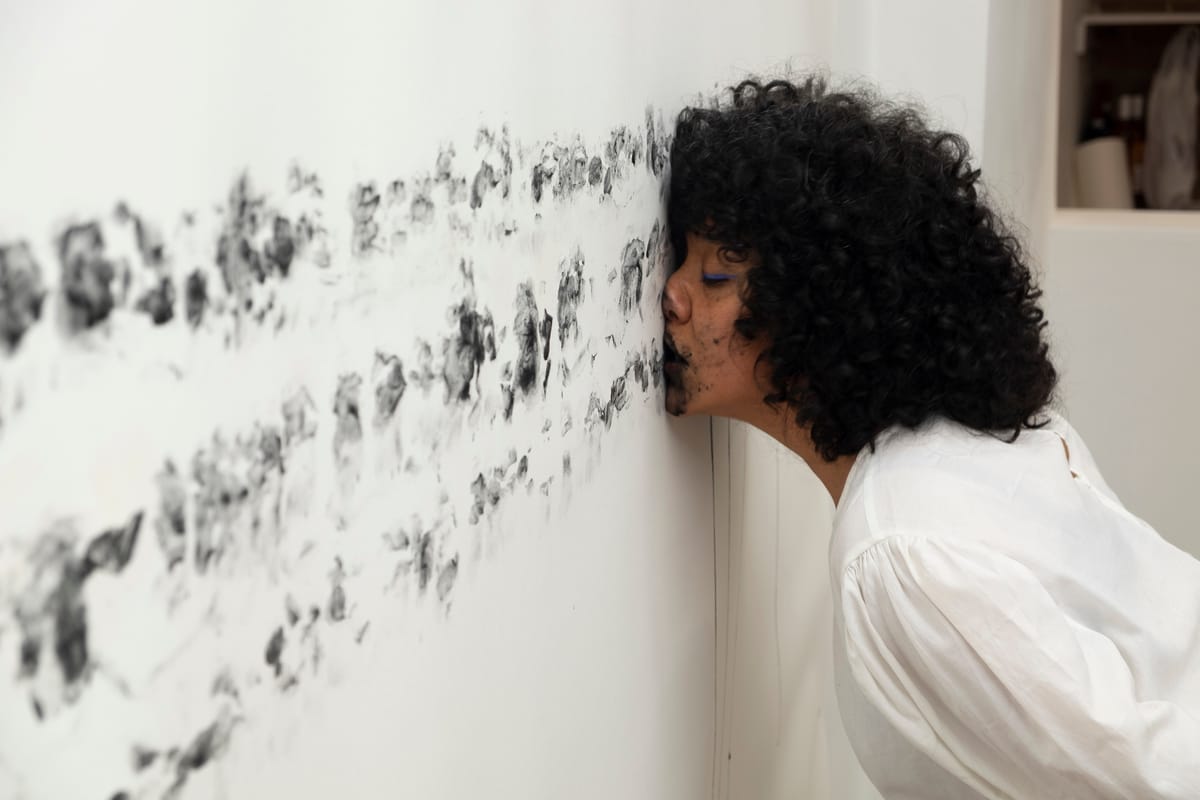
"At the end of November of 2011, I saw my dad take his last breath. I came back to the United States after participating in all the death-related rituals that helped organize my pain in México. New York City was not a place to live my mourning, and right around December of the same year, I felt an intense longing to become small again. I needed to work with children."
"I felt dizzy and disorganized working those first jobs with children. I went to art school and did not have an official training in childhood education, so I learned on the go. The children didn'trespond to logic, or at least not the logic that I was used to, like "up is up and not down," like "a fork is for eating and not for drumming." I ended my days feeling spellbound and inspired."
"I say that my accent makes me feel self-conscious. I know I should not feel that way - I know why I should not - but it still happens. Sometimes I identified with pre-verbal children, a term I learned in the Early Childhood Education Professional Development trainings. I kept the term with me to honor the bridge that I built with those children."
After witnessing a father's death and recovering from cancer, working with children served as a way to heal and reconnect with life. Initial classroom work felt dizzy and disorganized due to lack of formal early education training, but the experience proved inspiring. Two-year-olds stood out for their pre-verbal presence, minimal speech, and direct communication without shame. An accent created self-consciousness, yet observing children's nonverbal languages revealed alternative modes of expression. The term pre-verbal became a bridge to honor connections with children and to reshape understanding of language, embodiment, and creative practice.
Read at Hyperallergic
Unable to calculate read time
Collection
[
|
...
]