Social justice
fromLiberal Currents
23 hours agoWoke 2 Must Build Institutions
Critique reveals structural oppression, but knowledge alone does not reform society; building solutions is harder and necessary amid fascist backlash.
Dahmani was arrested in May 2024 at the headquarters of the Bar Association by masked police officers, in what her colleagues described as a brutal and illegal operation. She was released on conditional parole last November after more than 18 months in detention. Human rights organisations have raised alarm over what they describe as a sharp increase in repression since Saied seized power in a coup in July 2021.
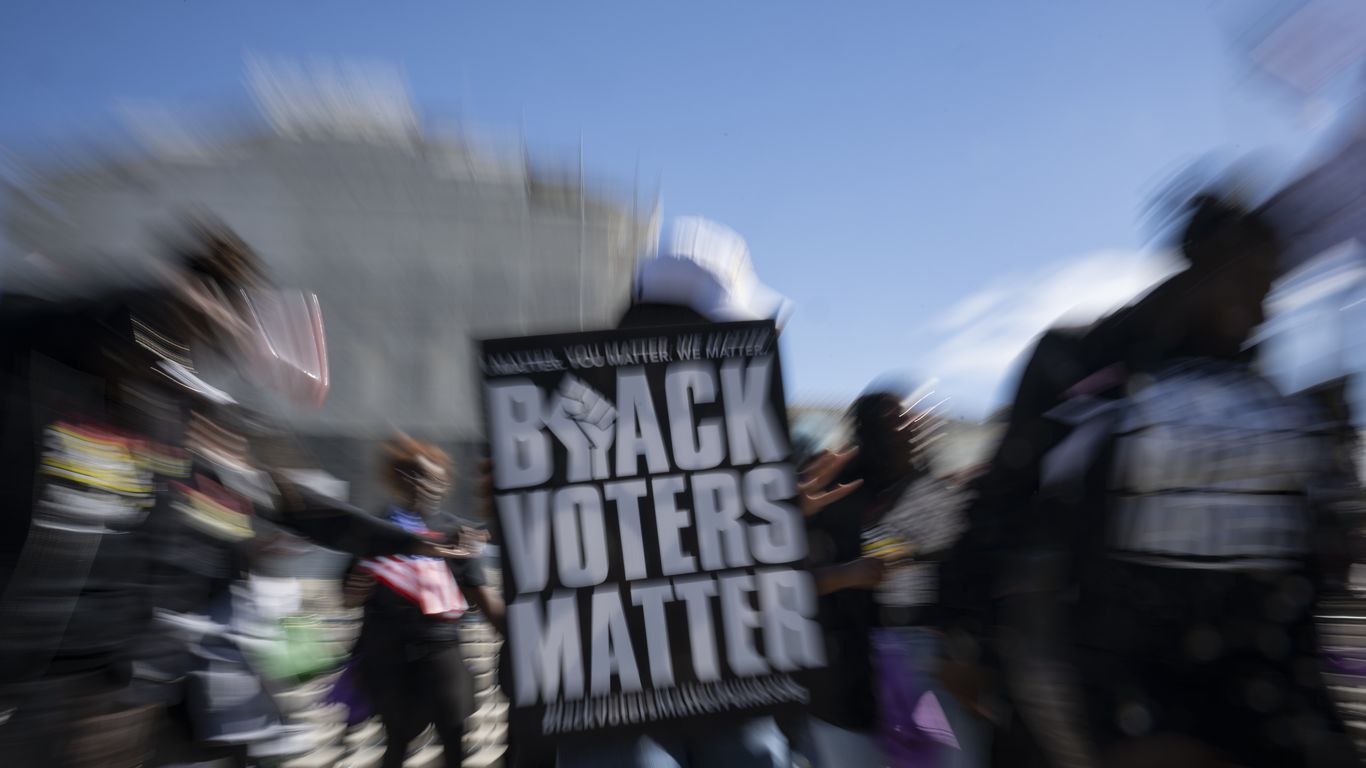
In 2020, the world turned completely upside down as we all experienced the collective trauma of the COVID-19 pandemic. For the Black community, the trauma of the pandemic was compounded by the latest iteration of violence against Black people. The murders of Ahmaud Arbery, Breonna Taylor, and George Floyd thrust issues of police brutality and racial inequity onto a national stage.
My own family migrated here in 1992. My father is an electrical engineer and successfully acquired a position in a regional electricity company. Apparently a board meeting was held at the time to confirm that no local options existed for the role. My mother worked at the local supermarket. They later owned successful businesses and have contributed a significant am
Kenneth Wolfe, the director of the DOL's faith center, is now also leading the Office of Federal Contract Compliance Programs (OFCCP), the office tasked with making sure that federal contractors comply with anti-discrimination laws. Wolfe's appointment was quietly announced earlier this month, after the agency released its proposed 2027 budget in April, which would eliminate the office entirely.
“There are many people suffering here. This is the only way we have to raise our voice, this is a call to stop the suffering and respect our dignity as human beings,” read a statement written by the strikers and read during an press conference held online this morning held by a coalition of advocacy groups.
The Norwegian appeals court dismissed the extradition request for the activist accused of facilitating the illegal entry of people into Greece, calling the decision a rare victory for human rights. Lawyers for Tommy Olsen said the judgment was unprecedented, with the court unanimously rejecting the request and stating his actions were lawful and protected under international treaties binding both countries. The court also acknowledged that the charge was absurd, given that Olsen was charged with monitoring and reporting people in distress at sea.
Fresh off the seventh forced displacement of his central West Bank Bedouin community since 1948, Abu Najjeh was not in a contemplative mood leading up to Nakba Day. He said he was in a rush, too busy reacting to the crises of the day the continuing third Nakba, as he called it. This is not a proper place to live that's why I'm in a hurry waiting for a car to take me, said Abu Najjeh, the mukhtar, or leader, of the former Bedouin community of Ein Samiya, speaking from a recently erected tent in the outskirts of Rammun before rushing to find his sons amid unfolding violence in Jiljilyya.
“The system is the way that we relate to each other, right? It's the way one group the working class gets exploited by another group the ruling class,” he says. “There's no getting out of it until we overturn this, until we have a movement that creates a whole different system.”
Dan Reed, the director of the HBO documentary Leaving Neverland, in a recent interview with , compared Michael Jackson to Jeffrey Epstein and, when it came to Jackson, bluntly said, "people just don't care." He is right. And the moment those words were posted, I knew that the arrows would likely start flying at Reed.
Osama Khalid was just twelve years old when he began contributing to Wikipedia Arabic. In the height of the blogging era, he became a prolific blogger, publishing writings on his home country of Saudi Arabia, meetups he attended, and his opinions and observations about open source technology and freedom of expression. He advocated for internet freedom, contributed time and translations to various projects-including EFF's HTTPS Everywhere -and was a thoughtful presence at the conferences he attended around the world...all while training to become a pediatrician.
The Franklin H. Williams Judicial Commission, in partnership with the Boys & Girls Club of New Rochelle, launched a 12-week Legal Career Pathway Program with a youth empowerment forum on May 8 in New Rochelle.
Just days before the conference was set to begin and as participants had begun to arrive in Lusaka, organizers that RightsCon would no longer proceed in Zambia or online after mounting political pressure and demands that would have excluded vulnerable communities and constrained discussion.
On May 1, 1886, hundreds of thousands of American workers walked off the job in protest of an eight-hour workday. In Chicago, these eight-hour workday protests culminated in the Haymarket Affair, when police sought to break up a rally near Haymarket Square, and a bomb was detonated in the process. The trial and martyrdom of the eight anarchists who were indicted, charged, and executed led to the formation of a day to recognize the labor struggle.
“When you speak about wanting changes for cleaner air, and you have a child who's impacted, it hits differently,” she told the magazine. “It's gut-wrenching, and knowing too that these data centers primarily are using fossil fuels. It's really disappointing and it's scary.”
The sharp spike in antisemitism that we've witnessed in Australia has been mirrored in other western countries and seems clearly linked to events in the Middle East, the commissioner, Virginia Bell, said on the first morning. It's important that people understand how quickly those events can prompt ugly displays of hostility towards Jewish Australians simply because they're Jews: displays of hostility that are sometimes expressed in images and sentiments that can sometimes be traced back to the Middle Ages if not earlier.