#water-soluble-fertilizers
#water-soluble-fertilizers
[ follow ]
#gardening #sustainability #soil-health #plant-care #agriculture #nutrient-management #fertilizer #agronomy

fromwww.theguardian.com
1 week agoHouseplant hacks: do eggshells deter fungus gnats from laying eggs?
Crushed clean, dry eggshells, when scattered over the soil, are intended to stop adult gnats from laying eggs and potentially add natural fertilizer. However, they merely sit on the surface, collecting dust, while the gnats remain attracted to the damp compost.
Renovation



fromRealagriculture
1 week agoPulse School: Balancing P-K-S fertility when margins are tight
"The awesome thing with pulse crops is no nitrogen needs... not having to put any nitrogen on a pulse crop is a great starting point," he says, noting that this allows growers to not only meet PKS requirements but, in some cases, build soil fertility for the rotation.
Agriculture
Venture
from24/7 Wall St.
1 month agoCF Industries Is Up 76% and Fertilizer Supply Is Why
CF Industries, the world's largest ammonia producer, surged 67.6% year-to-date as Middle East conflict disrupted global nitrogen supply, positioning the North American producer to capture market share at a structural cost advantage.

Environment
fromwww.npr.org
1 month agoMaking wastewater drinkable is a growing trend as water resources become more strained
Treated wastewater recycling for drinking water is becoming a viable solution in water-scarce regions, with Florida, Arizona, California, and Colorado now allowing direct potable reuse through regulated pilot programs.
Everyday cooking
fromTasting Table
3 weeks agoFireplace Ashes Can Boost Your Vegetable Garden - If You Use Them The Right Way - Tasting Table
Wood ash serves as a nutrient-rich, budget-friendly fertilizer that enhances plant growth, modifies soil pH, and deters garden pests when applied sparingly in small doses.
fromTasting Table
1 month agoUsing Rice Water To Fertilize Houseplants? Avoid This Mistake That Could Cost You Your Plant - Tasting Table
Rice water doesn't have any additional nutrients that plants need to grow - for example, the nitrogen, potassium, and phosphorus found in conventional fertilizers - and the starchy residue doesn't necessarily "fertilize" your plant. However, it is still water that would otherwise just be dumped down the sink, so if you're not saving your rice water for cooking, you might as well use it to hydrate your plants.
Everyday cooking
Canada news
fromRealagriculture
1 month agoA clean pass under pressure: Why farmers need to take the next shift on plant breeding
Canadian agricultural research faces structural funding pressures and requires a new, diversified research strategy to preserve critical knowledge, regain lost ground, and compete globally.
fromRealagriculture
3 weeks agoLoveland Products launching more than 20 new products for 2026
"We're bringing over 20 new products... in the adjuvant space, the crop protection space, seed treatment, as well as the plant nutrition space," Walker states, emphasizing the significant volume of innovations for the upcoming year.
Agriculture
fromwww.theguardian.com
2 months agoHouseplant hacks: can you really use banana water as a fertiliser?
You are not alone: social media is full of claims that soaking banana skins in water makes a fertiliser that will give you bigger leaves and better blooms. The hack Put banana peels in a jar of water, leave them to sit, then pour the liquid on your plants. Bananas do contain potassium and small amounts of other nutrients. The snag is you have no idea how strong it is or what's missing.
Environment
fromSilicon Canals
2 months agoThis kitchen scrap makes the best free fertilizer and most people throw it away - Silicon Canals
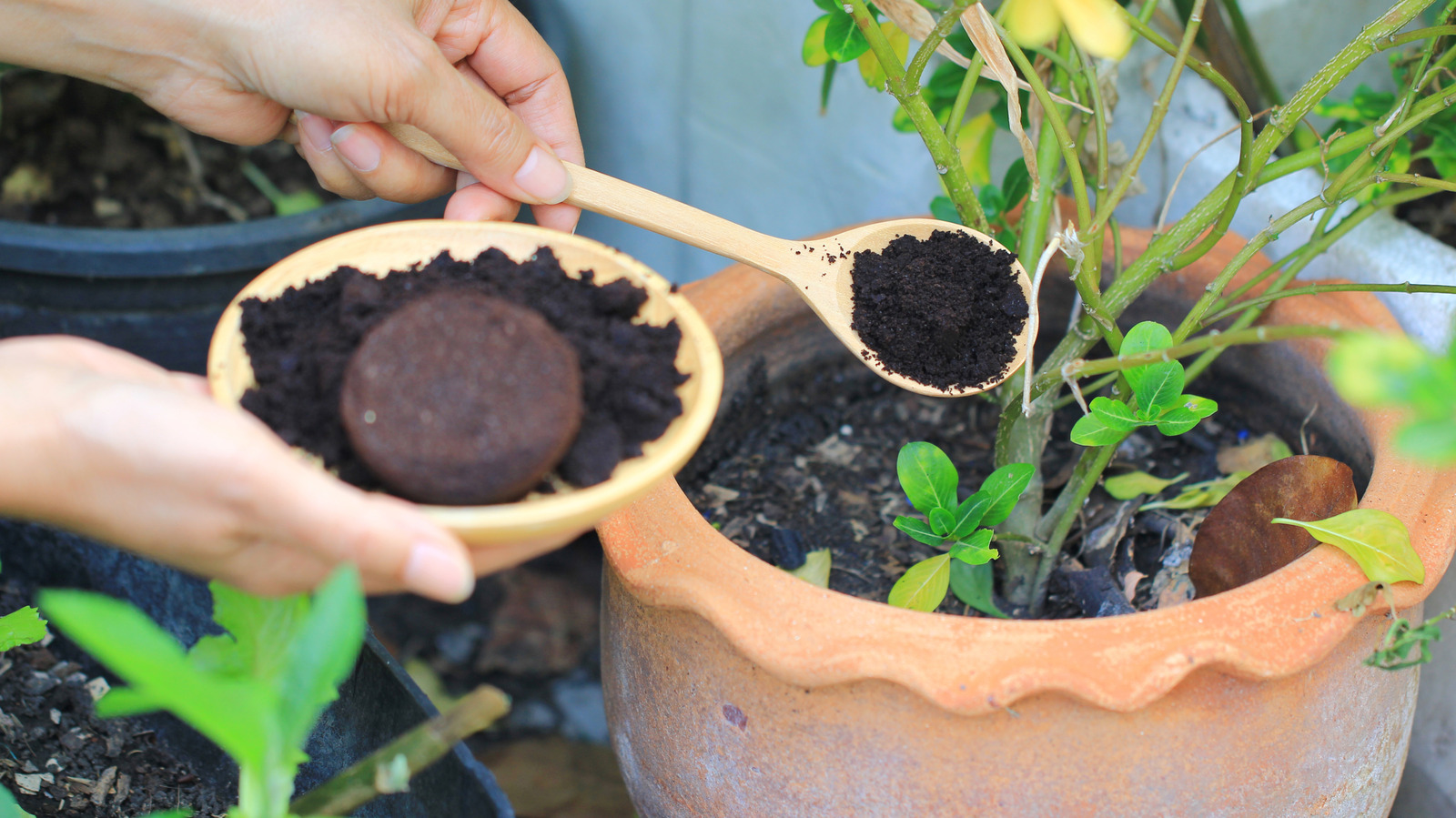
Last week, I was making my morning coffee-you know, the complicated order I'm too embarrassed to say out loud at coffee shops-when I noticed the pile of used grounds in my filter. For years, I'd been tossing these straight into the trash without a second thought. But then I remembered something my grandmother wrote in one of her letters years ago: "The garden teaches us that nothing is truly waste."
Coffee

fromwww.theguardian.com
2 months agoHouseplant hacks: can oats and Epsom salts pep up a plant?
The idea is that oats break down and enrich the soil, while Epsom salts (magnesium sulphate) top up magnesium to keep leaves green and glossy. Social media says a spoonful of each will pep up tired plants without the need for proper feed. The method The hack says unpot your plant and mix the old soil with 12 tablespoons of dry oats, a sprinkle of Epsom salts and a bit of fresh compost. Then pop the plant back in the pot, firm it around the roots and water it in.
Environment
Agriculture
fromRealagriculture
4 weeks agoClearCost puts fertilizer price comparisons in farmers' pockets
ClearCost is a free mobile platform that aggregates fertilizer pricing from multiple dealers across North America, enabling farmers to compare quotes and secure better deals through a single application.
Agriculture
fromRealagriculture
1 month agoRhizoSorb tops one million acres as growers seek improved phosphate efficiency
Phospholutions' RhizoSorb technology reached one million commercial acres in 2025, driven by growers seeking phosphorus efficiency and cost savings through controlled-release fertilizer innovation.
#wheat-agronomy
Agriculture
fromRealagriculture
1 month agoWheat Pete's Word, March 11: The next generation of ag, ponded wheat, potash power, and a rust watch
Ontario winter wheat shows strong spring conditions with minimal ponding, while high-tillering wheat in Idaho presents lodging risks and leaf rust emerges unexpectedly in the southern U.S.
Agriculture
fromRealagriculture
1 month agoWheat Pete's Word, March 11: The next generation of ag, ponded wheat, potash power, and a rust watch
Ontario winter wheat shows strong spring conditions with minimal ponding, while high-tillering wheat in Idaho presents lodging risks and leaf rust emerges unexpectedly in the southern U.S.
Agriculture
fromRealagriculture
1 month agoRhizoSorb delivers on higher phosphorous fertilizer ROI
RhizoSorb is a phosphate efficiency technology that doubles phosphate feeding efficiency, requiring one-third less product than traditional MAP while delivering 10% cost savings per acre and approximately $20 ROI.
Agriculture
fromRealagriculture
1 month agoRealAg Radio: Meteorological spring, sulphur management, and new variety considerations, Mar 2, 2026
Agronomic Monday covers meteorological spring, maple syrup season, DON risk in corn, sulphur management, wheat variety considerations, and risk management strategies for farm operations.
Agriculture
fromRealagriculture
1 month agoDon't cut the science that pays the bills
Closing AAFC research stations undermines Canada's agricultural competitiveness by eliminating the only coordinated system for validating crop genetics across diverse agro-ecological zones, despite wheat breeding generating a 32:1 benefit-cost ratio.
fromModern Farmer
1 month agoYour February Soil Checklist: What to Do Now for Healthy Soil
The term "soil fatigue" or exhaustion refers to the condition that soil profiles take on when they've been heavily monocropped and untended. This soil is devoid of the microbial content that offers plants bioavailable food. It lacks the fungal and bacterial organisms that interact with plant nutrients.
Agriculture
fromTasting Table
2 months agoThe Slow-Growing Crop That Pays Off Big When You Start It From Seed - Tasting Table
People grow asparagus from crowns because it shortens the long wait times for harvesting. From seed, you'll need to wait three years before harvesting asparagus. Some people consider that a waste of time. The tradeoff is that you can keep harvesting every spring for up to 15 years or more. If you plant crowns, you get a one-year jump on things. However, those crowns may have soil-borne diseases you don't know about, so there is a risk involved. Seeds remove that problem.
Agriculture
fromDaily Coffee News by Roast Magazine
1 month agoIn Wake of India's "Green Revolution," Scientists Find Organic Soils Healthier
As concepts such as "regenerative" and "biodynamic" continue to enter the mainstream coffee lexicon, scientists continue to literally dig into the soil to give them meaning. A recent peer-reviewed study from India's Western Ghats argues that one of the clearest signals of healthy, sustainable coffee farms lies in the ground itself, with organic coffee soils performing better than soils from conventional farms treated with synthetic inputs.
Agriculture
fromRealagriculture
2 months agoCan biologicals fill the soybean nitrogen gap? The jury's still out
More than 100 research studies show that soybeans typically suffer from a nitrogen gap when yields exceed 60 bu/ac. At that yield level, the combination of soil nitrogen and nodulation often doesn't provide what the plant requires to achieve higher yields. Could biologicals - including nitrogen-fixing endophytes and biostimulants - fill that "yield gap" and provide the nitrogen required at high yield levels? That's a question Syngenta Canada biological field specialist Greg Stewart has been working on for the past two years.
Agriculture
Agriculture
fromRealagriculture
1 month agoWheat Pete's Word, Feb 25: Compaction consequences, manure on snow warnings, and S surprises
Small management details like manure timing, sulphur application, and soil compaction create multi-year consequences affecting farm productivity and environmental outcomes.
fromRealagriculture
1 month agoOMAFA looks to bolster field crop team
According to the job posting, the successful candidate will serve as the lead provincial specialist for edible beans and edible oilseeds, including Identity Preserved (IP) soybeans, spring and winter canola, flaxseed, and sunflower. The role centres on technology transfer - developing and implementing strategies, policies, and programs - while coordinating projects that assess new and existing practices for their suitability under Ontario conditions. The specialist will also prepare and deliver educational tools, act as a liaison between the research community and industry, support policy and program development, and manage high-priority or contentious issues in the sector.
Agriculture
[ Load more ]