#specialized-transportation-services
#specialized-transportation-services
[ follow ]
#autonomous-vehicles #logistics #amazon #robotaxis #autonomous-trucking #last-mile-delivery #supply-chain #rivian
#amazon



E-Commerce
fromwww.businessinsider.com
1 week agoInside Project Kobe: Amazon's plan to build Walmart-style supercenters powered by warehouse robots and AI
Amazon is developing large-format supercenters that integrate grocery, general merchandise, and robotics-powered fulfillment centers to compete with Walmart.

fromTheregister
5 days agoHumanoid tests humanoid robot for automotive logistics
This proof of concept in the manufacturing industry allows us to demonstrate how humanoid robots can act as extensions of an organization's operations by providing business context awareness and integration with existing workflows.
London startup


Washington DC
fromEntrepreneur
2 weeks agoAmazon Plans to Slash USPS Shipments by Two-Thirds. Here's What That Means for the Postal Service.
Amazon plans to reduce USPS package shipments by two-thirds by fall, threatening the financially struggling postal service that delivered over one billion Amazon packages last year.
UK news
fromComputerWeekly.com
3 weeks agoUnreliable fleet connectivity driving employee exodus | Computer Weekly
UK fleet operators face significant connectivity challenges that threaten competitiveness, with unreliable networks causing customer complaints and operational disruptions despite limited failover protections.
#autonomous-trucking
Alternative transportation
fromEntrepreneur
2 weeks agoSelf-Driving Semi Trucks Are Coming, and They're About to Transform a $900 Billion Industry
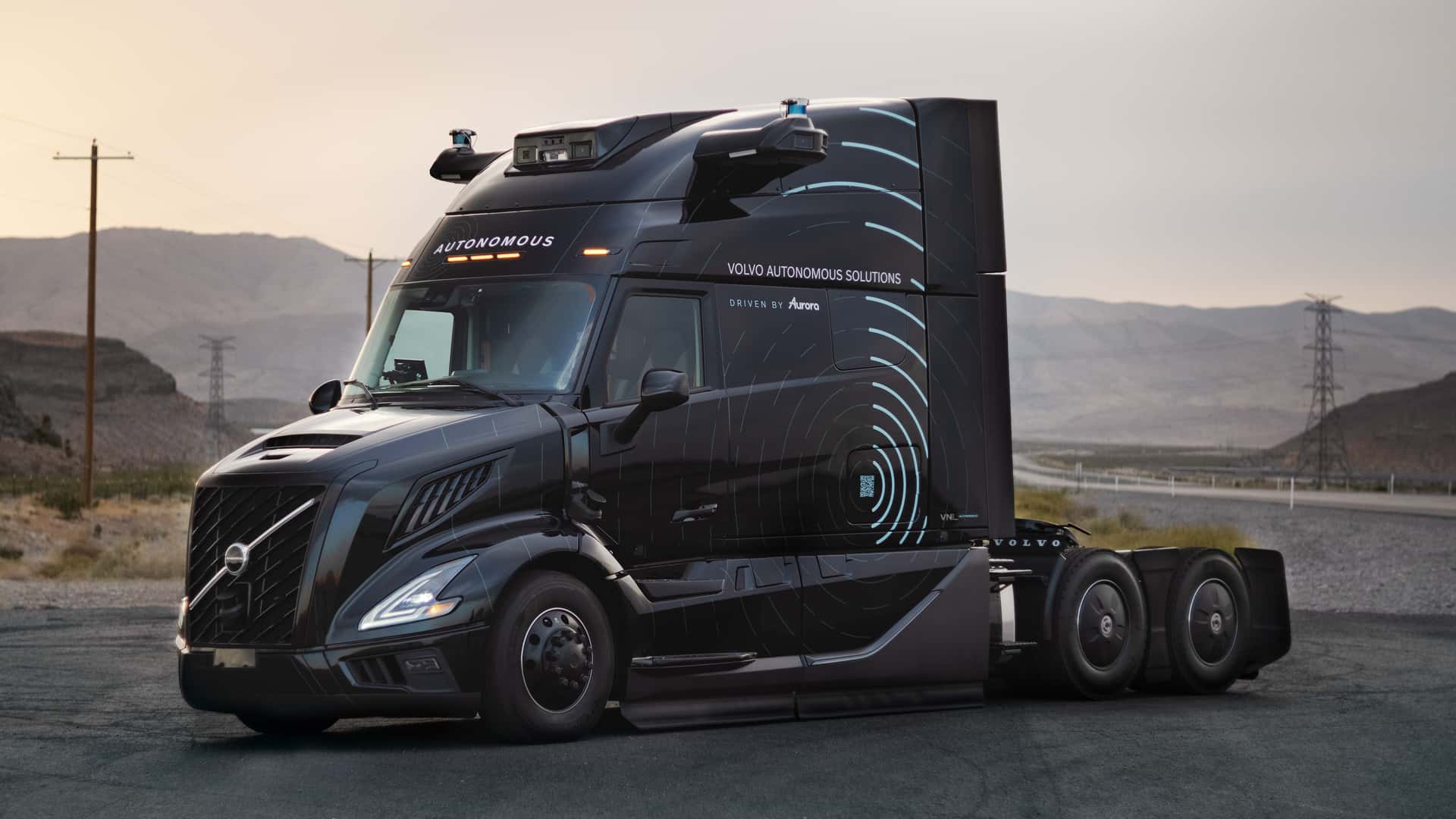
Aurora, Kodiak, and Waabi plan to deploy fully driverless big rigs on U.S. highways by 2027, targeting driver labor costs that represent up to 40% of per-mile trucking expenses.


Alternative transportation
fromEntrepreneur
2 weeks agoSelf-Driving Semi Trucks Are Coming, and They're About to Transform a $900 Billion Industry
Aurora, Kodiak, and Waabi plan to deploy fully driverless big rigs on U.S. highways by 2027, targeting driver labor costs that represent up to 40% of per-mile trucking expenses.


Remote teams
fromMiami Herald
1 month agoLong-Term Car Rental: The Freedom to Stay Mobile Anywhere
Month-to-month car rentals through platforms like Turo provide flexible transportation for extended stays without ownership commitments, enabling digital nomads and long-term visitors to live fully in new locations.
fromFuturism
1 month agoFormer Delivery Drivers Are Getting Weird New Jobs as Delivery Robots Take Over
When delivery units operated by companies like Coco or Serve Robotics run into real-world obstacles - like a garden, for example - these robot wranglers spring into action, freeing them from potholes, helping them upright after a fall, and ferrying them back to headquarters for maintenance.
Los Angeles
#amazon-delivery
E-Commerce
fromEngadget
2 weeks agoAmazon launches one- and three-hour delivery options in the US
Amazon launched one-hour and three-hour delivery options across 2,000+ locations, covering 90,000 products including essentials and discretionary items, with costs ranging from $5-$20 depending on membership and speed.
Gadgets
fromComputerWeekly.com
1 month agoConnectivity, AI drive fleet safety, productivity and decision-making | Computer Weekly
AI, connected data, and safety-focused services are transforming fleet operations, with GPS tracking adoption at record highs and AI delivering measurable safety improvements and cost reductions.
fromThe Mercury News
2 weeks agoDoorDash robots headed for Fremont streets
The little red four-wheeled delivery vehicle is expected to operate near Fremont's Downtown and City Center, an area centrally located near a high density of restaurants, apartments and other businesses in the city. Manufactured by Sonic Manufacturing Technologies in Fremont, DoorDash Dot can travel up to 20 miles per hour. It has built-in cup holders and enough cargo space to fit an extra-large pizza and a case of water.
Toronto startup
fromYanko Design - Modern Industrial Design News
1 month agoThis 40-Pound Robot Dog Can Carry 143 Pounds of Cargo - Yanko Design
At about 18 kilograms, roughly 40 pounds with its battery included, the As2 is compact enough to move through tight spaces, yet built to handle a standing payload of up to 65 kilograms. That's more than 143 pounds sitting on top of a 40-pound robot, which is genuinely impressive and a little hard to picture until you actually see it in action.
Gadgets
E-Commerce
fromBusiness Matters
3 weeks agoThe Hidden Costs of DIY Shipping: When to Switch to an Ecommerce Shipping Platform
DIY shipping becomes a business bottleneck as order volume grows, consuming excessive time and increasing errors while established shipping platforms automate processes and enable scalability.
E-Commerce
from24/7 Wall St.
3 weeks agoLook! Up In the Sky! It's Amazon's Flywheel in Action
Amazon's drone delivery service Prime Air exemplifies how the company's e-commerce, AWS cloud, and AI divisions create a self-reinforcing flywheel that generates data, optimizes operations, and drives competitive advantage.
fromSocketsite
9 years agoSelf-Driving Truck Tech Headed for San Francisco's Waterfront
It has been almost three years since the Port of San Francisco awarded TMG Partners the redevelopment rights for San Francisco's Pier 38, with TMG winning over the Port with a pitch that emphasized the speed with which they planned to act and an "immediate revitalization" of the pier with a mix of public, office and maritime uses. But Pier 38, which has been shuttered since 2011, remains red tagged and inactive.
San Francisco
Business
from24/7 Wall St.
2 months agoThe Warehouse Automation Seller Just Turned Profitable While the Retail Giant Builds Its Own
Investors face choosing Symbotic's newly profitable automation-as-a-service with volatile trading and insider selling or Amazon's scale-driven in-house robotics investment.
Deliverability
fromSitePoint Forums | Web Development & Design Community
2 months agoWhich Is the Best Sea Freight Forwarder for Time-Sensitive Cargo?
Choose sea freight forwarders that prioritize fast transit, priority handling, reliable networks, smooth customs clearance, real-time tracking, secure handling, and proven urgent-delivery experience.
fromComputerWeekly.com
1 month agoDelivery comms, intelligent fulfilment, and AI's growing influence | Computer Weekly
Nine in ten retailers globally are planning to raise their spending on artificial intelligence (AI) to optimise their e-commerce operations over the next 12 to 24 months, with online delivery execution a key area of focus. A total of 38% of European retailers identify speed, tracking and proactive communication around the delivery process as areas where AI can deliver the greatest impact.
E-Commerce
Software development
fromSitePoint Forums | Web Development & Design Community
1 month agoOperational Challenges as a Limo Company in Miami Scales - What Systems Actually Help?
Adopt fleet tracking, automated booking, driver communication, and service-quality monitoring as ride volume and service complexity grow to preserve consistency and transparent billing.
Artificial intelligence
fromABC7 San Francisco
2 months agoYour future delivery order in SF might be dropped off by a little self-driving robot
Serve Robotics deploys autonomous sidewalk delivery robots across U.S. cities, emphasizing approachable design, scaling beyond downtowns, and partnerships with Uber Eats and DoorDash.
fromSustainable Bus
2 months agoAutonomous Systems: depot-first autonomy for smartbuses
For more than a decade, autonomous buses have been "almost ready." Demonstrations with safety drivers began around 2015, and ten years later, this is still largely what we see. The reason is not a lack of ambition - it is physics, safety, and economics. Autonomous buses on city streets are inherently difficult. They carry dozens of passengers, operate as heavy vehicles, and move through a chaotic urban environment.
Business

Artificial intelligence
fromeLearning Industry
2 months agoArtificial Intelligence In Transportation Training And Education
AI enables individualized transportation training by evaluating trainee performance, tailoring instruction, simulating real scenarios, and measuring performance for targeted improvement.
frominsideevs.com
1 month agoHow Pedal-Assist Mini-Trucks Are Transforming Cities
Climbing onto the Honda Fastport eQuad is, quite literally, just like getting on a bicycle, except easier. With four wheels and broad diamond-plate running boards on either side, ingress and egress is as simple as swinging my leg over and stepping on and off the pedals, no kickstands involved. This makes sense, as the e-bike-based mini box-truck has been custom designed and constructed by the Japanese transportation company for the constant stop-and-go of urban e-commerce package delivery.
Cars
fromForbes
1 month agoFrom Click To Doorstep: Why Delivery Experience Is The Last Brand Impression
That's a problem. Without a doubt, a great website and top-level marketing will help generate new sales, but it's the delivery experience that warrants future ones. This is because today's consumer not only has options for where they'll buy but also a high set of expectations. What's more, they remember the way a product arrives at their doorstep more than how it was sold.
E-Commerce
fromBusiness Insider
1 month agoCEO Dara Khosrowshahi says Uber has a quiet edge in the robotaxi wars
Uber Eats might end up playing a key role in its parent company's robotaxi business, Uber CEO Dara Khosrowshahi said. The ride-hailing app is working with multiple companies, such as Alphabet-backed Waymo, to make self-driving cars available through its app. Waymo's robotaxis have already proven more efficient than most human Uber drivers in cities such as Atlanta and Austin, Uber has said.
Artificial intelligence
Tech industry
fromInfoQ
2 months agoUber Moves from Static Limits to Priority-Aware Load Control for Distributed Storage
Priority-aware, colocated load management with CoDel and per-tenant Scorecard protects stateful multi-tenant databases by prioritizing critical traffic and adapting dynamically to prevent overloads.
[ Load more ]