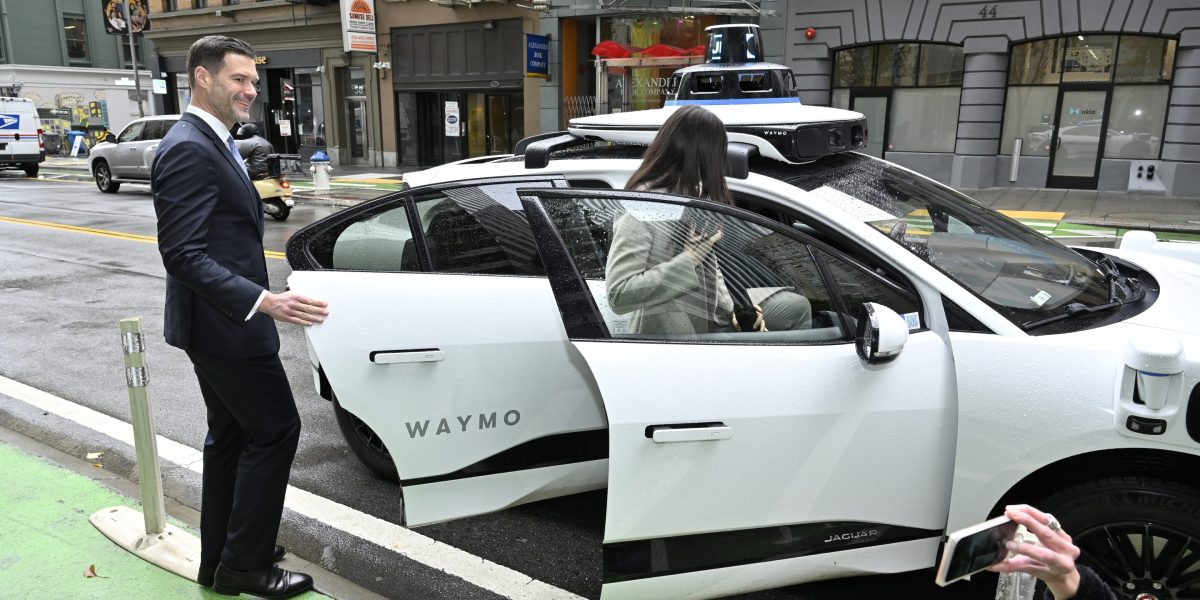
"Now, it might take two cars to complete a trip: the robotaxi that drops you off, and another dispatched to close the door after you step out. Some robotaxi customers are so lazy, it turns out, that Waymo has teamed up with DoorDash to send drivers to close the doors of automatic vehicles rendered immobile."
"Waymo's robotaxi rollout may not have created jobs for drivers, but it has created a microeconomy for gig workers who can spend up to an hour looking for the cars, according to the Post. At the time, Waymo spokesperson Katherine Barna told the publication the door issues were 'not too common' and that the company was focusing on 'educating and informing our riders' about closing the door."
"The DoorDash partnership is the latest in Waymo's efforts to work out one wonky non-automated feature of its otherwise automated robotaxi program: the doors require a human to close them. Waymo has already employed a similar practice in Los Angeles, The Washington Post reported, using the app Honk that contracts with towing companies to slam those doors shut."
Waymo's autonomous robotaxi service has encountered an unexpected operational challenge: the vehicle doors require manual closure. To address this issue, Waymo partnered with DoorDash to dispatch gig workers who close doors for $6.25 to $5 per task. Previously, Waymo used the Honk app, contracting towing companies where drivers earned up to $24 for closing doors. This limitation has inadvertently created a microeconomy for gig workers who spend considerable time locating and servicing these vehicles. Waymo spokesperson Katherine Barna characterized door issues as uncommon and stated the company focuses on educating riders about closing doors. Despite eliminating traditional driver jobs, the robotaxi rollout has generated alternative income opportunities for gig economy participants across multiple U.S. cities.
Read at Fortune
Unable to calculate read time
Collection
[
|
...
]