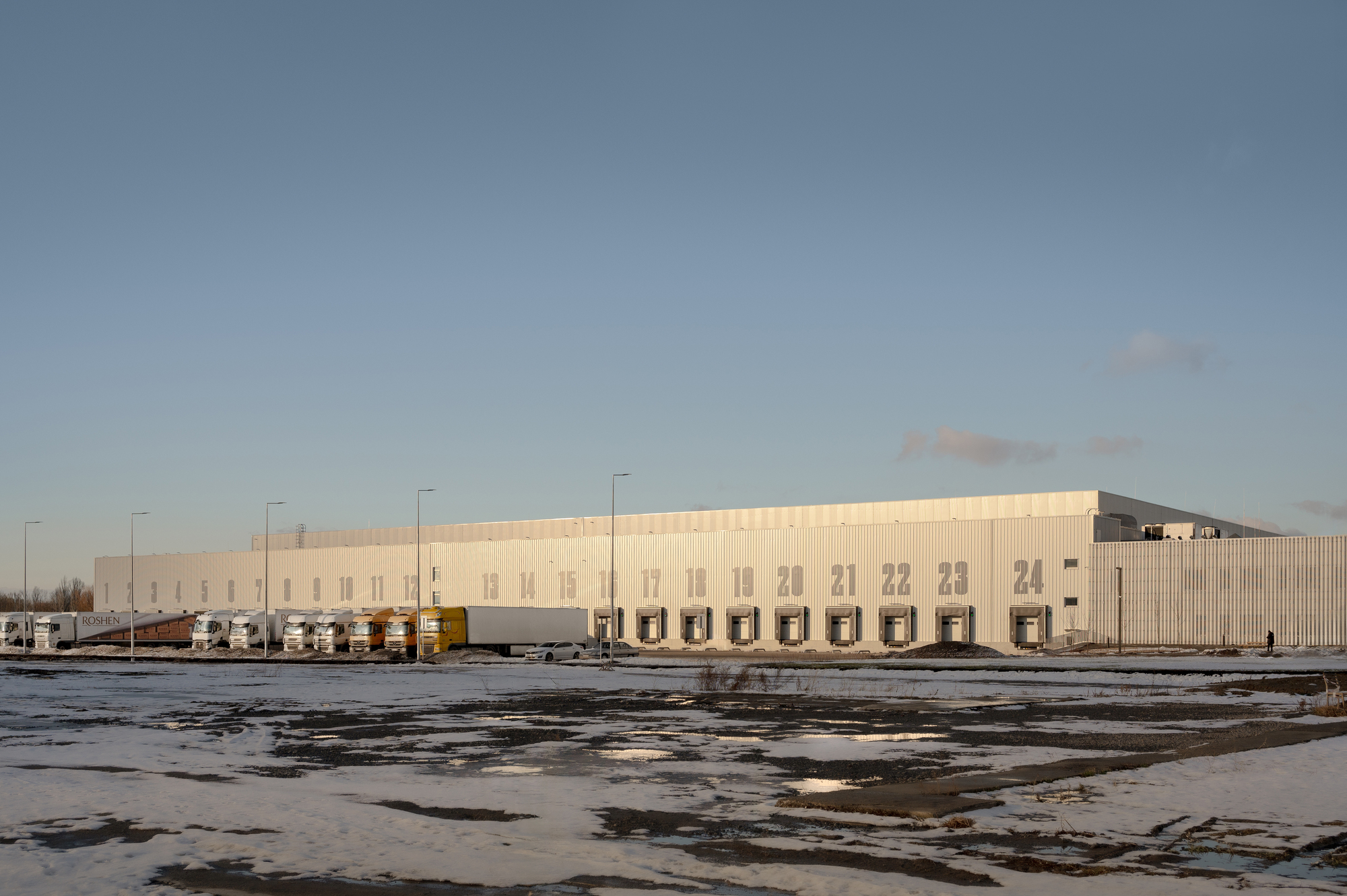
"Global warehouse space now exceeds tens of billions of square feet, expanding rapidly alongside the rise of e-commerce. During the COVID-19 pandemic, demand for logistics infrastructure accelerated by several years, compressing future growth into an already strained present."
"The shift becomes legible at the scale of projects like Maasvlakte 2, where architecture extends into engineered geography. Built on reclaimed land, the expansion adds roughly 2,000 hectares to the Port of Rotterdam, integrating automated terminals, storage zones, and transport infrastructure into a single logistical landscape."
"Here, the building dissolves into a system. Cranes, containers, and vehicles operate as part of a continuous spatial field, coordinated across land and sea. What emerges is an operational territory, architecture functioning as infrastructure, calibrated to global flows of goods."
"Far from being neutral containers, warehouses are shaped by the demands of automation, where efficiency is embedded directly into plan."
Warehouses are increasingly becoming the defining typology of the 21st century, expanding rapidly alongside e-commerce. Global warehouse space has surpassed tens of billions of square feet, with significant growth in the logistics sector, particularly during the COVID-19 pandemic. Projects like Maasvlakte 2 illustrate how architecture integrates with engineered geography, creating operational territories where buildings function as infrastructure. The internal organization of warehouses is designed for automation and efficiency, reflecting their critical role in modern logistics and territorial conditions.
Read at ArchDaily
Unable to calculate read time
Collection
[
|
...
]