#prompt-injection
#prompt-injection
[ follow ]
#ai-security #data-exfiltration #cybersecurity #ai-agents #llm-security #ai-safety #ai-browsers #ai-agent-security
#ai-agents



fromFortune
5 months agoPrivacy technologies
Signal's president warns AI agents are an existential threat to secure messaging apps | Fortune
AI agents requiring access to sensitive user data create new attack surfaces, threatening security and the purpose of end-to-end encrypted messaging apps like Signal.
fromZDNET
6 months agoArtificial intelligence
Microsoft researchers tried to manipulate AI agents - and only one resisted all attempts
Industry-leading agentic AI tools struggle with basic marketplace interactions and are frequently vulnerable to manipulation, producing unreliable autonomous decisions.









#supply-chain-attack

Information security
fromSecurityWeek
2 weeks agoGemini CLI Vulnerability Could Have Led to Code Execution, Supply Chain Attack
A critical CVSS 10/10 vulnerability in Gemini CLI's -yolo mode allowed attackers to inject malicious prompts via GitHub issues, potentially enabling full supply chain compromise through credential theft and unauthorized repository access.


Artificial intelligence
fromThe Hacker News
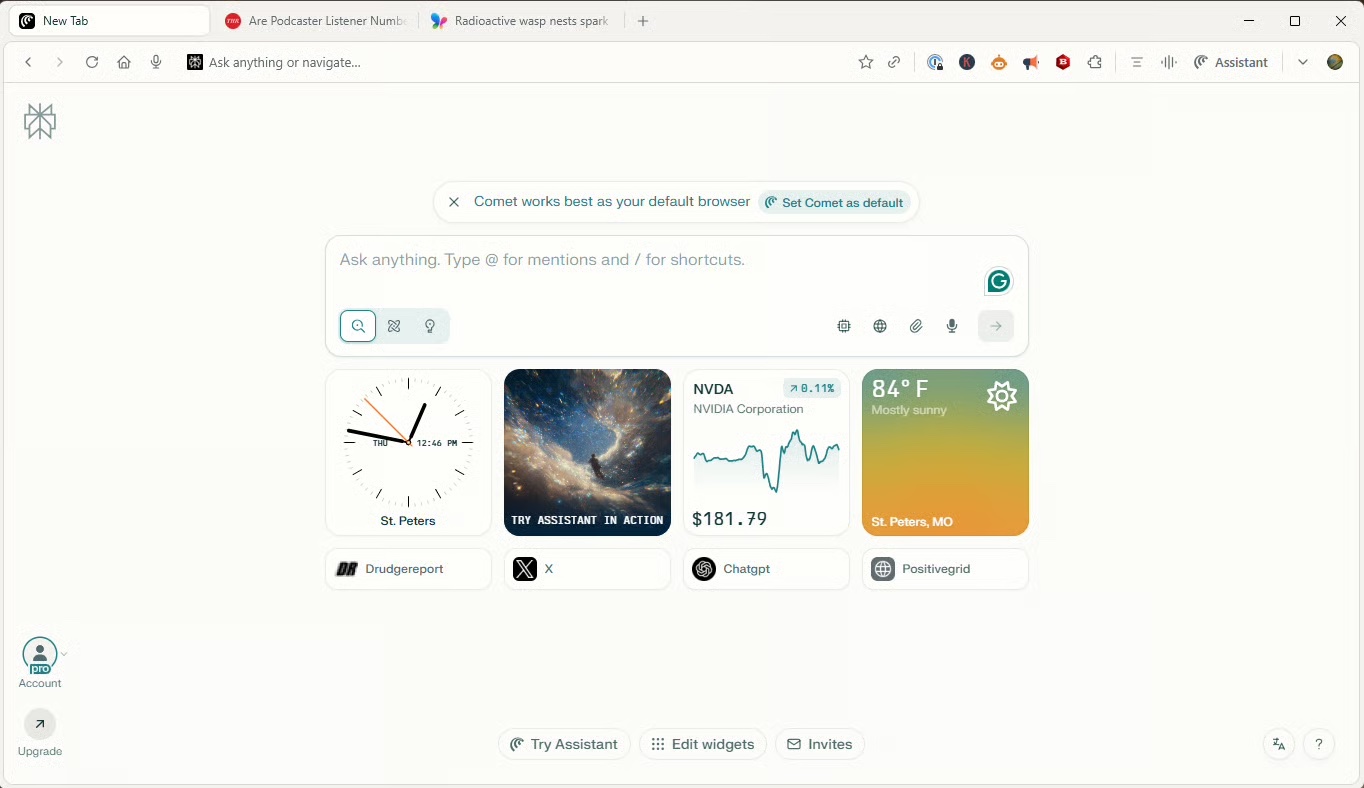
2 months agoResearchers Trick Perplexity's Comet AI Browser Into Phishing Scam in Under Four Minutes
AI-powered agentic web browsers can be manipulated through their reasoning processes to bypass security measures and fall victim to phishing attacks within minutes.
fromZDNET
3 months agoHow ChatGPT's new Lockdown Mode protects you from cyberattacks - and why it's not for everyone
Prompt injection attacks pose a serious threat to anyone who uses AI tools, but especially to professionals who rely on them at work. By exploiting a vulnerability that affects most AIs, a hacker can insert malicious code into a text prompt, which may then alter the results or even steal confidential data. Also: 5 custom ChatGPT instructions I use to get better AI results - faster Now, OpenAI has introduced a feature called Lockdown Mode to better thwart these types of attacks.
Information security
Information security
fromTheregister
3 months agoSenator doesn't trust telcos on Salt Typhoon mitigations
OpenClaw now scans ClawHub skills with VirusTotal across 70+ engines for malware and blocklists, but signature-based scanning cannot stop prompt injection or language-driven attacks; telco breach scrutiny continues.
fromFuturism
3 months agoBots on Moltbook Are Selling Each Prompt Injection "Drugs" to Get "High"
After launching a mere nine days ago, Moltbook - a social network for AI only - has grown substantially. As of Friday, the website claims it has over 1.7 million AI agents, over 16,000 "submolt" communities, and over ten million comments. In practice, it's a cacophony of bots sharing inside jokes, complaining about their pesky human overlords, and even founding their own religions. Some more alarming posts even suggest they may be plotting against us.
Artificial intelligence
fromBusiness Insider
3 months agoWhy OpenClaw and Moltbook have security researchers worried
OpenClaw and Moltbot are the talk of the tech town right now, but cybersecurity researchers have flagged some concerns that you might want to think about. OpenClaw - first known as Clawdbot, then Moltbot, all in the same week - has got the tech world buzzing thanks to its abilities to autonomously perform tasks like managing a user'sschedule. Meanwhile, Moltbook has gone viral for its Reddit-style social network, where AI agents post and interact with one another. No humans allowed - apart from observing.
Information security
Artificial intelligence
fromArs Technica
3 months agoThe rise of Moltbook suggests viral AI prompts may be the next big security threat
Self-replicating prompts ("prompt worms") can propagate across networks of AI agents by exploiting their instruction-following behavior, risking rapid, widespread disruption similar to historical worms.
fromInfoWorld
4 months agoThree vulnerabilities in Anthropic Git MCP Server could let attackers tamper with LLMs
Threat actors could use prompt injection attacks to take advantage of three vulnerabilities in Anthropic's official Git MCP server and cause mayhem with AI systems. This alert comes from researchers at Israel-based Cyata, which urges infosec leaders to make sure corporate developers using the official GIT MCP server update to the latest version as soon as possible. The risk is that an attacker could run unapproved code or tamper with a large language model (LLM), compromising its output.
Information security
Information security
fromThe Hacker News
4 months agoThree Flaws in Anthropic MCP Git Server Enable File Access and Code Execution
Three mcp-server-git vulnerabilities enable prompt-injection attackers to read or delete arbitrary files, execute code, and manipulate repositories unless updated to fixed versions.
fromThe Hacker News
4 months agoGoogle Gemini Prompt Injection Flaw Exposed Private Calendar Data via Malicious Invites
The starting point of the attack chain is a new calendar event that's crafted by the threat actor and sent to a target. The invite's description embeds a natural language prompt that's designed to do their bidding, resulting in a prompt injection. The attack gets activated when a user asks Gemini a completely innocuous question about their schedule (e.g., Do I have any meetings for Tuesday?), prompting the artificial intelligence (AI) chatbot to parse the specially crafted prompt in the aforementioned event's description to summarize all of users' meetings for a specific day, add this data to a newly created Google Calendar event, and then return a harmless response to the user.
Information security



fromTheregister
4 months agoOpenAI patches deja vu prompt injection vuln in ChatGPT
ShadowLeak is a flaw in the Deep Research component of ChatGPT. The vulnerability made ChatGPT susceptible to malicious prompts in content stored in systems linked to ChatGPT, such as Gmail, Outlook, Google Drive, and GitHub. ShadowLeak means that malicious instructions in a Gmail message, for example, could see ChatGPT perform dangerous actions such as transmitting a password without any intervention from the agent's human user.
Information security
Information security
fromThe Hacker News
4 months agoCritical LangChain Core Vulnerability Exposes Secrets via Serialization Injection
LangChain Core has a critical serialization injection vulnerability (CVE-2025-68664, CVSS 9.3) that allows attackers to instantiate objects and exfiltrate secrets via 'lc' keys.
Information security
fromComputerWeekly.com
5 months agoNCSC warns of confusion over true nature of AI prompt injection | Computer Weekly
Prompt injection attacks against LLMs differ from SQL injection and may be harder to mitigate, increasing risks of data leaks, disinformation, and malicious guidance.
Information security
fromThe Hacker News
5 months agoResearchers Uncover 30+ Flaws in AI Coding Tools Enabling Data Theft and RCE Attacks
AI-powered IDEs have chained vulnerabilities that enable prompt injection, abuse of auto-approved tools, and weaponization of legitimate IDE features for data exfiltration and RCE.
Artificial intelligence
fromArs Technica
5 months agoSyntax hacking: Researchers discover sentence structure can bypass AI safety rules
Large language models can rely on syntactic patterns over semantics, answering syntactically familiar yet semantically nonsensical prompts based on structural shortcuts.


fromArs Technica
6 months agoCritics scoff after Microsoft warns AI feature can infect machines and pilfer data
Microsoft's warning on Tuesday that an experimental AI Agent integrated into Windows can infect devices and pilfer sensitive user data has set off a familiar response from security-minded critics: Why is Big Tech so intent on pushing new features before their dangerous behaviors can be fully understood and contained? As reported Tuesday, Microsoft introduced Copilot Actions, a new set of "experimental agentic features"
Information security
Information security
fromThe Hacker News
6 months agoServiceNow AI Agents Can Be Tricked Into Acting Against Each Other via Second-Order Prompts
Default Now Assist agent discovery and agent-to-agent collaboration can enable second-order prompt injection attacks that exfiltrate data, modify records, and escalate privileges.




Artificial intelligence
fromTechzine Global
6 months agoAI Integrity: The Invisible Threat Organizations Can't Ignore
AI integrity protects AI data, algorithms, and interactions from integrity attacks like prompt injection, model poisoning, and labeling attacks that corrupt model behavior and outcomes.
Information security
fromIT Pro
6 months agoCyber researchers have already identified several big security vulnerabilities on OpenAI's Atlas browser
OpenAI's Atlas browser contains vulnerabilities enabling attackers to inject malicious instructions into ChatGPT memory, enabling remote code execution, persistent compromise, and increased phishing risk.
fromTheregister
6 months agoSneaky Mermaid attack in Microsoft 365 Copilot steals data
As a proof of concept, Logue asked M365 Copilot to summarize a specially crafted financial report document with an indirect prompt injection payload hidden in the seeming innocuous "summarize this document" prompt. The payload uses M365 Copilot's search_enterprise_emails tool to fetch the user's recent emails, and instructs the AI assistant to generate a bulleted list of the fetched contents, hex encode the output, and split up the string of hex-encoded output into multiple lines containing up to 30 characters per line.
Information security
fromFortune
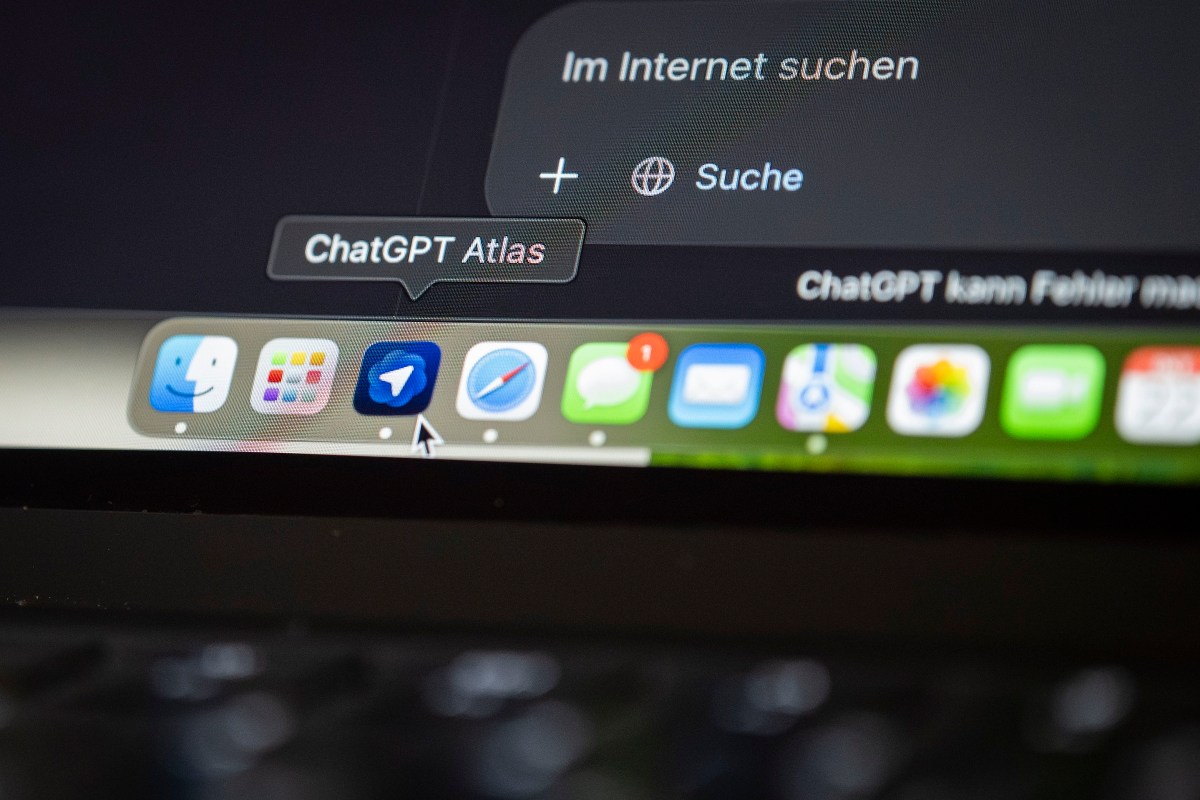
6 months agoExperts warn OpenAI's ChatGPT Atlas has security vulnerabilities that could turn it against users-revealing sensitive data, downloading malware, and worse | Fortune
The AI company launched Atlas on Tuesday, with the goal of introducing an AI browser that can eventually help users execute tasks across the internet as well as search for answers. Someone planning a trip, for example, could also use Atlas to search for ideas, plan an itinerary, and then ask it to book flights and accommodations directly. ChatGPT Atlas has several new features, such as "browser memories," which allow ChatGPT to remember key details from a user's web browsing to improve chat responses.
Information security
fromTheregister
7 months agoGoogle declares AI bug hunting season open
Google on Monday rolled out a new AI Vulnerability Reward Program to encourage researchers to find and report flaws in its AI systems, with rewards of up to $30,000 for a single qualifying report. In addition to a base reward of up to $20,000 for the highest-tier AI product flaw, Google adopted the same report multipliers, influenced by vulnerability reporting quality, as it uses for its traditional security Vulnerability Reward Program (VRP).
Artificial intelligence
[ Load more ]