Psychology
fromPsychology Today
6 days agoThe Psychology of Poetry: How Verse Can Foster Hope
Poetry can induce peak emotional experiences and support brain reward activity while humanizing shared struggles across cultures.
PyCharm 2026.1.1 introduced built-in support for uv workspaces, as well as those managed by Poetry and Hatch. This new functionality - currently in Beta - allows the IDE to automatically manage dependencies and environments across your entire workspace.
If you're looking desperately for something to read, wander over to the Catskill Mountain region of New York to the village of Hobart, which apparently has more bookstores per capita than any village in the country. And if you go in early June, when the Hobart Festival of Women Writers is in full swing, you can even have some books read aloud to you by the writers themselves. Founded fourteen years ago by poet Cheryl Clarke, historian and bookstore owner Barbara Balliet, and novelist Breena Clarke, the festival includes writing workshops, panels, and lunches by the Delaware River.
It is also, crucially, a night built less on sequence than on accumulation. Musicians move through poems, poets move through sound, and the boundaries between forms begin to dissolve in real time.
The poem opens as the world sleeps, and the moon slides in under the turnstile after dark, moves in a silent arc at an ancient pace, dabs its ointment on the gibbon's paw, nitpicks its way through the troop of gorillas, smooths the silverback's fur.
Classic France is a country of nuance with a love of conversation and freedom and an aversion to fanaticism. Contemporary Houellebecq describes France as a museum, where landscape turns into decor and where rural areas are emptying out.
James Broadnax, who is 37, describes how he writes: 'I've been here umpteen days never forgetting To forget the absence of my fate. Sloppy ciphered sentences become rage, Provoking thoughts into words spoken Across this blank page.'
A vision lay before him: Fleet Street blanketed with snow, silent, empty, pure white, and, at the end of it, the huge and majestic form of Saint Paul's Cathedral. It was a spellbinding moment: the great thoroughfare temporarily devoid of carts and carriages, the cathedral looming blurrily out of the still-falling snowflakes a real-life snow globe.
Poetry and artificial intelligence can appear as oppositesone deeply human; the other cold and mechanical. Sasha Stiles sees them as expressions of the same impulse. Poetry, the Kalmyk- American poet argues, is one of our most ancient and enduring technologies, a system of meter and rhyme invented to store vital information. She views AI as its natural heir. Stiles's path to AI began with literature, not code.
Best known as a memoirist, Morrison returns to poetry after 11 years with a masterclass of lyric distillation and charged observation, demonstrating that nothing is beneath poetic deliberation. His subjects range from social and political justice to meditations on poetic heroes such as Elizabeth Bishop and sonnet sequences elegising the writer's sister. The interwoven specificity and occasional nature of the poems is captivating:
Sophie Grace Chappell is Professor of Philosophy at the Open University, UK. She has been Executive Editor of The Philosophical Quarterly since 2021, and serves as a member of the APA's LGBTQ representation committee. Her books include Reading Plato's Theaetetus (Hackett 2004), Knowing What To Do (OUP 2014), Epiphanies (OUP 2022), Trans Figured (Polity Press 2024), and A Philosopher Looks At Friendship (CUP 2024).
San Francisco Poet Laureate emerita invites writers featured in Women in a Golden State to present at SFPL's Monthly poetry reading. was San Francisco's seventh Poet Laureate. Her poetry draws on her multiethnic background which includes Polish and Cherokee heritage, and her experiences as a lifelong resident of San Francisco. Her most recent book of poetry, Pick a Garnet to Sleep In, was published in 2024, and her book of essays, Noodle, Rant, Tangent, was published in 2022.
Because, let's face it, creative work does require some form of faith. It is a tumultuous thing to launch an idea into a vast nothingness and hope that it makes a light bright enough to be found by others. Luckily, these luminaries were my light, and I hope they may become yours as well, and - more so - that these snippets lead you to more of their work.
Nellie attended Oakland High School when her family moved to a neighborhood outside of Chinatown after World War II, the beginnings of integration for ethnic Chinese residents who'd lived under the Chinese Exclusion Act (1882-1943). Her early life, into her late 20s, was rooted in the patriarchal culture in Chinatown and the white American mainstream. That oppression did not sustain her. Nellie's intelligence, creativity, and compassion yearned to break free.
Join us outside on YBCA's Third Street Courtyard for a poetry and spoken word reading by Kevin Dublin, Magick Altman and Tongo Eisen-Martin. Enjoy the performances designed to bring together intergenerational and diverse voices from the Bay. Included with gallery admission. Disclaimer: Please double check event information with the event organizer as events can be canceled, details can change after they are added to our calendar, and errors do occur. Address: 701 Mission St, San Francisco, CA
It makes sense that in our culture of gain and scarcity that [finding a voice] should be a hunt or search or possession, but I don't think that's true," said Vuong, an award-winning poet, novelist, and the featured speaker at the recent annual Eliot Memorial Reading. "I don't think one finds a voice ... I think one develops it throughout one's life ... I'm still discovering mine.
i want back my rocking chairs, solipsist sunsets, & coastal jungle sounds that are tercets from cicadas and pentameter from the hairy legs of cockroaches. i've donated bibles to thrift stores (mashed them in plastic trash bags with an acidic himalayan salt lamp the post-baptism bibles, the ones plucked from street corners from the meaty hands of zealots, the dumbed-down, easy-to-read, parasitic kind): remember more the slick rubber smell of high gloss biology textbook pictures;
Join San Francisco Main Public Library with talented poets for a poetry jam. The Main Library's monthly Poem Jam poetry reading series, moderated by Kim Shuck, takes place on Thursdays at 6 pm in the Main Library. Thursday Night Poem Jam Every 2nd Thursday | 6 pm San Francisco Main Public Library, 100 Larkin St, San Francisco FREE - Updated 6/26/19 - Event info last checked via website
They are credited with bringing creative inspiration to millions every day - a simple idea that has been copied in cities across the world. In 1986 the first Poems on the Underground appeared in Tube carriages, and both commuters and visitors to London have been pondering their meaning ever since. Transport for London will be marking the 40th anniversary of this "art for all" project with new works, poetry readings and displays of poems at London Underground stations.
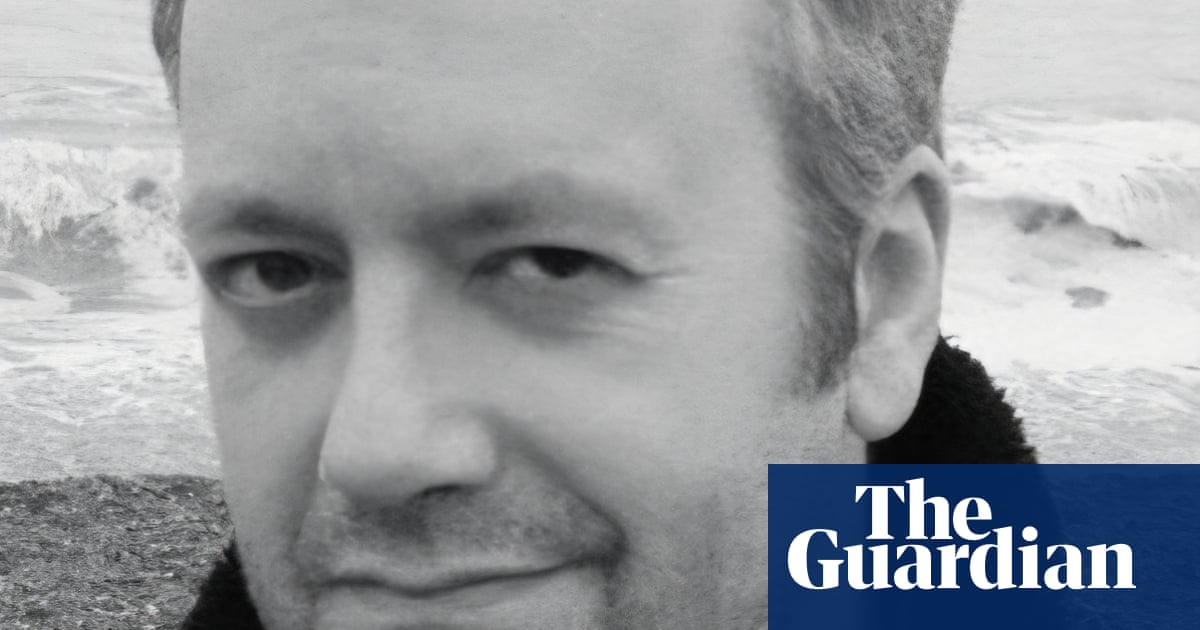
In Need of Seawater is not simply a documentary about poetry-it is an experience shaped by memory, voice, and lived history. Directed with sensitivity by Richard Yeagley, the film follows poet, writer, and producer Mark Anthony Thomas as he revisits the poems that defined his early adulthood, written between his early twenties and mid-twenties, and now read aloud more than twenty years later.
The books on your bedside table? I just counted and there are 17 books in the pile. On the top is John Milton's Paradise Lost. I am a member of an online shared reading group who each week read a couple of hundred lines together. It's a long-term commitment but immensely rewarding and far easier than reading it alone.
Poetry is traditionally taught - at least it was taught to me - as a kind of thing you have to endure in English class; there's no sense of it applying to your life. But poetry, good poetry, is the stuff of life. Poetry asks us to slow down and to think about what we're reading, but also to experience it.