Design
fromArchDaily
1 day agoCase Study Houses and the Myth of a Universal Domestic Ideal
Case Study Houses created efficient, affordable, quickly built postwar prototypes by integrating industrial mass production with everyday modern living.
The router, by virtue of how it works, HAS to be kept in an open environment so it can broadcast the Wi-fi signal everywhere efficiently. That being said, hardly any companies actually spend time thinking about how home-based Wi-fi should look. Companies like Google and Apple worked fairly hard to ensure their smart speakers fit well into interior spaces, but your router is still this alien-looking device with angular forms, black plastic, blinking lights, and antennas shooting out in every direction.
The Unix UX-1519 NEOM power bank is different as it takes industrial design into the mix of solid functionality, often customary to a battery bank. The 10,000mAh battery bank for your power-hungry gadgets delivers 22.5W fast charging for compatible devices, never letting you down when on-the-go.
The result, shaped by industrial designer Jerry Manock and powered by Wozniak's engineering genius, was the Apple II: a smooth, warm-beige enclosure that suggested domesticity rather than machinery. It belonged on a desk the way a telephone did. That calculated approachability helped sell millions of units across sixteen years of production.
There's something mesmerizing about watching objects move with intention. Not random chaos or frantic spinning, but deliberate, mechanical motion that feels almost choreographed. Kutarq Studio's Totem de Luz captures that magic perfectly. It's a kinetic lighting sculpture that sits somewhere between functional lamp and art installation, refusing to pick a lane and somehow being better for it. At first glance, Totem de Luz looks like a sleek vertical column made from stainless steel and glass.
At first glance, the GIA looks like it time-traveled from a 1960s Italian design studio, stopped briefly in 2026 to pick up some modern tech, and landed on your desk with a personality. The inspiration comes from Olivetti typewriters, those gorgeous mechanical machines that made office work feel like an art form. Remember when tools had character? When objects didn't just function but made you feel something? That's what Bedrina is tapping into here.
Since Apple finally put its mysterious and long-suffering Project Titan out to pasture, we've wondered what a Jony Ive-designed Apple Car might have looked like. Today, we might have a clue. This, though, is no Apple Car. It's the Ferrari Luce ("light" in Italian), the actual name for the EV formerly known as Elettrica, and I'm fresh from getting a walkthrough of the thing from Sir Ive himself. At a glance things look like you might have expected, but there are a few surprises here.
Mini PCs used to be defined by how invisible they could be, small black rectangles tucked behind monitors or under shelves. That made sense when they were just low-power desktops, but feels out of step now that these machines are running models, listening, watching, and routing data. If AI is going to sit on your desk, it might as well look like it belongs there instead of hiding like a piece of infrastructure.
Art Deco, which began to proliferate more broadly following the Paris International Exhibition of Modern Decorative and Industrial Arts, from which it derived its name, called upon ancient Egyptian motifs and futurism in a modality that emphasized geometric shapes, broad use of color and a streamlined (if maximalist) aesthetic. During the 1930s, a lesser-known but decidedly compelling offshoot of Art
Most storage furniture sits where you put it, fixed shelves and cabinets that do their job but rarely respond to how space changes during a day. Trolleys help with mobility, but they often feel generic, more utility than character. Harbor 051 is a storage trolley that borrows its logic from a place built entirely around movement and stacking, Busan Port, where containers shift and cranes swing in a constant choreography.
Most utility knives work perfectly fine. They cut boxes, strip packages, slice tape, then disappear into drawers or pockets until the next mundane task arrives. They're functional, reliable, forgettable. The problem isn't that they fail at their job. The problem is they offer nothing beyond the cut itself, no texture or personality, no reason to reach for them when they're not strictly necessary. They exist in a utilitarian void where efficiency trumps experience.
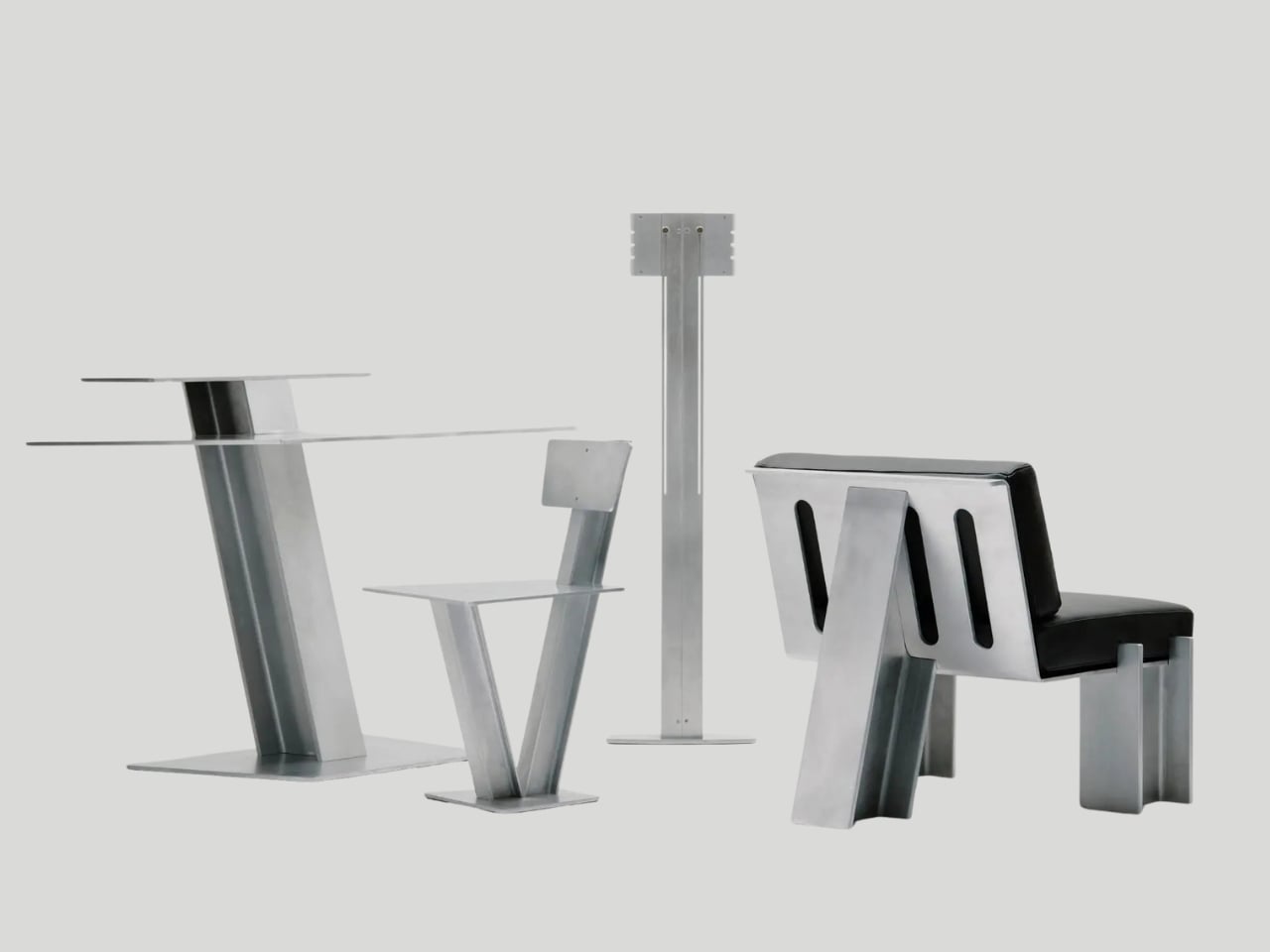
How did a material conceived for bridges, factories, and large-scale structures make its way to the living room bench, the apartment bookshelf, the café table? For centuries, metal was associated with labor, machinery, and monumentality-from the exposed structures of 19th-century World's Fairs to the productive logic of modern industry. Its presence in domestic interiors is not self-evident but rather a cultural achievement: the transformation of an industrial material into an element of everyday, intimate use, in close proximity to the body.
Yes, there are the New Year's traditions of setting ambitious goals and ditching bad habits, but one evergreen resolution that ought to top lists is to banish bad design. Why endure something that simply doesn't work (or is an affront to aesthetics) any longer than we have to? In the spirit of fresh starts, we polled experts in architecture, tech, industrial design, and urbanism on the everyday annoyances and the big-picture issues that they think are in desperate need of a refresh in 2026.
Transparent design has moved beyond gimmick territory into something genuinely compelling. When Nothing started showing off circuit boards through clear plastic, the tech world noticed. Now that aesthetic has matured into a legitimate design movement where form and function create something worth displaying. Audio equipment benefits particularly well from this treatment because the internals actually matter to the listening experience, turning technical components into visual storytelling.
A television spanning 130 inches diagonally creates immediate questions about physics, aesthetics, and whether something this massive can exist as anything other than spectacle. Samsung's answer at CES 2026 involves treating the R95H Micro RGB model as architecture rather than appliances, borrowing design language from gallery easels and luxury retail interiors to create what the company describes as an "extra-large window" that transforms room perception.
There's something oddly nostalgic about Caligra's c100 Developer Terminal, yet it feels completely modern at the same time. At first glance, it looks like someone took a pristine keyboard from the early computing era, polished it up, and reimagined it for 2026. But this isn't just a keyboard. It's an entire computer, cleverly disguised as the thing you type on.
This is the Orgdot N200 Bluetooth desktop speaker that bears a tell-tale industrial design influence and a pinch of steampunk vibe. Designed by Shu Zhang and his team, the wireless speaker is mindful of the design sense of modern users. The primary motive is to create a relaxing and immersive atmosphere for the user, while keeping the practical functionality intact.
The VS-01 Vertical Turntable by CoolGeek challenges the traditional layout of record players by rotating vinyl upright, transforming music playback into a visible, spatial event. Conceived as an all-in-one audio system, the design integrates vertical vinyl playback, built-in speakers, and Bluetooth 5.3 connectivity. By exposing the motion of the record, the turntable treats listening as both an auditory and visual act, allowing analog music to occupy space in a more deliberate way.
Design Mindset steps into episode 16 with a clear purpose: to understand how industrial designers are navigating a world where tools, platforms, and expectations keep shifting under their feet. Yanko Design's weekly podcast, Design Mindset, powered by KeyShot, is less about design celebrity and more about design thinking, unpacking how decisions get made, how stories are built around products, and how technology is reshaping the craft from the inside out.
Instead of treating great coffee as a weekend luxury, this little brewer integrates it into your everyday life. Plug it in beside your laptop, fill it with water and fresh grounds, and a few minutes later you have a dense, aromatic moka style coffee that feels closer to a ritual than a chore. This is also in part thanks to its avant-garde Alessi-esque Italian-design form factor. On the hardware front, you've got basic electronics
Look, most patio heaters are basically expensive lawn ornaments that happen to produce a tiny bubble of warmth if you stand directly underneath them while wearing a parka. The Timber Stoves Revere Patio Heater is not that. This American-made beast is more like a seven-foot tall sculpture that moonlights as a radiant heating powerhouse, and honestly, it's about time someone figured out how to make outdoor heating both beautiful and brutally effective.
Held from November 3 to 8, 2025, the Department of Industrial Design at Seoul-based Hongik University presented its annual Graduation Exhibition under the theme 'The Use of Uselessness: What If.' Moving beyond conventional purpose-centered design, the exhibition serves as an open dialogue between function, emotion, and culture, challenging students to find creative value in concepts that exist beyond conventional utility.
The main unit rises vertically under a tall transparent dome, and the first impression lands somewhere between illuminated glassware and a miniature architectural model. A sculpted cone sits inside the chamber, channeling warm LED light upward through fine vertical ribs that stretch the glow into elongated streaks. The gradient begins deep amber at the base, fades toward soft cream near the midpoint, and dissolves into near-invisibility at the dome's crown.