#domestic-military-use
#domestic-military-use
[ follow ]
#national-security #pentagon #military-technology #drones #anthropic #iran #drone-warfare #cybersecurity


History
fromFortune
9 hours agoPalantir wants to bring back the draft just as the Selective Service preps for automatic registration | Fortune
Thomas Jefferson warned against military conscription, while Palantir Technologies now advocates for universal national service despite historical opposition to drafts.
fromLondon Business News | Londonlovesbusiness.com
16 hours agoMoD has lost track of 95,000-strong war reserve as defence readiness fears mount - London Business News | Londonlovesbusiness.com
Lord Robertson stated, 'We need to sort of round up those who are available, fit, and willing to be able to do it.' This emphasizes the urgency of engaging former service personnel in the strategic reserve.
UK politics

fromFuturism
3 days agoPentagon Disturbed as Its Fleet of Drones Is Left Bobbing in the Ocean When Elon Musk's Starlink Fails
The outage left millions of Starlink customers in the dark back in August of 2025, dealing a blow to the company's image as an always-on satellite internet provider.
Tech industry
fromwww.mediaite.com
1 week agoWeird Obsession With Death': Current and Former Defense Officials Sound the Alarm on Hegseth
Retired Army Special Forces officer Mike Nelson criticized Hegseth's rhetoric, stating, 'That's a necessary end to achieve goals through military force - you have to kill people to achieve them. That's not the end. It's a weird obsession with death for the sake of it.'
Right-wing politics
UK politics
fromLondon Business News | Londonlovesbusiness.com
4 days agoEx-Army chief calls for military service for unemployed young Brits amid manpower fears - London Business News | Londonlovesbusiness.com
Young people in the UK not in work or education should have the option of military service to address manpower pressures.
fromTNW | Artificial-Intelligence
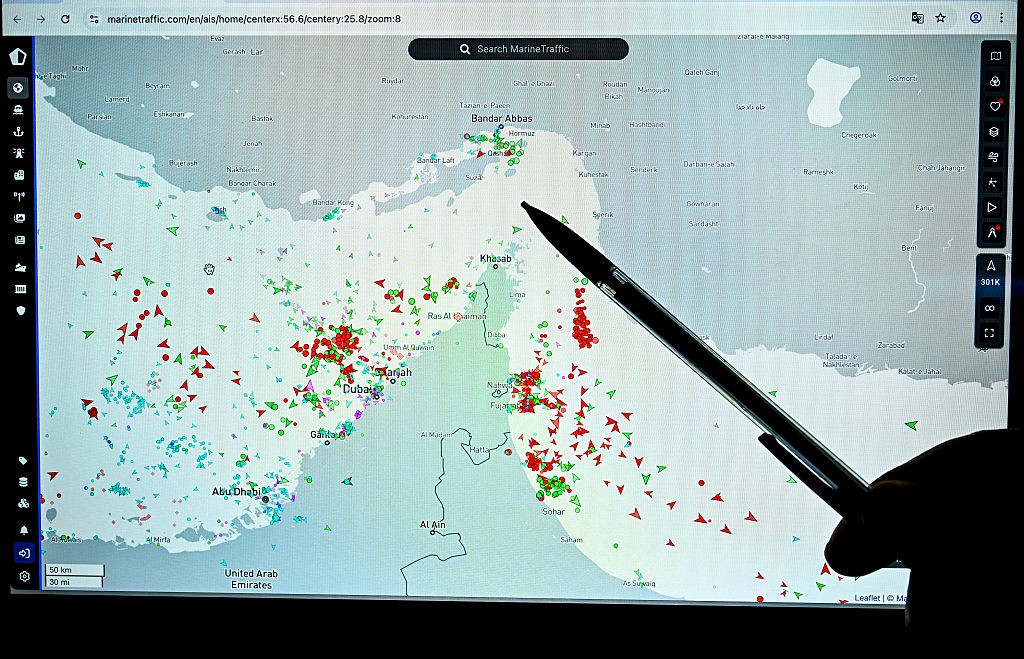
2 days agoAnthropic's Amodei meets Wiles and Bessent at the White House over Mythos access and Pentagon standoff
The White House described the conversation as 'introductory, productive, and constructive,' saying the three discussed 'opportunities for collaboration, as well as shared approaches and protocols to address the challenges associated with scaling this technology.'
Artificial intelligence


Artificial intelligence
fromFortune
5 days agoA retired general's warning: America can't fight the AI arms race on tech it doesn't control | Fortune
The U.S. faces a critical AI arms race affecting military power and national security, highlighted by the Anthropic-Pentagon standoff over AI usage control.
fromThe Washington Post
3 weeks agoU.S. uses hundreds of Tomahawk missiles on Iran, alarming some at Pentagon
The U.S. military has fired more than 850 Tomahawk cruise missiles in four weeks of war with Iran, burning through the precision weapons at a rate that has alarmed some Pentagon officials.
World news
#defense-spending
Business
from24/7 Wall St.
1 month ago3 Defense Stocks Built for the New Era of National Security Spending
Defense spending is shifting structurally, with investors identifying companies positioned to capture the next decade of growth through diversified funds, nuclear propulsion specialists, and emerging defense technology providers.
History
from24/7 Wall St.
1 month ago25 Weapons That Changed Warfare Over the Last Century
Technological breakthroughs over the last century transformed warfare by introducing tanks, missiles, stealth aircraft, and precision-guided weapons that forced armies to continuously adapt tactics and reshape military doctrine globally.
fromThe Cipher Brief
1 month agoThe Future of War Is Now: What Washington Needs to Hear from the Battlefield
I have been working in Ukraine since 2019, first as an active Green Beret advising in an official capacity, then after leaving that service, directing special operations on the ground and more recently carrying hard-won lessons back to NATO before they are forgotten or overtaken by the next news cycle.
Washington DC
Intellectual property law
fromwww.theguardian.com
1 month agoWhat does the US military's feud with Anthropic mean for AI used in war?
Anthropic's refusal to allow Claude AI for domestic mass surveillance and autonomous weapons has triggered a Pentagon supply chain risk designation, highlighting tensions between tech company safety values and military demands.
Information security
fromThe Cipher Brief
1 month agoThe Drone War's Real Problem Isn't Technology - It's Speed
Defense acquisition reforms implement recommended changes but fail to address the fundamental cycle-time gap between rapidly evolving adversary capabilities and the military's ability to deploy countermeasures.


US politics
fromFortune
1 month agoPentagon officially defines Anthropic as 'supply chain risk' | Fortune
The Trump administration designated Anthropic as a supply chain risk, forcing government contractors to stop using Claude AI due to national security concerns over surveillance and autonomous weapons capabilities.
Venture
fromThe Cipher Brief
1 month agoWhat the Latest Policy and Tech Shifts Mean for National Security
Counter-Unmanned Aerial Systems require integrated, multi-layered defense architectures combining non-kinetic and kinetic responses rather than isolated legacy technologies, as modern autonomous drones render traditional electronic warfare ineffective.
fromenglish.elpais.com
1 month agoDoes the United States have enough munition for a prolonged war?
We've got no shortage of munitions. Our stockpiles of defensive and offensive weapons allow us to sustain this campaign as long as we need. Iran is hoping that we cannot sustain this, which is a really bad miscalculation.
US politics
US news
fromwww.mediaite.com
1 month agoU.S. Military Reportedly Shoots Down DHS Drone in Texas: Our Heads Are Exploding'
The U.S. military shot down a Customs and Border Protection drone using a laser-based anti-drone system near Fort Hancock, Texas, prompting airspace closure and raising concerns about coordination between federal agencies.
fromWIRED
2 months agoICE Pretends It's a Military Force. Its Tactics Would Get Real Soldiers Killed
As a veteran of the war on terror, I have spent the past year watching Immigration and Customs Enforcement officers expand their operations across the country on a heretofore unprecedented scale and with a new faux-military bearing. From equipment to weapons to tactics, ICE and other immigration enforcement bodies want to be seen as combat forces carrying out their missions.
US politics
fromBusiness Insider
1 month agoThere's a new US Army office 'getting in the dirt' with soldiers and trying to quickly turn their ideas into real battlefield tech
Number one is speed takes priority over perfection. We can iterate to get to operational capability. And the second is that early soldier feedback is critical in order to make sure we're getting the right technology for the future fight, and then we want to be able to prove the demand signal before we spend big dollars on programs.
US news
fromArs Technica
1 month agoWhoops: US military laser strike takes down CBP drone near Mexican border
The Defense Department didn't realize the drone was being flown by CBP when it shot it down, and had not first coordinated the use of the laser system with the US Federal Aviation Administration. The military hasn't been coordinating counter-drone measures with the FAA, and CBP drone operators didn't inform the military's laser unit that it was launching.
US news
US politics
fromNextgov.com
1 month agoIt would take the Pentagon months to replace Anthropic's AI tools: sources
The Pentagon threatens to blacklist Anthropic's Claude AI if the company refuses to remove restrictions on mass surveillance and autonomous weapons use, potentially delaying military access to advanced AI tools for months.
fromNextgov.com
2 months agoDOD's AI acceleration strategy
According to the Secretary of Defense Pete Hegseth's memorandum on the Strategy, this AI-first status is to be achieved through four broad aims: Incentivizing internal DOD experimentation with AI models. Identifying and eliminating bureaucratic obstacles in the way of model integration. Focusing the U.S.'s military investment to shore up the U.S.'s "asymmetric advantages" in areas including AI computing, model innovation, entrepreneurial dynamism, capital markets, and operational data.
Artificial intelligence
Artificial intelligence
fromThe Hacker News
1 month agoPentagon Designates Anthropic Supply Chain Risk Over AI Military Dispute
The Pentagon designated Anthropic a supply chain risk after the AI company refused to allow mass domestic surveillance and autonomous weapons development using its technology.
fromBusiness Insider
2 months agoUS Army hopes AI can slash troops' paperwork burden
The US Army's biggest AI gamble may not be on autonomous weapons, but instead whether Silicon Valley software can tackle the service's most tedious and, more often than not, grueling administrative jobs. Think less uncrewed aircraft and more behind-the-scenes tasks like recruiting, equipment maintenance, and endless gear inventories. Through a mix of new tools, redesigned workflows, and data integration, logisticians
Artificial intelligence
[ Load more ]