#curatorial-practice
#curatorial-practice
[ follow ]
#contemporary-art #venice-biennale #art-exhibition #museum-exhibitions #art-exhibitions #community-engagement
fromCornell Chronicle
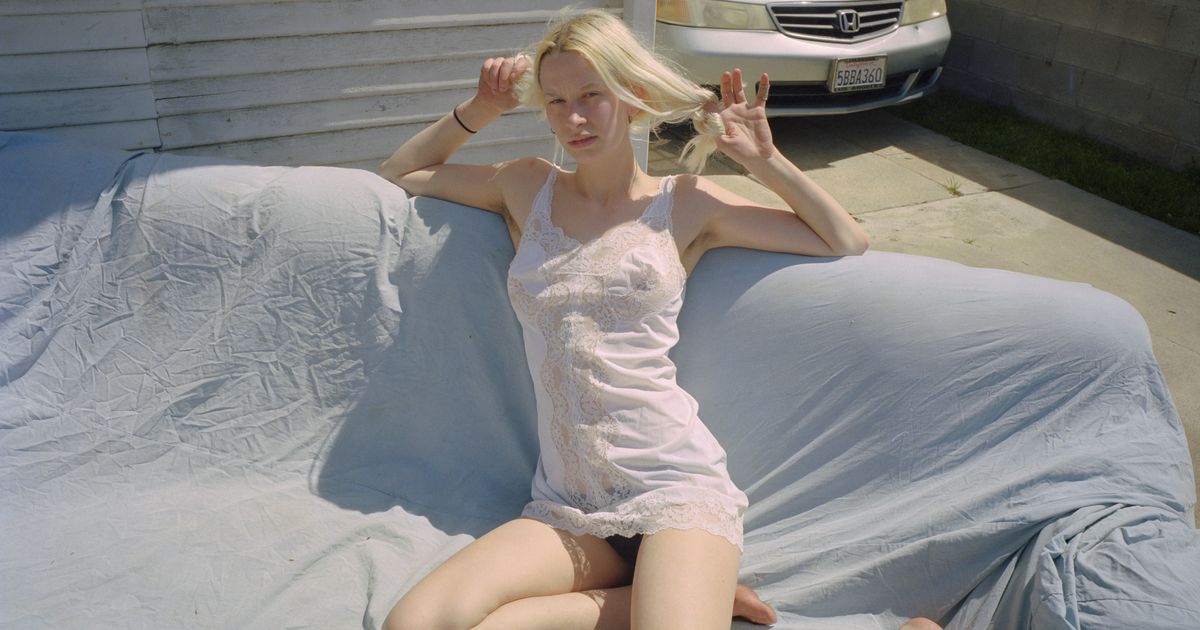
2 days agoStudent-created galleries explore Indonesian collection | Cornell Chronicle
A new installation at the Herbert F. Johnson Museum of Art contains pieces selected by students in a curatorial practicum seminar offered through the Department of History of Art and Visual Studies in the College of Arts & Sciences.
Arts
fromThe Art Newspaper - International art news and events
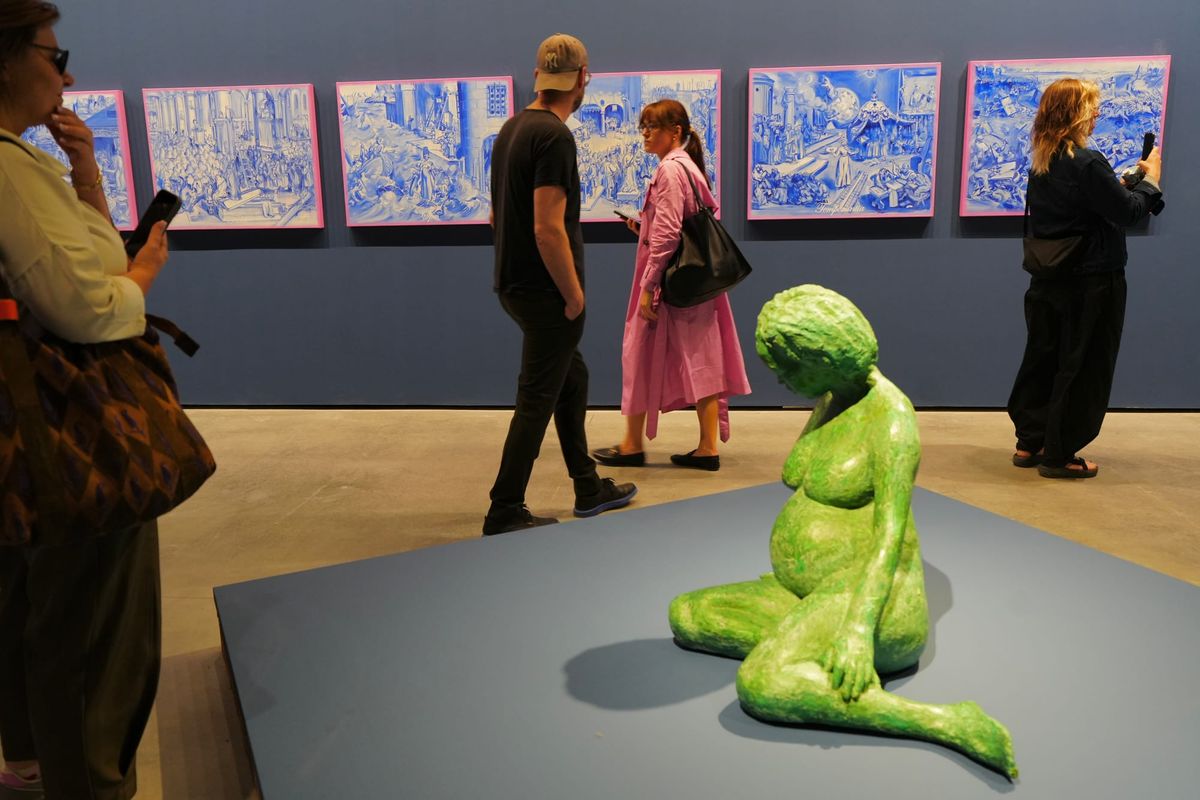
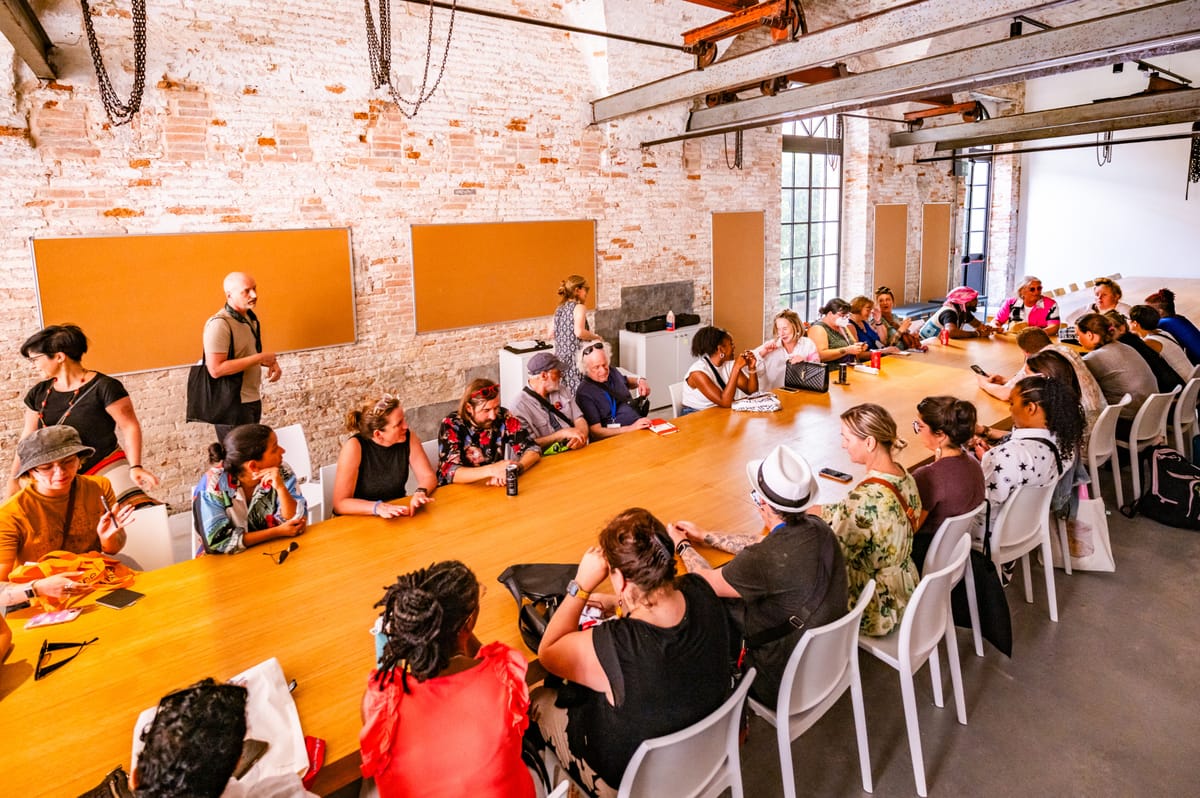
4 weeks agoSea change: inside LACMA's new curatorial strategy
"What was apparent was the values and gains that came from breaking down silos," says Britt Salvesen, the head of the museum's departments of photography and prints and drawings.
Arts


fromThe Art Newspaper - International art news and events
2 months agoNew public art biennial to take over Dallas's urban greenbelt park
I wanted to translate that idea into public space, to imagine the trail as a site of encounter between visitors and works by artists whose visual language already centres otherworldly beings, creatures or ecologies. In that meeting, the strange or unfamiliar hopefully becomes a source of curiosity and interconnectedness.
Arts
Design
fromdesignboom | architecture & design magazine
2 months agogalerie philia presents 'human after all' within a converted bathhouse in seoul
Galerie Philia presents Human After All in Seoul, featuring contemporary Korean designers within a historic 1980s bathhouse with distinctive architectural character that shapes the exhibition experience.
fromHyperallergic
2 months agoPetrit Halilaj's Opera of Kosovan Memory and Myth
At the Hamburger Bahnhof, the props, costumes, and set pieces of the musical are staged in vignettes throughout a large hall: a life-sized horse sculpture in a pink clearing surrounded by dirt, a curtained cart set up as a stage with a figure on its steps, two life-sized human figures in animal masks perched in a high window, as if observing the events.
Arts
Photography
fromThe New Yorker
2 months agoStephen Shore, Ryan McGinley's Xeroxes in "Hard Copy New York"
Photocopied photographs at the International Center of Photography exhibition demonstrate immediacy and contemporary relevance through a deliberately low-tech aesthetic, featuring work by prominent photographers including Stephen Shore, John Divola, and Daniel Arnold.
fromArtforum
3 months agoFatima Hellberg
Small, nimble cameras occupy perspectives inaccessible to human perception, creating images that are more visceral and embodied than the purely retinal. In the absence of verbal narration, we witness an interconnected logic of violence: The camerawork lets us see the brutal working conditions, but also the brutality toward other sentient beings and the sea, all unfolding as part of the same process.
Film
Arts
fromThe Art Newspaper - International art news and events
3 months agoNew experimental art organisation opens in New York
Summer Guthery and Francesca Sonara launch Times, a small, nimble three-year Manhattan art space prioritizing artists' needs, flexibility, and rejection of perpetual-growth institutional models.
Arts
fromThe Art Newspaper - International art news and events
4 months agoGuatemala's Bienal de Arte Paiz nurtures connections across geography and history
The World Tree-themed Bienal de Arte Paiz uses interconnected arboreal metaphors and commissioned contemporary works to question, connect, and transform Guatemalan cultural and political realities.
fromARTnews.com
5 months agoMichael H. Smith, Dealer and Curator Who Prized Experimentation, Dies at 80
Michael Smith's contributions to the history of Southern California art are critically important. He is a key piece in the larger puzzle that is composed of people who cared about ideas and artistic explorations in this community. He is the kind a curator for whom I have admiration and respect, one who took chances instinctively, without reservation, believing in his own opinions and observations, and motivated to share them.
Arts
fromwww.theguardian.com
6 months agoTurner seascapes and Damien Hurst sharks: Liverpool anniversary exhibition hopes to surprise
Visitors to a major JMW Turner exhibition may well be surprised to see the opening work is by Jeff Koons, and Damien Hirst sharks, a Bridget Riley stripe painting and some Doc Marten boots supplied by the curator herself are also on display. Surprised? That's what we're hoping, said Melissa Gustin, the curator of British art at National Museums Liverpool. But by the end it will all make perfect sense, she hopes. That is the vibe we are after.
UK news
fromThe Art Newspaper - International art news and events
6 months agoSan Francisco's Museum of the African Diaspora marks 20 years with a show about Blackness and the cosmos
"You'll also find a primer for the exhibitions," Monetta White, the director and chief executive of MoAD, tells The Art Newspaper. "You'll find a framework, some vocabulary, some definitions of the themes." Meanwhile, she points out, much of the rest of the $500,000 renovation has gone into critical infrastructure improvements visitors will hardly notice, such as lighting upgrades and a new heating, ventilation and air-conditioning system.
Arts
fromAnOther
6 months agoInside Clarissa, the Hottest Art Show of Frieze Week
Once a London district made up of neon-lit sex shops and late-night clubs, King's Cross has been polished by regeneration, yet here, the curators draw on the history of the space to choreograph a dialogue between art, architecture, and the city, attempting to explore how contemporary artistic practices might inhabit, and even provoke, the residues of urban change and regeneration.
Arts
fromArchDaily
7 months agoBehind the Scenes, On Display: Self-Curated Journeys through the Museum Archive
The museum and gallery visit has long been a highly curated experience. Visitors are guided through a carefully orchestrated sequence of rooms, with hand-picked works arranged to tell a specific narrative, supported by signage, graphics, scenography, and calibrated lighting. Even the rarely changed exhibitions - the permanent collections, also typically rely on a strong curatorial voice - led by noted artists or curators-to set institutional stance and shape interpretation.
Arts
fromArchDaily
7 months agoFormer MoMA Curator Barry Bergdoll Receives the 2025 Vincent Scully Prize
Barry Bergdoll is the Meyer Schapiro Professor of Art History at Columbia University, where he has taught for more than three decades. He is internationally recognized for his scholarship on the history of modern architecture and for his innovative curatorial projects. From 2007 to 2014, he served as Chief Curator of Architecture and Design at MoMA, organizing influential exhibitions such as Rising Currents: Projects for New York's Waterfront (2009-10), Foreclosed: Rehousing the American Dream (2012), and Latin America in Construction: Architecture 1955-1980 (2015).
Design
fromArchDaily
7 months agoThe Korean Pavilion at the 2025 Venice Biennale Marks 30 Years with "Little Toad, Little Toad: Unbuilding Pavilion"
The Korean Pavilion at the 19th International Architecture Exhibition - La Biennale di Venezia marks its 30th anniversary with "Little Toad, Little Toad: Unbuilding Pavilion," an exhibition commissioned by Arts Council Korea (ARKO) and curated by Curating Architecture Collective (CAC), composed of Chung Dahyoung, Kim Heejung, and Jung Sungkyu. Bringing together architects and artists Kim Hyunjong, Heechan Park, Young Yena, and Lee Dammy, the exhibition critically revisits the pavilion as both a physical structure and a symbolic space, tracing its trajectory since its completion in 1995.
Arts
Arts
fromThe Art Newspaper - International art news and events
8 months agoTimely rediscoveries await at Independent 20th Century
Independent 20th Century fair spotlights overlooked 20th-century artists and re-examines lesser-known works by major figures through international exhibitors and thematic solo presentations.
Arts
fromThe Art Newspaper - International art news and events
8 months ago36th Bienal de Sao Paulo seeks to 'exhibit silence'
The 36th Bienal de São Paulo centers silence, ancestral narratives and non-linear journeys, using Conceição Evaristo's poem to foreground marginalized African diasporic voices.


Artificial intelligence
fromArchDaily
1 year ago"Architecture is Survival": In Conversation with Curator Carlo Ratti at the 2025 Venice Architecture Biennale
The 2025 Venice Architecture Biennale emphasizes interactive engagement through architecture, bridging natural, artificial, and collective intelligences.
[ Load more ]