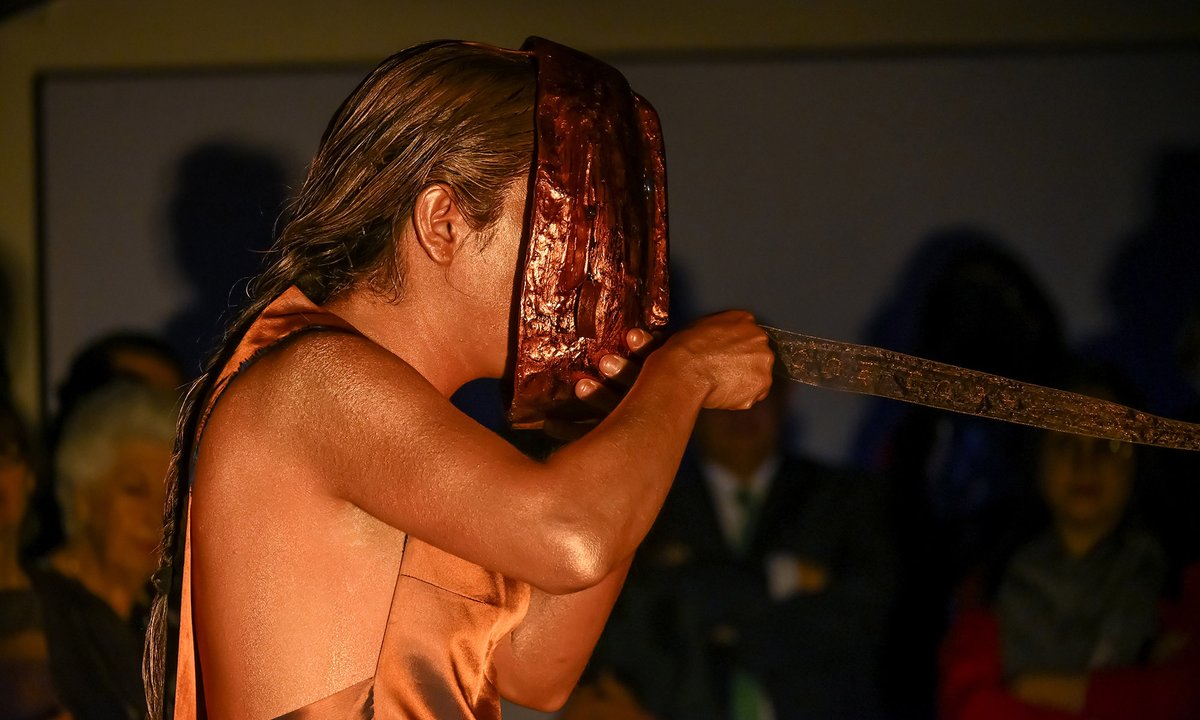
"The Italian curator and artistic director of Museo de Arte Moderno de Bogotá, Eugenio Viola, has orchestrated the largest edition of the Guatemalan biennial under the title and concept The World Tree, a cosmogonic symbol for ancient civilisations-including the Maya, for whom the Ceiba tree represents "the universe's structure and the interrelation between the levels of existence"-and also a synaptic map drawn from neuroscience often depicted as a tree."
"Fundación Paiz's president, María Regina Paiz, says the focus "remains on amplifying the biennial's resonance among Guatemalans". Viola's concept for this edition of "an interconnected arboreal metaphor" takes various forms, many created by artists he has collaborated with previously. Some, especially the 31 pieces commissioned specifically for The World Tree, explore the biennial's theme through lenses that range from the poetic to the political."
""The challenge was to curatorially unite 11 venues, moving from the macro-the World Tree-to the micro-the little trees of the synapse," Viola says. "The venues and artworks operate as sites of emergence, uncertainty and symptoms of our present, creating a counter-cartography of resistance and resilience." Fragmented tree branches, reflecting how ancient cultures saw trees as the axis mundi and the present-day lack of connection with nature, inform the Peruvian artist Ximena Garrido Lecca's work at in Antigua."
The 24th Bienal de Arte Paiz, titled The World Tree, stages an expanded, multi-venue presentation that links cosmogonic and neuroscientific tree metaphors. Eugenio Viola curated the largest edition, commissioning 31 new works that probe ecological, political and poetic dimensions. The Ceiba's axis mundi symbolism and the synaptic tree concept frame installations that examine disconnection from nature, emergence, resilience and counter-cartographies of resistance. Fundación Paiz emphasizes broadening national resonance while increasing domestic and international reach. Artists reinterpret ancestral cosmologies, social symptoms and memory across eleven venues to create immersive encounters between contemporary practice and Guatemalan cultural frameworks.
Read at The Art Newspaper - International art news and events
Unable to calculate read time
Collection
[
|
...
]