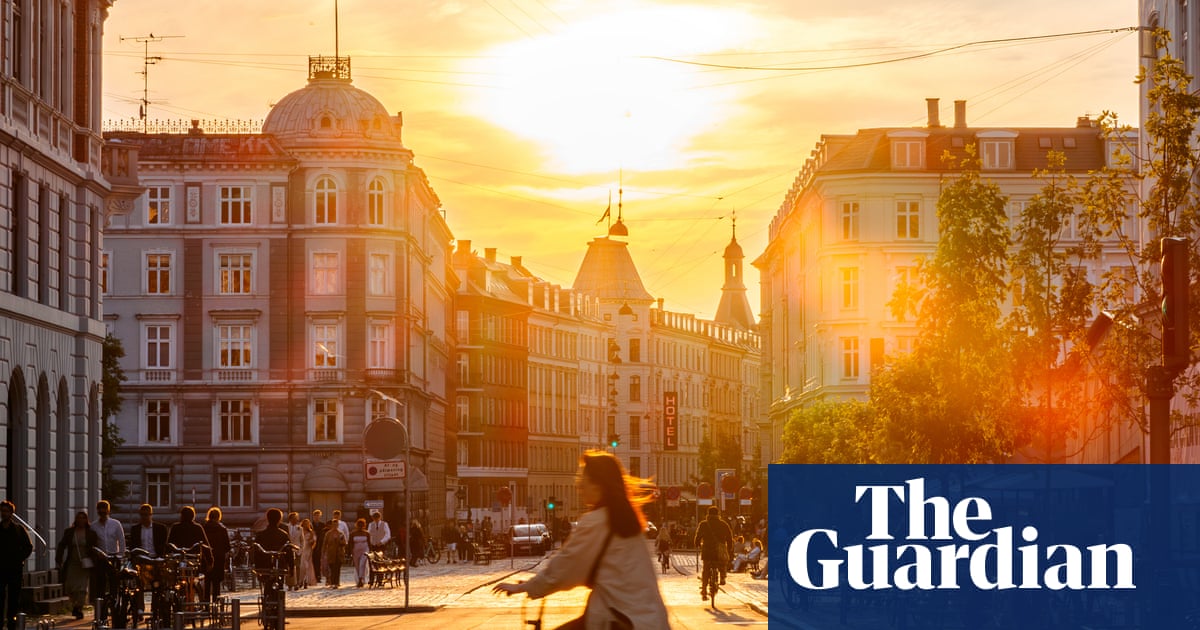
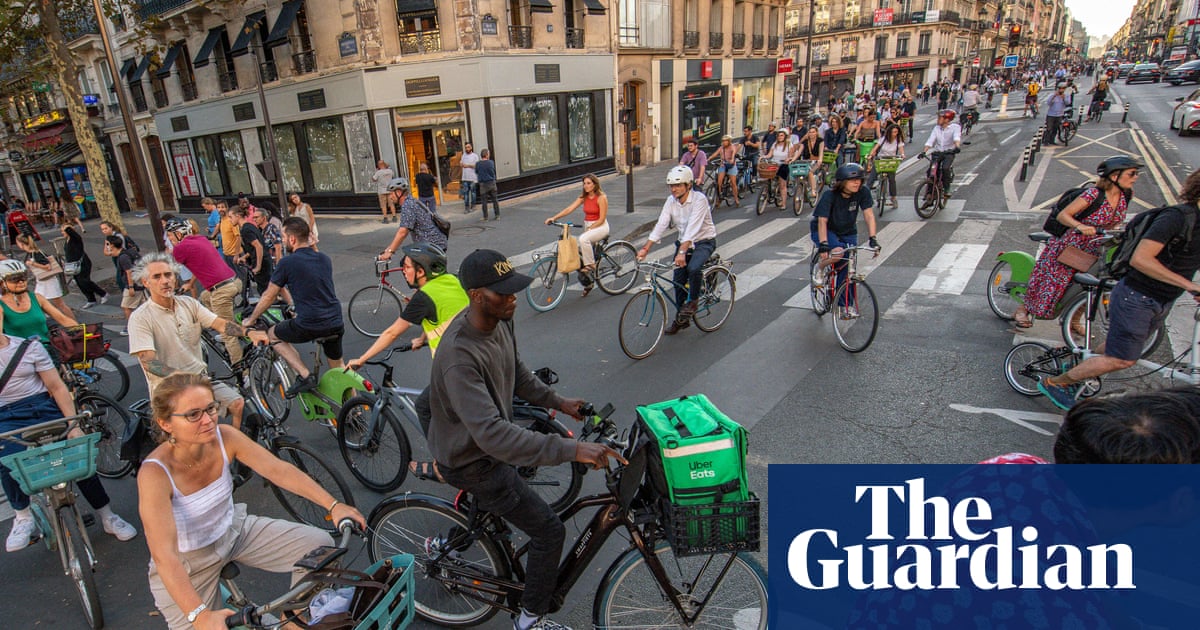
Ever since Team GB's velodrome successes at the 2008 Olympics, campaigners and government ministers have confidently predicted that Britain is about to become a nation of cyclists. There is just one problem: for the most part, it has not happened. Apart from a very concentrated spike in bike use during Covid, the level of cycle trips in England has stayed broadly static for years, and things do not appear to be changing.
On a hot Saturday spring morning, Karabo Mashele urged a group of female cyclists up the hills of a plush Johannesburg suburb. Come on my ladybugs, the 32-year-old shouted over the sounds of 4X4 cars overtaking the riders. You can do hard things! Twice a month, Mashele, who only learned to cycle aged 29, leads Girls on Bikes casual rides for up to 25 women in their 20s and 30s, through Johannesburg or Pretoria.
Half a million visitors pound its pavement every day - but it has seen better times. It has poor air quality and a high number of collisions. Buses and taxis run right through the middle of the shopping area. Research indicates it performs worse, in terms of customer spending, than other areas nearby. Businesses there and the mayor of London think the solution is pedestrianisation - and a recent consultation suggested nearly two-thirds of respondents supported the idea.
In the 1970s and 80s, when it was possible to envisage curbing car use in favour of integrated public transport in Britain's towns and cities, my father, Rob Lane, who has died aged 84, was a leading exponent of prioritising public services and pedestrian safety over the car. As a lecturer in transportation studies at the Polytechnic of Central London in the 1960s he wrote
The City of London council announced that black cabs will be permitted to drive through Bank junction again as part of an 18-month trial, citing the need for increased access for those unable to use public transport.