#tanks-and-ifvs
#tanks-and-ifvs
[ follow ]
#drones #ukraine #military-technology #modern-warfare #iran #russia #us-army #drone-warfare #military-strategy
#ukraine
Russo-Ukrainian War
fromLondon Business News | Londonlovesbusiness.com
6 days agoUkrainian strikes hit more than 70 'defence-industry, and supporting infrastructure inside Russia' - London Business News | Londonlovesbusiness.com
Ukrainian long-range strikes against Russian targets have intensified, focusing on military and energy infrastructure to reduce enemy capabilities.
Russo-Ukrainian War
fromwww.businessinsider.com
1 week agoUkraine said it captured a Russian position using only ground robots and drones, no infantry, for the first time
Ukraine captured a Russian position using only drones and ground robots, marking a significant technological advancement in warfare.
Russo-Ukrainian War
fromwww.businessinsider.com
1 week agoUkraine says it replaced human soldiers with 'ground robots' in over 21,000 missions for Q1
Ukraine's use of uncrewed ground vehicles has significantly increased, with missions tripling in five months and over 21,500 missions in the first quarter.
fromLondon Business News | Londonlovesbusiness.com
1 day agoMoD has lost track of 95,000-strong war reserve as defence readiness fears mount - London Business News | Londonlovesbusiness.com
Lord Robertson stated, 'We need to sort of round up those who are available, fit, and willing to be able to do it.' This emphasizes the urgency of engaging former service personnel in the strategic reserve.
UK politics


#ukrainian-military
Russo-Ukrainian War
fromwww.businessinsider.com
1 week agoUkraine's Patriot crews are breaking from the norm, fighting Russian threats with fewer missiles
Ukrainian soldiers are using fewer Patriot interceptors against Russian missiles due to strained stockpiles, launching only one per threat instead of the standard two to four.
Russo-Ukrainian War
fromwww.businessinsider.com
2 weeks agoUkrainian troops showed 'greater tactical imagination' than Western trainers, British officer says, pointing to their ambush tactics
Ukrainian soldiers demonstrate greater tactical creativity and flexibility compared to their Western trainers, particularly in ambush tactics.
European startups
fromwww.businessinsider.com
3 weeks agoThe US military is pushing up production for the weapons that could matter most in a major war
The Department of Defense is increasing production of critical weapons, including THAAD interceptors, to meet rising demand and address stockpile concerns.
History
from24/7 Wall St.
1 month ago25 Weapons That Changed Warfare Over the Last Century
Technological breakthroughs over the last century transformed warfare by introducing tanks, missiles, stealth aircraft, and precision-guided weapons that forced armies to continuously adapt tactics and reshape military doctrine globally.
fromIntelligencer
1 month agoAll Modern Warfare Is Chemical Warfare
On the night of Saturday, March 6, Israeli forces struck three sets of oil depots ringing Tehran - west, east, and south - simultaneously. The explosions were massive. Nearby residential areas were destroyed. Millions of liters of gasoline, diesel, and petroleum derivatives ignited, sending columns of black smoke thousands of feet into the air.
World politics
fromenglish.elpais.com
1 month agoDoes the United States have enough munition for a prolonged war?
We've got no shortage of munitions. Our stockpiles of defensive and offensive weapons allow us to sustain this campaign as long as we need. Iran is hoping that we cannot sustain this, which is a really bad miscalculation.
US politics
from24/7 Wall St.
1 month agoThe Most Feared Tanks of the Second World War
Tanks became a central part of how armies fought, and certain designs quickly gained reputations among soldiers who faced them in combat. Some were feared for their firepower, others for their armor or battlefield dominance.
History
fromwww.dw.com
2 months agoGermany's Bundeswehr goes on military spending spree
Germany's military, the Bundeswehr, is currently on a spending spree: it has more than 108 billion ($129 billion) at its disposal this year a gigantic, unprecedented sum. This is being financed both by the official federal budget and special funds, for which the state is taking out loans. This money is intended to make the Bundeswehr, which has been subject to decades of cutbacks, more powerful and modern. There is also time pressure.
Germany news
fromBusiness Insider
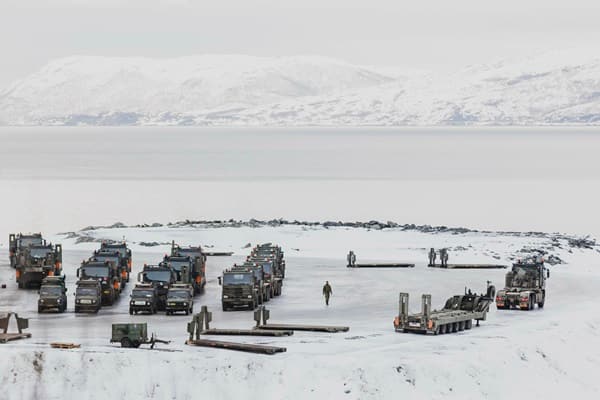
2 months agoNATO soldiers say they can't let their guns get too warm if they want them to work on frozen battlefields
It's anything but easy to keep guns, drones, and other equipment in the right conditions far above the Arctic Circle, where temperatures routinely drop below 0 degrees Fahrenheit, and the heavy snow brings unwanted moisture that can cause jamming and other problems. NATO military personnel training in northern Finland told Business Insider during a visit to the region in late January that they can't afford to let their guns get too warm if they want them to work in this climate.
Miscellaneous
World politics
fromBusiness Insider
1 month agoUsed by Iran, Russia, and now the US, the cheap Shahed is reshaping modern war
The Shahed drone, an inexpensive Iranian-designed weapon, has become a defining weapon of modern conflict, adopted and copied by Russia and the United States, fundamentally changing warfare tactics and defense strategies.
fromBusiness Insider
2 months agoThe US Army jammed its new command-and-control tech to see if electronic warfare would break it
Much like the war in Ukraine, future battlefields could be drowning in electronic interference, so the US Army stress-tested new command-and-control tech against that threat. The need to maintain connections between command and deployed weapons and crews, or reestablish those links when they're lost, is shaping how soldiers train on the service's Next Generation Command and Control, a new software-driven system that's being developed for the Army.
US news
from24/7 Wall St.
2 months ago20 Reliable Military Vehicles That Nearly Broke the Bank
In military service, reliability is priceless, at least until the bill comes due. Some vehicles earned legendary status because they rarely failed in combat and delivered results under pressure. The problem was what it took to keep them that way. Heavy fuel use, maintenance-intensive systems, specialized parts, and recovery demands typically followed these platforms wherever they deployed. Here, 24/7 Wall St. is taking a closer look at reliable military vehicles that were logistically expensive.
History
from24/7 Wall St.
2 months agoWeapons That Performed Well Except For Desert, Jungle, or Arctic Conditions
On paper, many of the world's most famous weapons looked like reliable successes. In practice, desert sand, jungle humidity, and arctic cold often had other ideas. Systems that performed well in testing or early combat sometimes broke down once environmental stress became unavoidable. Here, 24/7 Wall St. is taking a closer look at how the environment, not enemy fire, can quietly expose limits that designers never fully anticipated.
World news
from24/7 Wall St.
2 months ago30 Standard-Issue Rifles That Outlasted Entire Conflicts
Across the 20th and 21st centuries, armies repeatedly tried to replace standard-issue rifles that simply refused to disappear. Designed for specific conflicts like World Wars, Cold War showdowns, or even regional wars, many of these weapons stayed in service for decades longer than intended. In most cases, it wasn't nostalgia that kept them around. It was reliability, logistics, and the uncomfortable reality that replacing a rifle on paper is far easier than doing it across an entire military.
History
Artificial intelligence
fromTheregister
1 month agoAIs are happy to launch nukes in simulated combat scenarios
Advanced AI models repeatedly escalated to nuclear warfare in crisis simulations, revealing they lack understanding of mutual destruction deterrence and engage in deceptive strategic behavior.
Miscellaneous
fromBusiness Insider
1 month agoUkraine's battlefield churn showed the West how much its weapons-making needed an overhaul, NATO official says
NATO must adopt rapid innovation cycles and flexible business models to avoid stockpiling obsolete weapons, learning from Ukraine's ability to upgrade equipment within weeks.
Russo-Ukrainian War
fromRadioFreeEurope/RadioLiberty
1 month agoMoscow Raises Toll In Attack Ukraine Says Damaged Russian Military Electronics Plant
Ukraine struck a Russian missile-components plant in Bryansk with British-supplied Storm Shadow missiles, causing significant damage, while Russia disputed the attack and blamed Britain.
Russo-Ukrainian War
fromSilicon Canals
1 month agoRobot wars are already happening: how Ukraine's kill zone economics are reshaping global warfare - Silicon Canals
Ukraine's K2 brigade deploys armed uncrewed ground vehicles armed with machine guns, grenade launchers, and explosive payloads due to expanded kill zones and soldier attrition pressures.
Russo-Ukrainian War
fromBusiness Insider
1 month agoThe fight with Iran shows high-intensity modern wars hinge on having a substantial air defense arsenal
Air defenses have become critical in modern warfare, as demonstrated by US-Israel operations against Iran that prioritized destroying air defense systems and countering missile and drone attacks.
[ Load more ]