#student-privacy
#student-privacy
[ follow ]
US politics
fromLos Angeles Times
1 month agoCalifornia sues over Trump demand for college race, test score and GPA admissions data
California and 16 Democratic states sue the Trump administration over a Department of Education rule requiring colleges to submit detailed admissions data including race, gender, and GPA by March 18.
#supreme-court
LGBT
fromsfist.com
1 month agoSupreme Court Blocks California Law Preventing Schools From Outing Kids to Their Parents If They Change Pronouns
The Supreme Court's conservative majority blocked California's law protecting transgender and nonbinary students' privacy from parents, ruling parents have due process rights to participate in their children's mental health decisions.
Privacy professionals
fromInside Higher Ed | Higher Education News, Events and Jobs
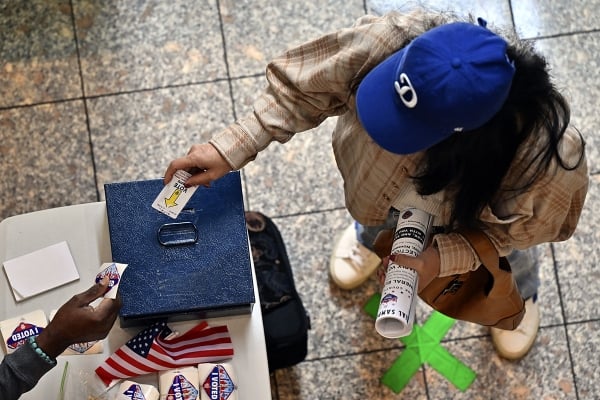
1 month agoClearinghouse Severs Relationship With Student Voting Study
The National Student Clearinghouse ended its 13-year partnership with Tufts University's voting study after the Trump administration investigated potential Family Educational Rights and Privacy Act violations.





US politics
fromLos Angeles Times
3 months agoTeachers have a right to tell parents if their child might be LGBTQ+, federal judge rules
A court ruled California teachers may notify parents about a student's gender expression, blocking district rules that prohibit such disclosures and limiting school privacy policies.


fromwww.berkeleyside.org
4 months agoAs feds investigate antisemitism at BUSD, some worry about a witch hunt'
In this March 2024 file photo, members of the Berkeley school community packed a BUSD board meeting in support of ethnic studies programs focusing on Palestinian history. Credit: Ximena Natera, Berkeleyside/CatchLight
Education
fromBoston.com
5 months agoSmithfield football families stand by their kids amid antisemitism claims
Multiple members of the football team participated in a brief, approximately 90-second prank against a freshman student, While the freshman was using a urinal in a communal bathroom, with his back to the door, students closed the door, moved a bench in front of it, threw ice into the bathroom, and sprayed a few bursts of disinfectant into the open area above the door.
US news
fromDataBreaches.Net
5 months agoTwo years after an audit highlighted significant concerns, North Salem Central School District leaves sensitive student data at risk - DataBreaches.Net
The audit determined that District officials did not ensure network user accounts were adequately managed. It also determined there were sensitive information technology (IT) control weaknesses, which we communicated confidentially to officials. As a result, compromised accounts may not be detected and increased opportunities for users to make unauthorized or improper changes, improperly access students' private and personal information and/or modify accounting records to conceal malicious transactions exist. The audit included three recommendations to help District officials adequately secure access to the network and properly manage user permissions.
Information security
fromInside Higher Ed | Higher Education News, Events and Jobs
6 months agoInstitutions, Advocates Argue Against Admissions Data Collection
Under the Department of Education's proposed Admissions and Consumer Transparency Supplement, institutions would have to submit applied, admitted and enrolled student data broken down by test score quintiles, grade point average quintiles, income ranges, Pell Grant eligibility and parental education levels, as well as data regarding aid and student outcomes. Institutions would also be required to send historical data going back to 2020.
Higher education
fromTechzine Global
6 months agoMicrosoft 365 Education violates GDPR: illegally tracks students
During the COVID pandemic, schools around the world rapidly switched to cloud services. Microsoft immediately offered "educational" products. At the same time, responsibility for privacy compliance was shifted to schools and national authorities. The fundamental tension came to light when a student requested access to his personal data. Microsoft simply referred him to the local educational institution, which in turn could only provide minimal information because it does not have access to data held by Microsoft. The result: no one could guarantee GDPR rights.
EU data protection



Higher education
fromThe Mercury News
6 months agoUCSD faculty fear student, employee information may have been shared with Trump administration for investigation
UC San Diego faculty fear students' and employees' personal information may have been shared with federal investigators, risking targeting by the Trump administration.
fromwww.mercurynews.com
7 months agoLetters: UC leadership should resign after handing over names
As the UC system asks its supporters to stand up against the federal government's demand for $1 billion from UCLA, it throws 160 of its own under the bus. In a cynical act of self-service, UC's leadership has given the names of those who practiced free speech, endangering their lives and livelihoods. As a Berkeley alum, I am appalled by this decision.
California
US politics
fromAdvocate.com
7 months agoMaine fights Trump DOJ demand for identity of every student athlete in the state
Maine Principals' Association refused a DOJ subpoena for student-athlete rosters to protect minors' personally identifiable information amid a federal effort targeting transgender female athletes.
Privacy professionals
fromDataBreaches.Net
7 months agoTexas sues PowerSchool over breach compromising info of over 880,000 students, teachers - DataBreaches.Net
A PowerSchool data breach exposed sensitive personal and health information of over 880,000 Texas students and teachers, prompting a lawsuit by the Texas Attorney General.
Artificial intelligence
fromFuturism
7 months agoCreepy AI Will Look Up a Teacher's Info to Predict What Grade They'll Give a Paper
Grammarly released an AI Grader that uses publicly available instructor information and uploaded rubrics to predict student grades and provide tailored feedback, raising privacy concerns.
[ Load more ]