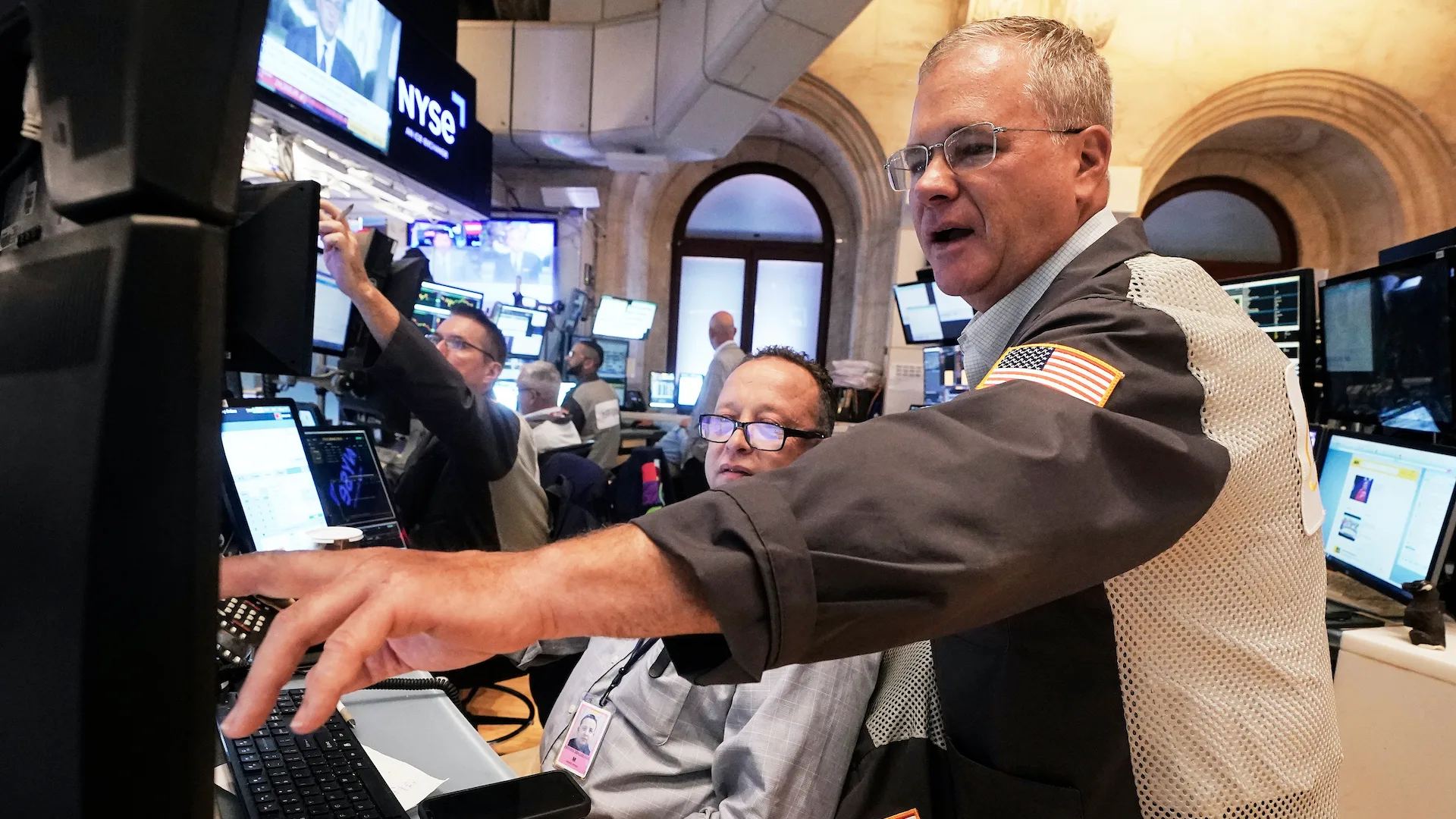
The Dow Jones industrial average crossed 50,000 for the first time, as ballooning tech valuations, robust corporate earnings and hopes of lower interest rates drive it to new highs. Chart of the Dow Jones Industrial Average's performance over the past year Leading stock markets on Wall Street came under pressure earlier this week as technology stocks fell amid scrutiny of extraordinary levels of investment into artificial intelligence.
Since taking office, Trump has imposed a range of tariffs on countries, including key trading partners, leading to predictions of inflation skyrocketing, manufacturing screeching to a halt and unemployment soaring. None of those scenarios came true. Inflation, while above the Federal Reserve's target, was a modest 2.7 percent in December. The unemployment rate was relatively low, at 4.4 percent, last month.
U.S. stocks signaled another rally on Sunday night after the Trump administration negotiated a framework for a trade deal with China that should avoid mutual assured destruction. Treasury Secretary Scott Bessent offered rough outlines of an agreement that include China easing rare earth export restrictions and buying "significant" amounts of U.S. soybeans in exchange for President Donald Trump removing his threat of adding 100% tariffs on China.
Cambricon Technologies Corp. swung to a record profit in the first half, reflecting a wave of demand for Chinese chips after Beijing encouraged the use of homegrown technology in a post-DeepSeek AI boom. The Chinese AI chip designer, which competes with Huawei Technologies Co. to provide accelerators for developing and hosting AI models, posted a 1.03 billion yuan profit ($144 million) versus a year-earlier loss of 533 million yuan. That's off a roughly 44-fold surge in revenue to 2.9 billion yuan. Its shares climbed more than 8% in Shanghai.