Information security
fromSecurityWeek
1 day agoSerial-to-IP Converter Flaws Expose OT and Healthcare Systems to Hacking
Serial-to-IP converters have serious vulnerabilities that can expose critical systems to remote attacks.
Bayer is supplementing human security patrols around its 8,000 acre Hawaiian corn farm with robotic security dogs, supplied by the tech firm Asylon. The Asylon dogs are meant to guard the company's precious maize from vandals, wildfires, wild fauna, and other hazards around the clock.
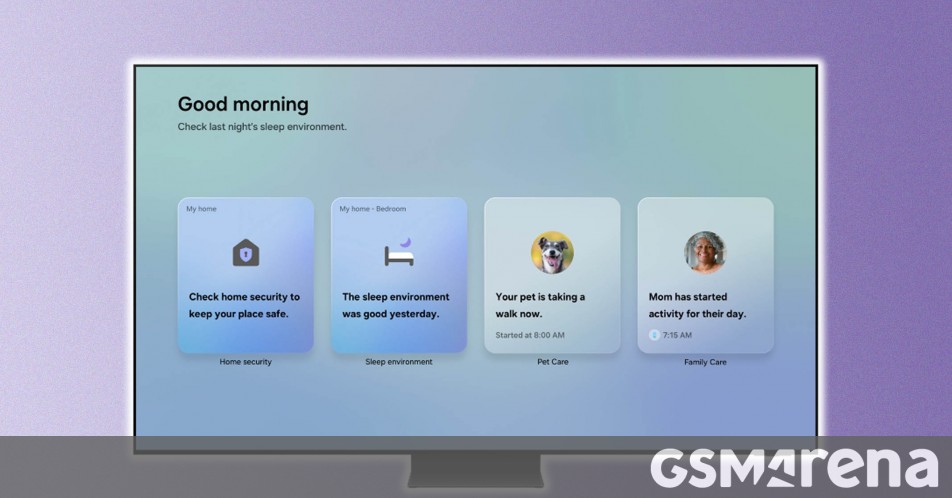
Smart TVs are capable of tracking user data, including viewing habits and app usage, which can lead to personalized advertising and content recommendations. Users may prefer to limit this tracking to protect their privacy.
In the past, roof inspections mostly focused on what could be seen from the outside. Contractors looked for broken shingles, worn flashing, or areas where water might enter the roof. The problem is that roof damage does not always show clear signs right away. Water can move through roofing layers before it becomes visible inside the home.
Openreach says the appeal of the project is its simplicity and scale: it uses fibre already in the ground, applies machine learning to "listen" for leaks in nearby pipes, and pinpoints issues to within a few metres. The pilot sees utility provider Affinity Water and UK technology company Lightsonic use Distributed Acoustic Sensing to convert Openreach's fibre optic cables into thousands of sensors that can "hear" and pinpoint leaks from surrounding water pipes.
Long-range radio waves can pass through obstacles more easily, which makes them perfect for monitoring expansive factories or outdoor infrastructure. A recent report by Fabrity highlighted that these systems use very little power. This allows sensors to operate for 5 to 10 years on a single battery. Using such tech means you do not have to install expensive wiring across your entire site.
Edge computing is a type of IT infrastructure in which data is collected, stored, and processed near the "edge" or on the device itself instead of being transmitted to a centralized processor. Edge computing systems usually involve a network of devices, sensors, or machinery capable of data processing and interconnection. A main benefit of edge computing is its low latency. Since each endpoint processes information near the source, it can be easier to process data, respond to requests, and produce detailed analytics.
All smart homes are at risk of being hacked, but it's not a likely event. The type of bad actors that target smart homes and devices, such as security cameras, are opportunistic. They search randomly for easy targets -- they don't tend to choose a particular home to attack and then try to circumvent that specific system.
All of the appliances and systems are brand-new: the HVAC, the lighting, the entertainment. Touch screens of various shapes and sizes control this, that, and the other. Rows of programmable buttons sit where traditional light switches would normally be. The kitchen even has outlets designed to rise up from the countertop when you need them, and slide away when you don't.
Retail point-of-sale systems today offer a wide range of options for peripherals and hardware. Their technical specifications play a major role in selection, and big retailers often choose multiple vendors to reduce a single point of failure. This gives them an advantage to negotiate price or support as well. Technically, these peripherals also require updating with new models and may have new feature sets. This necessitates the redevelopment of point-of-sale applications, increasing development costs.
Siemens has published eight new advisories. The company has released patches and mitigations for high-severity issues in Desigo CC, Sentron Powermanager, Simcenter Femap and Nastran, NX, Sinec NMS, Solid Edge, and Polarion products. A medium-severity flaw has been found in Siveillance Video Management Servers. Exploitation of the vulnerabilities can lead to unauthorized access, XSS, DoS, code execution, and privilege escalation.
Originally developed by Nest (before the Google acquisition), Thread has existed since 2011. Devised as a power-efficient mesh networking technology for internet-of-things (IoT) products, Thread gathered pace after the 2014 formation of the Thread Group, which develops the technology and drives its adoption as an industry standard. Founding members like ARM, Samsung, Google, and Qualcomm have been joined by Apple, Amazon, and many other big companies over the years.
AI and ML are critical for enabling autonomous, self-optimizing Wi-Fi networks capable of managing dense deployments and real-time performance demands. AI/ML reduces operational costs, improves reliability and security and delivers a more consistent quality of experience. Proprietary approaches, inconsistent data quality, and closed interfaces slow innovation and increase integration costs. Interoperable frameworks - not algorithms - will be key to success. Interoperability must include data models, telemetry, APIs, and model lifecycle management.
The Indurex platform ingests and correlates data from multiple sources across the cyber-physical stack, with a strong focus on industrial historians, instrumentation and asset management systems (IAMS), alarm management, and OT network and endpoint data. The platform, which can be integrated with third-party OT security solutions, is designed to unify cyber, process, and safety context into a single operational view, using adaptive risk scoring to highlight issues and prioritize response actions.
According to CISA, Gardyn products were affected by two critical and two high-severity vulnerabilities. One of the critical flaws, tracked as CVE-2025-29631, is a command injection issue that can be exploited to execute arbitrary OS commands on the targeted device. The second critical vulnerability, CVE-2025-1242, is related to the exposure of hardcoded admin credentials that can be used to gain full control of the Gardyn IoT Hub.
Ring has launched a new tool that can tell you if a video clip captured by its camera has been altered or not. The company says that every video downloaded from Ring starting in December 2025 going forward will come with a digital security seal. "Think of it like the tamper-evident seal on a medicine bottle," it explained. Its new tool, called Ring Verify, can tell you if a video has been altered in any way.
The findings are based on several years of deploying OMICRON's intrusion detection system (IDS) StationGuard in protection, automation, and control (PAC) systems. The technology, which monitors network traffic passively, has provided deep visibility into real-world OT environments. The results underscore the growing attack surface in energy systems and the challenges operators face in securing aging infrastructure and complex network architectures.