#religion
#religion
[ follow ]
#trump #politics #donald-trump #faith #controversy #christianity #lgbtq #military #mental-health #hypocrisy #identity

fromwww.dw.com
1 week agoNorth Korea ramps up executions over foreign media, says NGO
The Transnational Justice Working Group found that 153 people were condemned to death in North Korea between January 2020 and mid-December 2024 on various charges, marking a jump of nearly 250% compared to the equivalent time period before the January 2020 closure.
World news




fromKqed
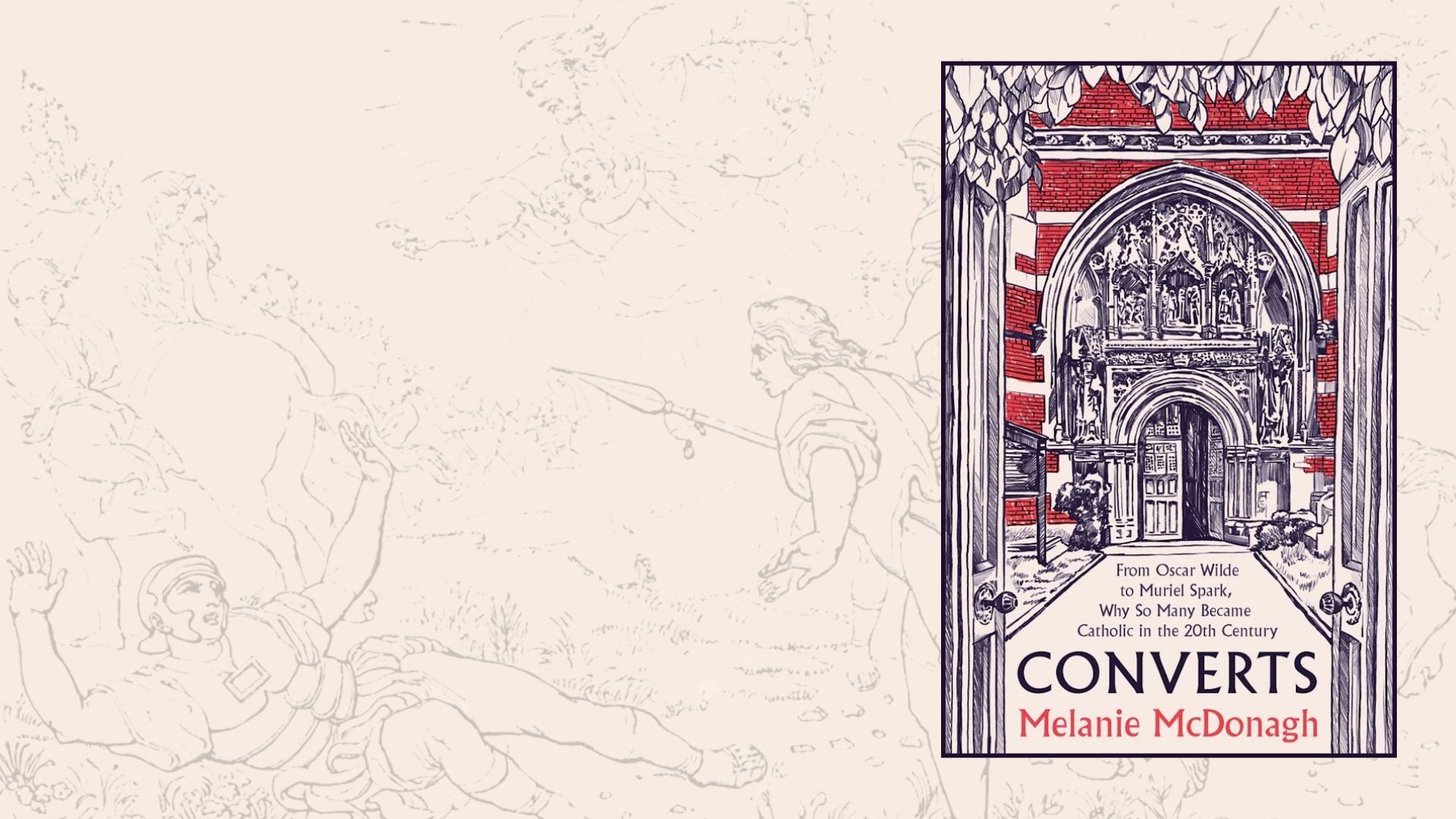
4 weeks agoWhat Draws People Into Cults? A New Book Tracks Two Followers
Hippies placed a premium on freedom, on the right to improvise their lives as they saw fit. And yet the 1960s and seventies also revealed the limits of freedom - how an endless array of options could be confusing, overwhelming, even debilitating.
Books
#donald-trump



Right-wing politics
fromwww.mediaite.com
1 month agoBritish Morning Show Guest Declares Trump Is the Anti-Christ' After Prez Shares Wild Image of Himself as Jesus With Horned Figure Behind Him
Marina Purkiss declared Donald Trump the Antichrist after he posted an image of himself as Jesus Christ, calling it blasphemous and disrespectful.


Social media marketing
fromwww.theguardian.com
1 month agoWho needs looksmaxxing when you've got Catholicmaxxing? The TikTok trend making religion great again
Catholicmaxxing is a trend among young men combining fitness and Catholicism, often influenced by social media to enhance personal appearance and faith.



fromBarca Universal
1 month agoLamine Yamal issues strong statement after disturbing scenes during Spain vs Egypt | Barca Universal
"I am a Muslim, alhamdulillah. Yesterday at the stadium, the chant 'whoever doesn't jump is a Muslim' was heard. I know it was aimed at the opposing team and wasn't something personal against me, but as a Muslim, it is nonetheless disrespectful and intolerable."
FC Barcelona
fromenglish.elpais.com
1 month agoDiana Walsh Pasulka, specialist in religions: Belief in UFOs is very similar to that of the early Christian community'
Pasulka states, 'I never wanted or desired to study the subject of UFOs, what is now called UAP. I have always worked in religious studies as an academic discipline.' This highlights her unexpected journey into the UFO phenomenon.
Philosophy
fromThe Nation
3 months agoHow Was Sociology Invented?
What I mean is that 'religion' was the way the classical sociologists like like Emil Durkheim, Georg Simmel, and Max Weber first managed to turn 'society' into something you could actually study. Durkheim's Elementary Forms defines religion as a system of beliefs and practices tied to sacred things, and what matters there is how those beliefs and rituals bind people together into a moral community-the church. For him, the believer isn't wrong to think he depends on a higher power.
Philosophy
Relationships
fromIndependent
3 months agoAsking for a friend: My new girlfriend is from another country and goes to church a lot, which is not my thing. Can we overcome all our cultural differences?
Cultural and religious differences, particularly traditional gender roles and church involvement, create significant challenges to a relationship despite mutual attraction.
fromFuncheap
3 months agoSF Sketchfest "Jesus Roast: The Resurrection"
A celebrity roast of our favorite Lord and Savior, Jesus H. Christ. With roasters: Kristi Noem, Mother Teresa, Pete Hegseth, Pope Leo XIV, Santa, King James and More. "Comic Genius" -SF Weekly "God, that's funny" - San Francisco Chronicle "Rides you hard and puts you away wet" -SOCAL Magazine "Kurt Weitzmann - casually, breezily blasphemous" - PATTON OSWALT- Silver Screen Fiend: Learning About Life from an Addiction to Film.
Humor
fromPsychology Today
3 months agoDo Aliens from Other Planets Also Believe in Gods?
My prediction is based on only two assumptions. First, our visitors from space can die; they are not immortal. Second, they care about each other. When one of their own dies, they mourn them, just as humans do. These assumptions, I think, will have led these aliens to invent gods and a belief in the afterlife. Belief in the afterlife, where we defeat death and are reunited with loved ones who have died, is the basis of all past and current religions.
Philosophy
fromwww.mediaite.com
3 months agoTed Cruz Declares, Jews Didn't Kill Jesus I Did'
Number one, our savior Jesus was Jewish in the line of David, and number two, Jews didn't kill Jesus I did. You did. He died for our sins. That's what the New Testament says, is that he willingly took the cross to die for our sins, and so the sort of anti-Semites who says Jews killed Jesus, well actually, it was Romans who drove the nails in. Is anyone mad at the Italians? Like that's just stupid.
US politics
LGBT
fromPinkNews | Latest lesbian, gay, bi and trans news | LGBTQ+ news
3 months agoThe Traitors' Matthew Hyndman reveals church tried to 'cure' him of being gay
Matthew Hyndman was pressured by his church to undergo conversion therapy after being outed, he refused and later co-founded Ban Conversation Therapy.
fromLGBTQ Nation
3 months agoICE agent threatens to kill man in car: "Did you not learn from what just happened?" - LGBTQ Nation
"Sir! This is a warning!" an agent yells at a driver in video posted to the Minneapolis subreddit over the weekend. "Stop f**king following us! You are impeding operations! This is the United States federal government!" The driver explained that he lived in the area. "I serve the Lord. Go to church," the driver said. "I will arrest you!" the ICE agent shouted before walking away. The driver continued to say that the agents should let people go to church.
LGBT
fromInsideHook
4 months agoReport: Some American Churches Are Embracing Meditation
When you think about the goings-on inside an average church, you might envision a sermon, a reading from the Bible or a song or two. Something that's less expected would be, for instance, a guided group meditation - and yet meditation has been showing up in a growing number of religious contexts where you might not expect it. That, at least, is one of the big takeaways from a recent Associated Press investigation by Luis Andres Henao and Deepa Bharath.
Mindfulness
Relationships
fromwww.mercurynews.com
5 months agoDear Abby: My ex-wife is our housemate, and my girlfriend isn't happy about it
Enforce clear boundaries with cohabitants and insist on respectful behavior; address reluctance about returning to church by acknowledging guilt and considering gradual reengagement.
US politics
fromPinkNews | Latest lesbian, gay, bi and trans news | LGBTQ+ news
5 months agoTrans uni instructor put on leave after failing student's 'offensive' essay
A University of Oklahoma trans graduate assistant was removed after grading a student's Bible-cited essay as failing for lacking empirical evidence and being offensive.
Mindfulness
fromSlate Magazine
5 months agoI'm a Career Food Professional. But There's One Part of the Thanksgiving Meal I've Never Mastered-Until Now.
Practicing a brief blessing before meals can cultivate gratitude and mental health, even for someone raised agnostic and skeptical of organized religion.
Film
fromwww.theguardian.com
5 months agoWake Up Dead Man: A Knives Out Mystery review Josh O'Connor excels in another deadpan delight
A new Knives Out mystery follows detective Benoit Blanc investigating a sensational priest's murder amid eccentric, divided parishioners and a culture-clash with a junior priest.
fromPsychology Today
5 months agoHow Well Do You Treat Yourself?
I grew up in a very religious, Christian family where Sunday's activities were predetermined and strictly enforced. Like many of my generation, come Sunday, our parents faithfully saw that we were dressed in our best attire and dutifully marched to church like preprogrammed automatons. With unblinking obedience, we reenacted this liturgy-week after week, year after unrelenting year-seemingly ad infinitum. Growing into adolescence, however, my mind began to fill with questions-many of them-but one upstaged the rest: "What was the purpose of our never ending churchgoing?"
Philosophy
fromBuzzFeed
6 months agoMy Boyfriend And I Were Falling In Love. Then He Hit Me With A Deal Breaker I Never Saw Coming.
He agreed ― we shouldn't be. And that was that. I'd never ended a relationship over religion. Disagreements about having children? Absolutely. Political beliefs? Yes. The guy being a jerk? Oh, sure. But if you'd asked me whether I'd break up with a man I was falling in love with over religion ― Greek Orthodox or any other ― I wouldn't have even considered it a possibility.
Relationships
Philosophy
fromThe Conversation
6 months agoWhat's the difference between ghosts and demons? Books, folklore and history reflect society's supernatural beliefs
Ghosts and demons are distinct supernatural concepts whose meanings vary across cultures and historical periods and are shaped by religious, social and literary contexts.
fromVulture
6 months agoNobody Wants This Wants Feeling Jewish to Be Enough
But by the episode's last act, Joanne has realized that Noah can't maintain his faith and be with her if she won't commit to conversion. "You can't have both, and I would never make you choose," she tells him tearfully over the din of his niece Miriam's bat mitzvah. And so she dumps him - it's the most painless way to move forward - until the episode's final two minutes, when the pair run back into each other's arms once more.
Television
History
fromTasting Table
7 months agoWhy We've Been Tossing Spilled Salt Over Our Shoulder For Centuries - Tasting Table
Salt has been revered across cultures for preservation, purification, hospitality, and spiritual protection, giving rise to superstitions like tossing spilled salt over the shoulder.
Philosophy
fromThe Conversation
7 months agoReligion often shapes someone's view of abortion - but what about a woman's actual decision?
Religious belief strongly predicts moral opposition to abortion, but religiosity does not consistently reduce unmarried American women's likelihood of terminating a first pregnancy.
Social justice
fromSlate Magazine
7 months agoI Know All the Reasons Why People Don't Raise Kids in a Religion. Here's My Case For It.
Quaker spiritual principles like Peace and Equality can provide moral guidance and community structure useful to parenting, despite contemporary religious institutions' divisiveness.
fromwww.london-unattached.com
7 months agoSidi Larbi Cherkaoui/Eastman, Vlaemsch (chez moi)
Vlaemsch (chez moi) is Flemish-Moroccan choreographer Sidi Larbi Cherkaoui's love letter to his native Flanders. Like so many love letters, it's full of anger, pain and recrimination. Its tone is by turns overblown, infuriated, accusatory, ironic and tender. It is, nonetheless, a love letter in the guise of a piece of dance-theatre. Cherkaoui's background is as complex as that of his native Flanders. He was born in Antwerp, the son of a Moroccan father and a Flemish mother;
Arts
fromThe Atlantic
7 months agoFive Nonfiction Books That Read Like Fiction
This is an edition of The Atlantic Daily, a newsletter that guides you through the biggest stories of the day, helps you discover new ideas, and recommends the best in culture. Sign up for it here. Nonfiction books sometimes get a reputation for being hard to slog through. But the qualities that make good novels so enjoyable-the well-paced plot, the engaging characters-can also be found in many of their fact-based counterparts. The Atlantic 's writers and editors answer the question: What is a nonfiction book that reads like fiction?
Books
Arts
fromOregon ArtsWatch * Arts & Culture News
8 months ago'The Cake': Making a meal of the gay-marriage debate * Oregon ArtsWatch
A Southern baker's conservative Christian beliefs collide with a friend's same-sex engagement when a confrontational writer challenges her, centering conflict on a requested wedding cake.
fromDefector
8 months agoJames Dobson Is Dead, Was A Monster | Defector
He enlisted a whole bunch of Ideology-patriarchy; social conservatism; utterly fake upside-down Christianity-in service of those basic motivations, not only to justify his own appetite for and personal acts of sadism and domination but to cast punishment and predation as far out into the world as he could manage. He studied psychology and the Bible so that he could borrow their authority and instrumentalize them to do widespread cruelty more effectively.
Right-wing politics
fromThe Atlantic
8 months agoFive Baha'i Lessons for a Happier Life
One of the biggest gripes I have about my academic field of social science is that it explains a lot about human behavior but is very short on prescriptions for how to live day to day. Even when it does have something suggestive to offer, the research almost never supplies evidence of whether its widespread adoption would have a positive effect. The same deficiency is even truer for philosophy, a realm in which big thoughts about life usually remain abstract ideas.
Philosophy
fromThe Conversation
9 months agoFootball and faith could return to the Supreme Court - this time, over loudspeakers
The First Amendment's establishment clause forbids the government from establishing an official religion, from giving preference to a specific religion and from favoring or disfavoring religion in general.
Philosophy
[ Load more ]