#physical-ai
#physical-ai
[ follow ]
#robotics #automation #autonomous-vehicles #nvidia #industrial-automation #humanoid-robots #autonomous-robotics
#robotics


Berlin
fromFortune
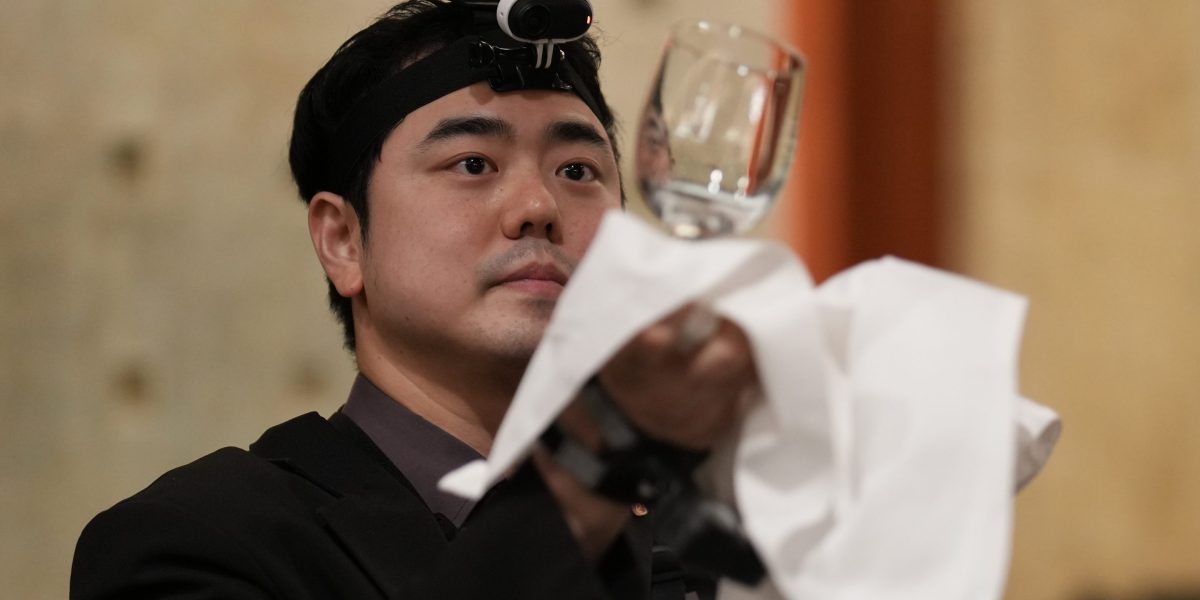
8 minutes agoThis South Korean hotel worker is training a robot to fold a banquet napkin: 'I've been doing this about once a month' | Fortune
Body-worn cameras capture skilled workers’ movements to train AI systems that can teach robots humanlike dexterity for real-world tasks across workplaces and homes.

Venture
fromwww.businessinsider.com
4 days agoThis former a16z partner and solo VC has backed 6 unicorns. Now he's raised $50 million to invest in hard tech
Raised a $50M hard-tech fund quickly, expanding total AUM to nearly $300M and enabling $1M–$2M pre-seed/seed checks across physical-world AI and biotech.
fromTNW | Battery
5 days agoNyobolt raises $60M at $1B valuation led by Symbotic for ultrafast-charging batteries powering warehouse robots and AI data centres
Nyobolt's batteries charge from zero to 80 percent in under five minutes, survive more than 20,000 charge cycles without degradation, and deliver 20 times the energy density of supercapacitors.
NYC startup
#autonomous-robotics


Artificial intelligence
fromZDNET
1 month agoNvidia's 'ChatGPT moment' for self-driving cars, and other key AI announcements at GTC 2026
Nvidia released new physical AI models for robots and autonomous vehicles, with Uber planning to deploy Nvidia-powered robotaxis by 2027 and Disney exploring robotic characters for theme parks.
Tech industry
from24/7 Wall St.
2 months agoServe Robotics Up 13%: NVIDIA Loves It, Analysts See 67% More Upside
Serve Robotics surged 13% after beating Q4 revenue expectations and raising 2026 guidance to project 10x year-over-year growth, driven by rapid fleet expansion from 100 to 2,000 robots across 20 U.S. cities.
Artificial intelligence
fromFortune
1 month agoThe U.S. is winning the AI chatbot war - and losing the one that actually matters | Fortune
Physical AI that manipulates the real world represents the greatest value creation opportunity, yet investment focuses on text-based AI and humanoid robots instead of task-specific machines.
Venture
from24/7 Wall St.
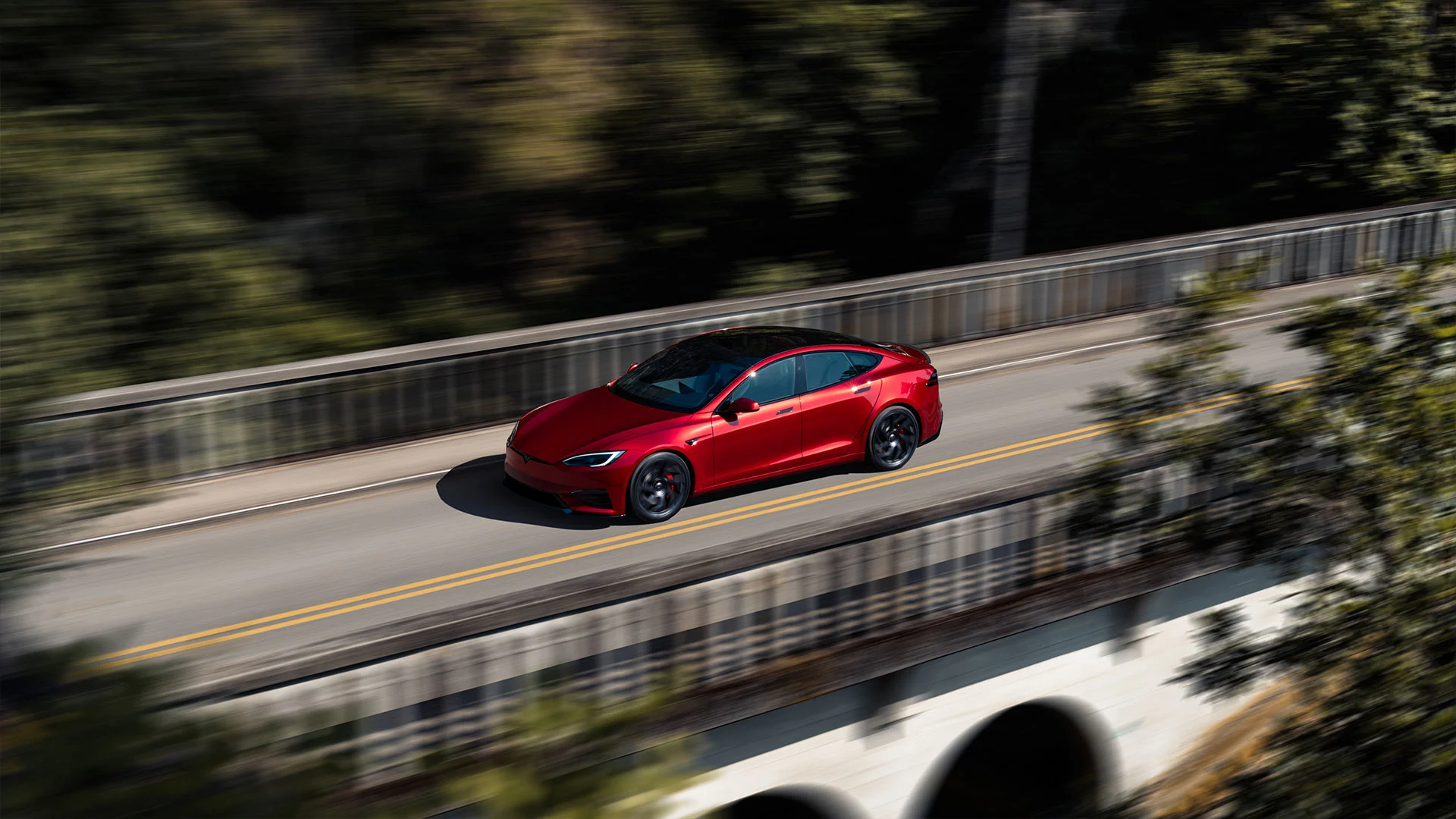
2 months agoTesla's Optimus Robot is Seriously Impressive. Is it Enough Reason to Buy the Stock?
Tesla shareholders are betting on Optimus robotics and robotaxis as the primary growth driver, with the company halting Model S and X production to prioritize physical AI development.
#robotics-partnership
European startups
fromComputerWeekly.com
2 months agoNeura Robotics accelerates next-generation physical AI | Computer Weekly
Neura Robotics and Qualcomm Technologies partner to advance intelligent robots for safe human-robot collaboration through edge AI integration and production-ready deployment at scale.
Artificial intelligence
fromTNW | Robots
2 months agoBMW Group brings humanoid robots to Germany
BMW deployed AEON, a humanoid robot by Hexagon Robotics, at its Leipzig plant as Germany's first humanoid robot in production, signaling the company's commitment to physical AI integration in manufacturing.
fromComputerWeekly.com
2 months agoNvidia teams with global telecom leaders for 6G development | Computer Weekly
Beyond traditional connectivity, 6G wireless networks will become the fabric for physical AI, enabling billions of autonomous machines, vehicles, sensors and robots and significantly increasing demands for security and trust. Yet legacy wireless architectures were not designed to meet these requirements, creating challenges as networks increase in complexity.
Artificial intelligence
from24/7 Wall St.
2 months agoNvidia Just Made Another Pair of Brilliant AI Bets
Either way, I think the AI boom is alive and well, but with much of the short-term hype fading away, the big question is whether the long-term trajectory is still there and whether it makes sense for investors to hit the buy button now that the near-term is somewhat less hyped while the long-term is as exciting as ever.
Artificial intelligence

Venture
fromSilicon Canals
2 months agoDIC Enters into a Partnership with Switzerland-Based Emerald to Accelerate Business Creation in the Physical AI Domain - Silicon Canals
DIC established a $62 million investment portfolio and will open a Zurich-based investment subsidiary to fund Physical AI startups globally in partnership with Emerald Technology Ventures.
fromFortune
2 months agoYour essential services are one surprise failure away from disruption. Consider how physical AI could tackle the crisis | Fortune
For all the energy being spent on whether AI will eliminate white-collar jobs, I believe that business leaders are missing a much bigger story: AI won't replace skilled trades-it will require more of them, and most importantly, make them better. That's not a nice-to-have. It's a necessity as the trades workforce ages, retirements accelerate, and fewer new workers enter the pipeline.
Artificial intelligence
from24/7 Wall St.
2 months agoIf 2026 is the Year of Physical AI, NVIDIA is the Robotics Play to Watch
Whether or not 2026 really is the big year of physical AI (I think it's likelier to be the year when agentic AI breaks out) and robotics, much hype surrounds recent comments made by the great Nvidia ( NASDAQ:NVDA | NVDA Price Prediction) CEO Jensen Huang, who believes his firm has achieved a "ChatGPT moment" with regards to physical AI.
Artificial intelligence


Artificial intelligence
fromwww.cbc.ca
3 months agoRobotics is the new face of AI. Is Canada missing the boat? | CBC News
AI-powered physical robots are rapidly being adopted across industries, learning on the job and offering flexible, plug-and-play capabilities that can transform work and public spaces.
fromGSMArena.com
3 months agoConfirmed: Asus is exiting the smartphone market
A report from earlier this month suggested there won't be any new Asus phones launching this year, and we now have official confirmation that the brand is moving away from smartphones altogether. Asus chairman Jonney Shih confirmed that the brand is not planning any new smartphone releases during a special event gala at the Taipei Nangang Exhibition Center. According to reports, Asus will focus its resources and R&D on commercial PCs and physical AI (i.e., robotics and smart glasses).
Mobile UX
.jpg)
fromSouth China Morning Post
4 months agoPhysical AI Takes Center Stage: Smart Assistants Break Free from Digital Confines to Real-World Interactions
Artificial intelligence is undergoing a fundamental transformation, moving beyond the screen-based interactions that have dominated consumer technology for the past decade. At this year's Consumer Electronics Show (CES) in Las Vegas, the shift became particularly evident as companies showcased AI systems designed to operate directly with physical devices and smart home environments. The evolution represents a significant departure from current AI assistants, which remain largely confined to specific devices or require explicit user commands.
Artificial intelligence
Artificial intelligence
fromFortune
4 months agoA year ago, Nvidia's Jensen Huang said the 'ChatGPT moment' for robotics was around the corner. Now he says it's 'nearly here.' But is it? | Fortune
Nvidia expands beyond chips into software and physical AI, producing Vera Rubin GPUs while positioning itself as a key supplier for robotics and autonomous systems.
fromFast Company
4 months agoCES 2026: Day 1 roundup of the coolest tech on display
CEO Jensen Huang showed off Cosmos, an AI foundation model trained on massive datasets, capable of simulating environments governed by actual physics. He also announced Alpamayo, an AI model specifically designed for autonomous driving. Huang revealed that Nvidia's next generation AI superchip platform, dubbed Vera Rubin, is in full production, and that Nvidia has a new partnership with Siemens. All of this shows Nvidia is going to fight increased competition to retain its reputation as the backbone of the AI industry.
Tech industry
frominsideevs.com
4 months agoAt CES 2026, The Real Automotive Story Is Robots, Robotaxis And AI
Here's the thing about CES, though: it showcases fantasies as much as it brings us what's next. People had VCRs (if you don't know what that is, go ask a grandparent or a nearby millennial) in their homes for decades. I am still waiting for flying cars to be a thing. Thus, it's good to take what you see at this show with a grain of salt. Or a gallon of it.
Cars
fromFast Company
4 months agoHow will AI transform business in 2026?
How should leaders prepare for AI's accelerating impact on work and everyday life? AI scientist, entrepreneur, and Pioneers of AI podcast host Rana el Kaliouby shares her predictions for the year ahead-from physical AI entering the real world to what it means to onboard AI into your org chart. El Kaliouby cuts through today's biggest AI headlines, bringing to light the insights that will matter most in the months to come.
Artificial intelligence
Artificial intelligence
fromTechCrunch
5 months agoNvidia announces new open AI models and tools for autonomous driving research | TechCrunch
Nvidia released Alpamayo-R1, an open vision-language reasoning model plus Cosmos Cookbook resources to accelerate level-4 autonomous driving and physical AI development.
Startup companies
fromTechCrunch
5 months agoFinland's NestAI lands 100M, partners with Nokia to build AI for defense applications | TechCrunch
NestAI raised €100M to build 'physical AI' for unmanned vehicles, autonomous operations, and defense, partnering with Nokia and Tesi to advance European technological sovereignty.
Science
fromFast Company
6 months agoFast Company and Johns Hopkins University partner for the first-ever World Changing Ideas Summit
The World Changing Ideas Summit convenes leaders to drive actionable innovation across healthcare, space exploration, and physical AI through immersive experiences and cross-sector partnerships.
Artificial intelligence
fromZDNET
6 months agoGartner just dropped its 2026 tech trends - and it's not all AI: Here's the list
AI innovation dominates 2026 strategic technology trends, driving AI-native platforms, AI supercomputing, physical AI, and transforming engineering teams and enterprise capabilities.
fromTheregister
6 months agoAI boffins teach office supplies to predict your next move
The system combines ceiling-mounted cameras with computer vision and large language models (LLMs) to monitor what humans are doing and deciding when to lend a hand. When a person begins an action - say, reaching for papers or chopping vegetables - the AI generates a short text description of the scene and uses it to infer what might happen next. Movement commands are then sent to small, wheeled robotic bases under the objects, which the researchers call "proactive assistants."
Artificial intelligence
E-Commerce
from24/7 Wall St.
7 months agoAlibaba's $53 Billion AI Blitz Ignites Stock Rally With Nvidia As the Secret Sauce
Alibaba will integrate Nvidia's full physical AI development stack into Alibaba Cloud and increase AI infrastructure spending to accelerate physical AI despite regulatory headwinds.
Artificial intelligence
fromTechCrunch
7 months agoAlibaba to offer Nvidia's physical AI development tools in its AI platform | TechCrunch
Nvidia partnered with Alibaba to integrate Nvidia's Physical AI tools into Alibaba Cloud to enable synthetic-data-driven training for robotics, autonomous vehicles, and smart spaces.
fromFortune
8 months agoAs EV sales continue to plummet, Elon Musk says Optimus robots will make up 80% of Tesla's value, despite production delays
Elon Musk's lofty vision for Tesla includes less attention on electric vehicles and a doubling-down on its autonomous robots, even as production for the bots have hit numerous snags. The Tesla CEO said on Monday 80% of Tesla's value would someday come from Optimus robots, the humanoid bot Musk's company introduced in 2021 intended to eliminate dangerous and menial factory tasks. Musk's forecast of the bots' success came shortly after Tesla revealed its " Master Plan Part IV " on Monday, outlining Tesla's goals for the future.
Artificial intelligence
[ Load more ]