#oil prices
#oil prices
[ follow ]
#oil-prices #strait-of-hormuz #strategic-petroleum-reserve #supply-and-demand #gasoline-pricing #inflation



fromBusiness Matters
1 hour agoBrent Crude jumps back to $99 as US strikes on Iran knock the wind out of peace talks
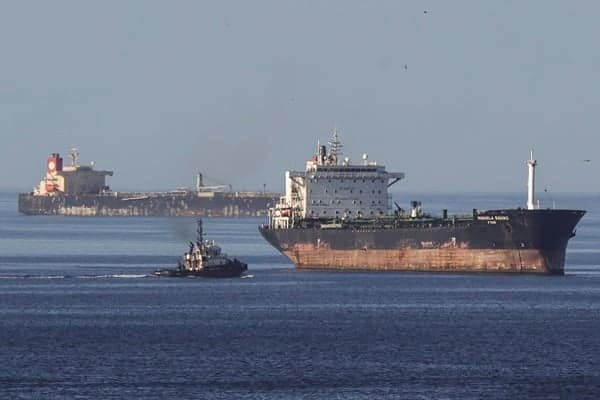
The oil price has lurched higher again after the United States launched a fresh round of air strikes on Iranian missile sites and vessels Washington claims were laying mines in the Gulf, pushing the already-fragile peace process to the brink and dashing hopes of a near-term reopening of the Strait of Hormuz.
World news
#oil-prices
World news
fromLondon Business News | Londonlovesbusiness.com
2 days agoOil caught in crossfire of diplomacy and war - London Business News | Londonlovesbusiness.com
Oil stays pressured as Middle East tensions and slow supply normalization keep physical markets tight and sensitive to geopolitical headlines.
World news
fromLondon Business News | Londonlovesbusiness.com
2 days agoSpring in the step of the Footsie amid hopes for Middle East peace deal - London Business News | Londonlovesbusiness.com
Renewed Iran strikes pushed oil prices higher, feeding into UK shop price inflation while a record heatwave boosts some retail spending.
World news
fromLondon Business News | Londonlovesbusiness.com
1 day agoOil futures slide further - London Business News | Londonlovesbusiness.com
Crude prices fell as hopes for a Middle East diplomatic breakthrough rose, but the proposed framework lacks binding nuclear concessions and leaves security risks unresolved.
World news
fromLondon Business News | Londonlovesbusiness.com
2 days agoOil caught in crossfire of diplomacy and war - London Business News | Londonlovesbusiness.com
Oil stays pressured as Middle East tensions and slow supply normalization keep physical markets tight and sensitive to geopolitical headlines.
World news
fromLondon Business News | Londonlovesbusiness.com
2 days agoSpring in the step of the Footsie amid hopes for Middle East peace deal - London Business News | Londonlovesbusiness.com
Renewed Iran strikes pushed oil prices higher, feeding into UK shop price inflation while a record heatwave boosts some retail spending.
#us-iran-relations



US Elections
fromLondon Business News | Londonlovesbusiness.com
6 hours agoTrump 'doesn't care' about rising oil costs, but bond markets will force Iran deal - London Business News | Londonlovesbusiness.com
Sustained $100-plus oil and rising yields will likely constrain US policy options regarding Iran despite claims of no pressure.
Europe news
fromLondon Business News | Londonlovesbusiness.com
6 hours agoEUR/USD between geopolitical tensions and federal reserve hawkishness - London Business News | Londonlovesbusiness.com
Oil price gains tied to Middle East developments are reviving inflation concerns, supporting higher-for-longer U.S. rates and limiting EUR/USD upside.
Business
from24/7 Wall St.
23 hours agoShort Sellers Are Betting Record Amounts Against Stocks. But the Market is Rallying On a Potential Deal Between Trump and Iran.
Short interest in U.S. equities has surged to crisis-era highs while stocks rallied, likely supported by expectations of easing U.S.-Iran tensions and lower oil prices.
from24/7 Wall St.
1 day agoLive Nasdaq Composite: Market Bulls Maintain Grip in Tech-Fueled Rally
Stock futures extended their rally Wednesday morning as oil prices retreated on news that an Iran agreement would restore commercial traffic through the Strait of Hormuz to pre-war levels within one month. The move builds on a record-setting Tuesday, when both the S&P 500 and Nasdaq Composite closed at all-time highs on the back of a tech rally anchored by Micron Technology (NASDAQ:MU | MU Price Prediction).
Business
fromnews.bitcoin.com
2 days agoBitcoin Slides Below $77K as US Military Strikes on Iran Shake Risk Appetite
Following reports of U.S. Navy strikes against targets in Iran, bitcoin dropped nearly $800 in over three hours on Monday night, slipping below $77,000 and wiping out roughly $20 billion in market capitalization. Late on Monday, bitcoin fell nearly $800 below $77,000 following reports of U.S. Navy military strikes in Iran. Brent crude spiked near $99 as maritime clashes disrupted energy markets and dented crypto capitalization.
Cryptocurrency
fromwww.aljazeera.com
3 days agoOil prices fall amid mixed signals on US-Iran peace deal
Japan's benchmark stock index, the Nikkei 225, surged more than 3 percent in morning trading, hitting an all-time high after closing at a record peak on Friday. Oil prices have fallen sharply amid tentative hopes for a deal to end the US-Israel war on Iran. Brent crude, the primary benchmark for global oil prices, fell about 5 percent on Sunday as US President Donald Trump gave mixed signals on the prospects for a permanent end to the conflict.
World news
#ftse-100
UK news
fromLondon Business News | Londonlovesbusiness.com
6 days agoFTSE 100 edges higher despite weak retail sales and renewed oil price fears - London Business News | Londonlovesbusiness.com
FTSE 100 gains were fragile as Middle East peace hopes lifted sentiment while weakening UK consumer data and rising oil prices raised inflation and cost concerns.
Europe news
fromLondon Business News | Londonlovesbusiness.com
1 week agoFTSE falls as growth fears hammer miners while oil surge hits airlines - London Business News | Londonlovesbusiness.com
Rising oil prices and global growth fears pressured FTSE 100 miners and airlines, while defence technology shares gained on improving turnaround confidence.
fromSFGATE
6 days agoWeekly Mortgage Rates Rise Under Gloomy Economic Clouds
The average rate on a 30-year fixed-rate mortgage rose 17 basis points to 6.42% APR in the week ending May 21, according to rates provided to NerdWallet by Zillow. (A basis point is one one-hundredth of a percentage point.) We calculate our weekly average using daily APRs recorded over the past five business days.
Real estate
fromTNW | Alternative-Fuel
1 week agoEurope EV sales surge 51% as Iran war drives oil past $100
Since US and Israeli airstrikes hit Iran at the end of February, crude oil has soared past $100 a barrel for the first time since Russia's 2022 invasion of Ukraine. The result at Europe's petrol pumps has been immediate and painful. The Iran conflict has effectively shut down shipping through the Strait of Hormuz, threatening roughly one-fifth of global oil supply. The International Energy Agency called it the greatest global energy security challenge in history.
Europe news

Europe news
fromFortune
1 week agoRyanair's CFO says the airline has plans for an 'armageddon situation' as the jet fuel crisis threatens weaker European airlines this winter | Fortune
Ryanair has hedged most summer fuel and plans full schedules through winter despite potential fuel-price shocks from an Iran-related conflict.
#global-markets
World news
fromFortune
1 week agoWall Street sees 'nothing of real substance' in Trump's China trade deal-and stocks are selling off globally | Fortune
Global stocks fell after Trump returned from a China summit without detailed outcomes, while Boeing shares dropped on a smaller-than-expected aircraft order.
fromThe Art Newspaper - International art news and events
2 weeks agoNew York art world spared worst of logistics woes
“The Iran war isn't stopping art shipments into New York-but it's removing flexibility from the global system. Logistics is becoming more fragile, and that's changing how the market plans,” says Robin Eckstein, the regional manager for the Middle East at the logistics firm Hasenkamp. “What used to be flexible is now fragile.”
Arts
Portland
fromFortune
2 weeks agoOregon Democrats have genius political strategy: raising the gas tax heading into the midterm elections | Fortune
Democrats face a difficult midterm messaging environment as Oregon voters consider repealing recent gas tax and fee increases amid rising national fuel prices.
from24/7 Wall St.
2 weeks agoPresident Trump Wants to Suspend the Federal Gas Tax. Here's Why Consumers May Still Feel Squeezed
Consumers are paying $4.52 a gallon for gasoline nationally, while diesel prices have climbed to $5.64 a gallon nationwide and above $6 in some regions. At the same time, food inflation remains stubborn because trucking costs ripple through nearly every aisle in the grocery store.
US Elections
fromLondon Business News | Londonlovesbusiness.com
2 weeks agoDollar volatile amid Middle East concerns, yields firm on oil rebound - London Business News | Londonlovesbusiness.com
The US dollar index was relatively volatile on Monday amid renewed concerns about the geopolitical situation in the Middle East. Markets remained focused on the lack of progress in negotiations between Washington and Tehran, after President Donald Trump rejected Iran's latest proposal. The diplomatic deadlock has kept concerns over energy supply disruptions elevated, supporting higher oil prices and reinforcing inflation expectations. This pushed Treasury yields higher across maturities, underpinning the dollar.
World news
fromwww.aljazeera.com
2 weeks agoCan Asian economies cope with the fallout from the Iran war?
Fuel costs, inflation and debt pressures are testing Asian economies. Working from home. Fuel queues. Blackouts. This is the fallout from the war on Iran across Asia. Governments are scrambling to shield their economies from the worst of the energy crisis. Some are rationing fuel. Others are reintroducing subsidies or limiting exports altogether. And the longer the Strait of Hormuz remains disrupted, the worse it gets so much so for vulnerable economies.
World news
Europe news
fromFortune
2 weeks agoThe CEO of Maersk, which ships 14% of everything you buy, said the Iran war is adding $500 million in monthly costs it's trying not to pass down | Fortune
Prolonged war in Iran is raising energy costs and inflation while weakening consumer demand, disrupting global shipping flows and logistics.
fromLondon Business News | Londonlovesbusiness.com
2 weeks agoFTSE slides as Middle East tensions and Labour turmoil rattle markets - London Business News | Londonlovesbusiness.com
London's benchmark index dropped 55 points to 10,222 in early trading, after briefly falling as much as 80 points to touch 10,196, as traders weighed the impact of Labour's bruising local election results alongside escalating tensions involving the United States and Iran.
UK politics
US Elections
fromwww.mediaite.com
2 weeks agoTrump Goes on Early-Morning Picture-Sharing Spree, Including Bizarre Meme About Lasers
Trump posted early-morning claims about oil prices, stock gains, and a laser meme about an Iranian military plane, alongside a chart comparing Iran conflict length to past wars.
World news
fromwww.aljazeera.com
2 weeks agoCan Asian economies cope with the fallout from the Iran war?
Asian economies face severe strain from energy crisis, inflation, and debt as Strait of Hormuz disruption drives oil prices higher, forcing governments to implement rationing, subsidies, and spending cuts.
US Elections
fromwww.mediaite.com
3 weeks agoFox's Bret Baier Says Trump Economy Cooking' Could Be Running a Lot Harder' If Not for Trump's War
Trump believes an Iran deal could accelerate economic growth by resolving Strait of Hormuz constraints and reducing oil prices, though questions remain about Iranian compliance.
World news
fromLondon Business News | Londonlovesbusiness.com
3 weeks agoDollar retreats amid geopolitical hopes - London Business News | Londonlovesbusiness.com
The dollar weakened as markets priced in a potential US-Iran agreement, while oil prices fell on de-escalation prospects, though the Fed is expected to maintain unchanged interest rates.
fromIrish Independent
3 weeks agoIran reviewing US proposal to end war as oil prices plunge and Trump pauses Strait of Hormuz mission
Iran is reviewing a new U.S. proposal, with sources indicating that Washington and Tehran are nearing a one-page memorandum to end the Gulf war while deferring discussions on Iran's nuclear program.
World news
from24/7 Wall St.
3 weeks agoCBOE VIX Slides Toward 17 as Oil Retreat and Tech Stock Surge Restore Risk Appetite
The pulse that pushed VIX above 30 in late March has faded. President Trump paused the U.S. operation to escort commercial ships through the Strait of Hormuz, citing 'Great Progress' toward an Iran agreement, while warning bombing would resume 'at a much higher level and intensity' if Tehran balks.
Business
[ Load more ]