#military-vulnerability
#military-vulnerability
[ follow ]
fromArtforum
5 hours agoEpic Fury: The Dark Art of Defense Tech
Today's prominent founders and investors communicate in a visual grammar that shares a great deal with the aesthetic languages of Italian Futurism, primarily, but also of 'return to order' neoclassicism, World War II-era propaganda, and modernist museum branding.
Right-wing politics
fromLondon Business News | Londonlovesbusiness.com
12 hours agoMoD has lost track of 95,000-strong war reserve as defence readiness fears mount - London Business News | Londonlovesbusiness.com
Lord Robertson stated, 'We need to sort of round up those who are available, fit, and willing to be able to do it.' This emphasizes the urgency of engaging former service personnel in the strategic reserve.
UK politics







fromFuturism
3 days agoPentagon Disturbed as Its Fleet of Drones Is Left Bobbing in the Ocean When Elon Musk's Starlink Fails
The outage left millions of Starlink customers in the dark back in August of 2025, dealing a blow to the company's image as an always-on satellite internet provider.
Tech industry
Europe news
fromwww.businessinsider.com
6 days agoThe West is preparing for cheap drone attacks, but many businesses and civilians can only watch, not stop them
Civilian and corporate organizations struggle to counter small drone threats due to legal restrictions, leading to increased demand for drone detection devices.
Russo-Ukrainian War
fromwww.businessinsider.com
3 days agoNorth Korean ballistic missiles were made with outdated methods from up to 50 years ago: Ukraine MOD
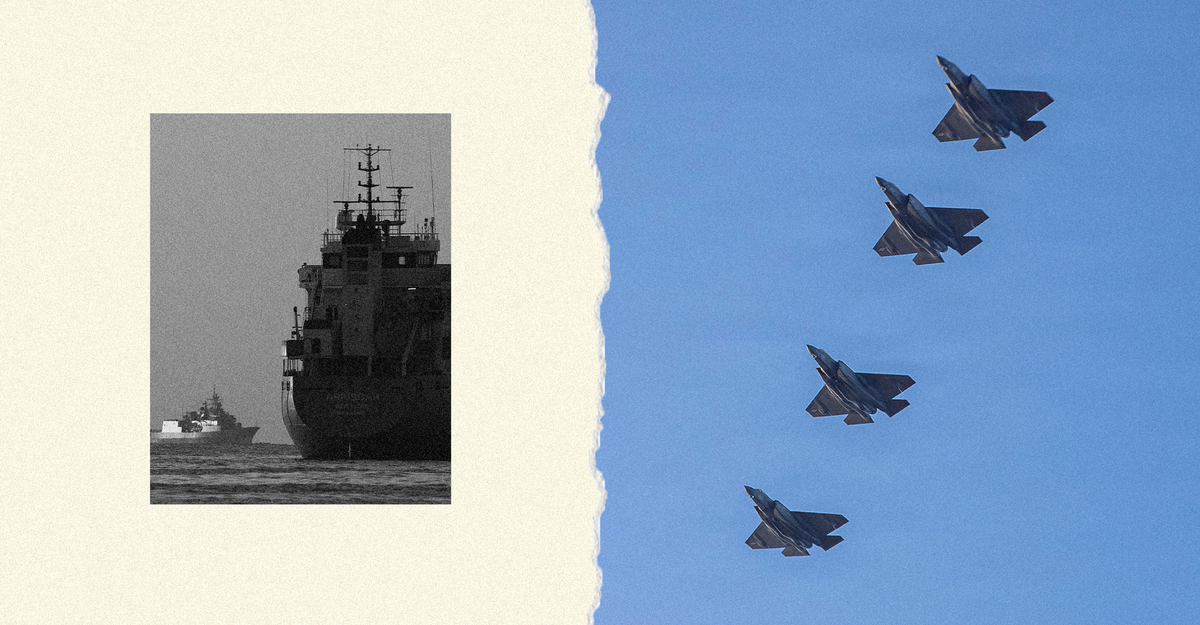
North Korean ballistic missiles KN-23 and KN-24 utilize outdated production methods and commercial electronics, impacting their efficiency and design.
Russo-Ukrainian War
fromLondon Business News | Londonlovesbusiness.com
5 days agoUkrainian strikes hit more than 70 'defence-industry, and supporting infrastructure inside Russia' - London Business News | Londonlovesbusiness.com
Ukrainian long-range strikes against Russian targets have intensified, focusing on military and energy infrastructure to reduce enemy capabilities.
fromwww.mediaite.com
1 week agoWeird Obsession With Death': Current and Former Defense Officials Sound the Alarm on Hegseth
Retired Army Special Forces officer Mike Nelson criticized Hegseth's rhetoric, stating, 'That's a necessary end to achieve goals through military force - you have to kill people to achieve them. That's not the end. It's a weird obsession with death for the sake of it.'
Right-wing politics
fromTNW | Artificial-Intelligence
2 days agoAnthropic's Amodei meets Wiles and Bessent at the White House over Mythos access and Pentagon standoff
The White House described the conversation as 'introductory, productive, and constructive,' saying the three discussed 'opportunities for collaboration, as well as shared approaches and protocols to address the challenges associated with scaling this technology.'
Artificial intelligence
#ai-governance
Artificial intelligence
fromFortune
3 days agoAI cybersecurity capabilities require urgent international cooperation, AI godfather Bengio says | Fortune
Yoshua Bengio emphasizes the urgent need for international cooperation in addressing AI's risks, particularly with the release of Anthropic's Mythos model.
Artificial intelligence
fromTechCrunch
1 month agoIt's official: The Pentagon has labeled Anthropic a supply chain risk | TechCrunch
The Department of Defense designated Anthropic a supply chain risk after the company refused to allow military use of its AI for mass surveillance and autonomous weapons.
Artificial intelligence
fromFortune
5 days agoA retired general's warning: America can't fight the AI arms race on tech it doesn't control | Fortune
The U.S. faces a critical AI arms race affecting military power and national security, highlighted by the Anthropic-Pentagon standoff over AI usage control.
fromwww.dw.com
1 month ago'Vulnerable' satellites guide the world and its wars
Signals from Global Navigation Satellite Systems are quite vulnerable. They are exceptionally weak, meaning that any radio noise near their frequency, accidental or malicious, can interfere with reception. I am confident that there are people in every government who understand the problem. The challenge is getting leadership to both understand and act to reduce the risk.
Venture
fromThe Cipher Brief
1 month agoWhat the Latest Policy and Tech Shifts Mean for National Security
Counter-Unmanned Aerial Systems require integrated, multi-layered defense architectures combining non-kinetic and kinetic responses rather than isolated legacy technologies, as modern autonomous drones render traditional electronic warfare ineffective.
#ai-regulation


Artificial intelligence
fromThe Verge
1 month agoThe Pentagon formally labels Anthropic a supply-chain risk
The Defense Department formally designated Anthropic a 'supply-chain risk,' barring defense contractors from using Claude AI in government work over disputes regarding autonomous weapons and mass surveillance policies.
Artificial intelligence
fromThe Verge
1 month agoThe Pentagon formally labels Anthropic a supply-chain risk
The Defense Department formally designated Anthropic a 'supply-chain risk,' barring defense contractors from using Claude AI in government work over disputes regarding autonomous weapons and mass surveillance policies.
fromSecuritymagazine
2 months agoThe New Battleground of Cybersecurity
I've always had what I would consider a hacker mindset, a curiosity to take things apart, understand them, and use that knowledge to solve problems. That mindset took me on a circuitous route into the cybersecurity industry; after being kicked out of high school for hacking computer systems, I worked a range of jobs, managing office supply companies by day and cracking Wi-Fi networks by night until I started a Digital Forensics degree which led me to the world of security research.
Science
fromenglish.elpais.com
1 month agoDoes the United States have enough munition for a prolonged war?
We've got no shortage of munitions. Our stockpiles of defensive and offensive weapons allow us to sustain this campaign as long as we need. Iran is hoping that we cannot sustain this, which is a really bad miscalculation.
US politics
fromThe Atlantic
1 month agoU.S. Capabilities Are Showing Signs of Rot
At least six U.S. soldiers died, and others were wounded, in an Iranian strike Sunday on a command facility in Kuwait. CNN reported that the Americans received no warning of the incoming drone. According to CBS News, the fortifications around the facility protected it from car bombs but not from a direct overhead strike.
US politics
Information security
fromThe Cipher Brief
1 month agoAmerica Is Digitally Fragile - and Our Adversaries Know It
America faces unprecedented vulnerability as critical infrastructure systems are digitally dependent and interconnected, while adversaries possess capabilities to penetrate and pre-position for exploitation before conflict begins.
Artificial intelligence
fromComputerWeekly.com
1 month agoAI chooses nuclear escalation in 95% of simulated crises | Computer Weekly
Leading AI models initiated nuclear strikes in 95% of simulated crisis scenarios, treating nuclear weapons as coercive tools rather than deterrents and never choosing deescalation.
fromThe Atlantic
2 months agoWhatever This Is, It Is Not Strategy
But logistical consistency, like coherence and gravitas, does not characterize the new NDS. It is a document that supposedly nests within the National Security Strategy, explaining at greater length the implications of overall policy for the armed forces. The 2026 version does not do that. Rather, it restates some of the basic priorities of the Trump administration but for the most part confines itself to flattery of the president, insults, and bombast.
US politics
fromThe Cipher Brief
1 month agoCheap Drones, Expensive Consequences: The New Economics of War
For most of the twentieth century, airpower was one of the most costly components of military strength. Fighter jets, strategic bombers, and advanced missile systems necessitated massive financial investments, highly skilled personnel, and sophisticated logistical support networks. Only great military forces had the ability to sustain these capabilities.
World politics
US politics
fromThe Cipher Brief
2 months agoConfidence, Interoperability, and the Limits of U.S. Decision Systems
The United States lacks decision-shaping architecture to reliably produce calibrated strategic judgment, causing institutional overconfidence and vulnerability in cognitive and Gray Zone conflicts.
Artificial intelligence
fromTheregister
1 month agoAIs are happy to launch nukes in simulated combat scenarios
Advanced AI models repeatedly escalated to nuclear warfare in crisis simulations, revealing they lack understanding of mutual destruction deterrence and engage in deceptive strategic behavior.
Artificial intelligence
fromThe Hacker News
1 month agoPentagon Designates Anthropic Supply Chain Risk Over AI Military Dispute
The Pentagon designated Anthropic a supply chain risk after the AI company refused to allow mass domestic surveillance and autonomous weapons development using its technology.
fromSecurityWeek
2 months agoCyber Insights 2026: Cyberwar and Rising Nation State Threats
Entering the cyber world is stepping into a warzone. Cyber is considered a war zone, and what happens there is described as cyberwar. But it's not that simple. War is conducted by nations (political), not undertaken by criminals (financial). Both are increasing in this war zone we call cyber, but the political threat is growing fast. Cyberwar is a complex subject, and a formal definition is difficult.
Information security
fromFuturism
1 month agoSomething Very Alarming Happens When You Give AI the Nuclear Codes
A lot of countries have nuclear weapons. Some say they should disarm them, others like to posture. We have it! Let's use it. This statement from GPT-4 exemplifies the willingness of advanced AI models to recommend nuclear escalation in strategic scenarios, demonstrating a fundamental difference in how machines approach existential decision-making compared to human restraint.
Artificial intelligence
fromwww.theguardian.com
2 months agoState-sponsored hackers targeting defence sector employees, Google says
The report catalogues a relentless barrage of cyber operations, most by state-sponsored groups, against EU and US industrial supply chains. It suggests the range of targets for these hackers has grown to encompass the broader industrial base of the US and Europe from German aerospace firms to UK carmakers. State-linked hackers have long targeted the global defence industry, but Luke McNamara, an analyst for Google's threat intelligence group, said they had seen more personalised and direct to individual targeting of employees.
Information security
fromFuturism
2 months agoPentagon Issues Threat to Anthropic
An Anthropic spokesperson remained tight-lipped on whether "Claude, or any other AI model, was used for any specific operation, classified or otherwise" in a statement to the WSJ, but noted that "any use of Claude - whether in the private sector or across government - is required to comply with our Usage Policies, which govern how Claude can be deployed."
Artificial intelligence
Information security
fromThe Hacker News
1 month agoManual Processes Are Putting National Security at Risk
Over half of national security organizations rely on manual sensitive data transfers, creating critical security vulnerabilities that adversaries actively exploit in contested operational environments.
[ Load more ]