#laser-communications
#laser-communications
[ follow ]
#amazon #globalstar #starlink #spacex #satellite-connectivity #apple #satellite-internet #space-technology
fromTelecompetitor
21 hours agoArchtop Fiber introduces 5 Gig and 8 Gig plans
"Customers shouldn't have to think about their WiFi: It should just work. By including eero devices with every new plan, we're making it easier for customers to get set up quickly and get strong, fast coverage throughout their homes."
Brooklyn
fromArs Technica
1 day agoMeet the Quantum Kid
Katia Moskvitch got the idea for a podcast after her precocious son, who loved scrolling through YouTube science videos and has been programming in Python since he was six, kept peppering her with big questions about the origins of life and the universe.
Podcast

Business intelligence
fromComputerWeekly.com
2 weeks agoStarlink reshapes satellite communications as industry enters terabit era | Computer Weekly
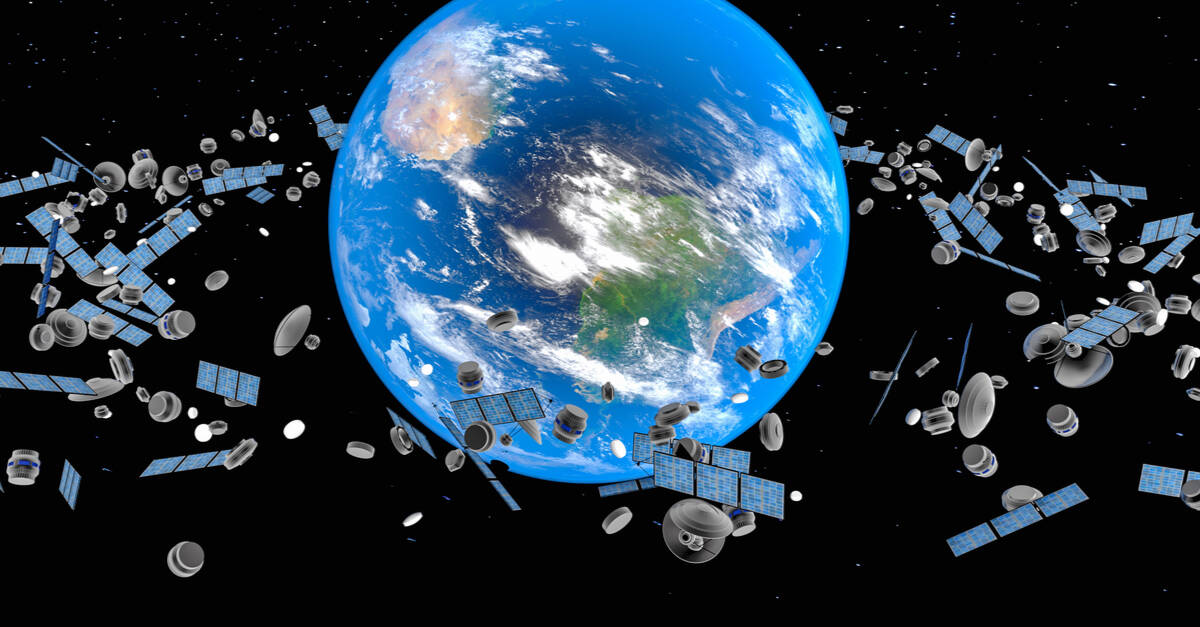
The satellite communications market is rapidly expanding, driven by demand for high-performance connectivity and the influence of non-geostationary orbit constellations like Starlink.
Science
fromSilicon Canals
1 week agoSpaceX, Amazon, and Google want orbital data centers - four engineering barriers reveal who really benefits - Silicon Canals
Orbital data centers will concentrate AI infrastructure power among a few dominant companies, limiting access for smaller competitors and national regulators.
Venture
from24/7 Wall St.
4 weeks agoBroadcom Just Shipped the World's First Quantum-Safe Network Encryption - 3 Reasons AVGO Investors Should Pay Attention
Broadcom shipped the first quantum-safe network encryption solution embedded at the silicon level, positioning itself as a first-mover in a compliance-driven enterprise infrastructure upgrade cycle.


fromLondon Business News | Londonlovesbusiness.com
1 month agoWhy long range communication is useful for industrial monitoring - London Business News | Londonlovesbusiness.com
Long-range radio waves can pass through obstacles more easily, which makes them perfect for monitoring expansive factories or outdoor infrastructure. A recent report by Fabrity highlighted that these systems use very little power. This allows sensors to operate for 5 to 10 years on a single battery. Using such tech means you do not have to install expensive wiring across your entire site.
Roam Research
#starlink


European startups
fromComputerWeekly.com
3 weeks agoStarlink launches services in UAE and Kuwait, expanding Middle East satellite internet | Computer Weekly
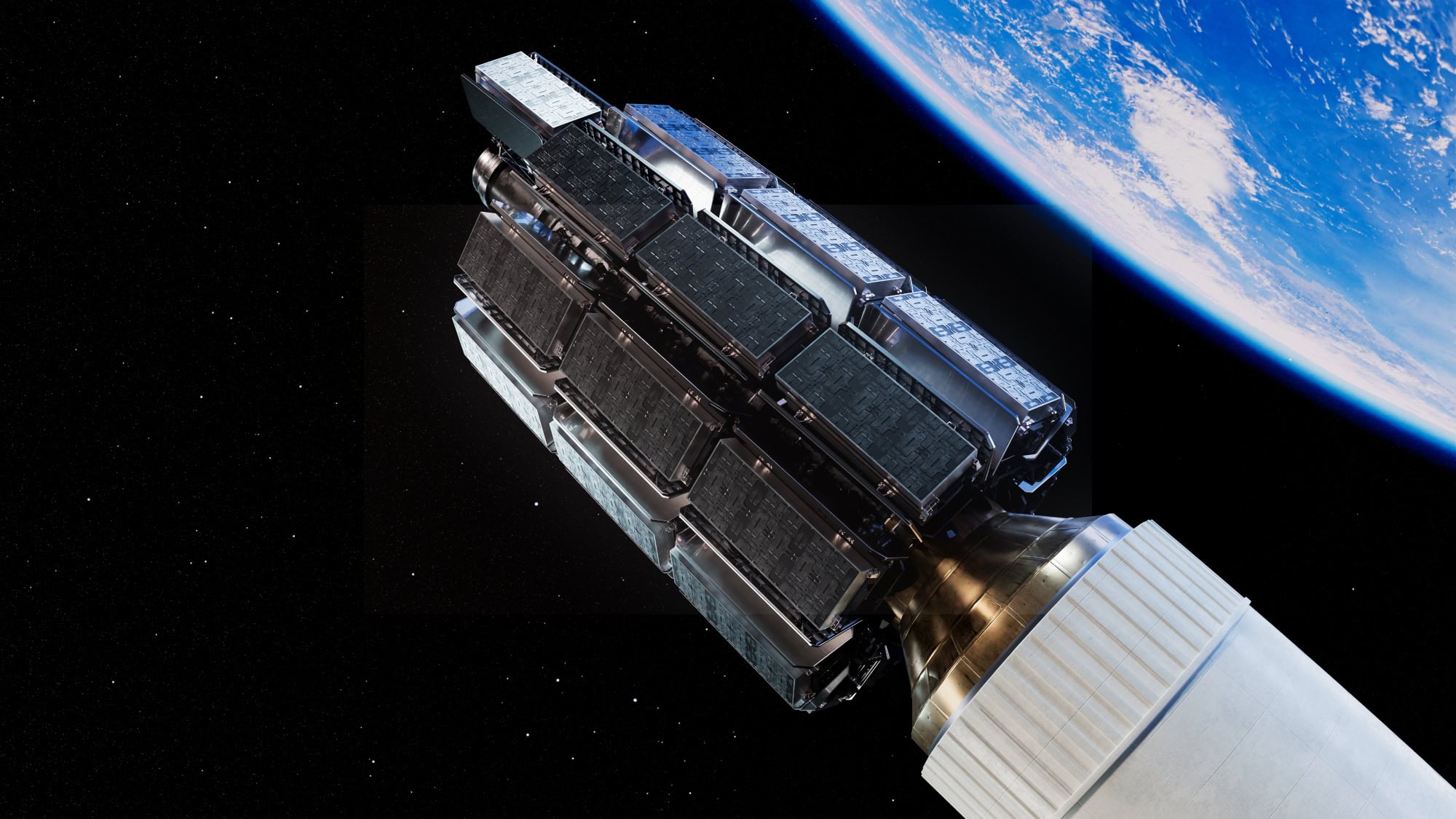
Starlink expands its Middle East operations by launching services in the UAE and Kuwait, enhancing global internet access with low-latency satellite technology.
fromFuturism
1 month agoAstronomers Spot Huge Microwave Laser Blasting Into Space
This system is truly extraordinary. We're seeing the radio equivalent of a laser halfway across the universe. Fundamentally, masers and lasers are focused beams of light in the same frequency. In the realm of astrophysics, these can arise from clouds of dust being excited into a higher energy state from the light emitted by other sources, like stars and black holes.
OMG science
Berlin
fromComputerWeekly.com
1 month agoT-Labs demos commercial viability of quantum networking | Computer Weekly
Telecommunications operator demonstrated quantum teleportation of qubits over more than 30 km of commercial fibre, integrating Qunnect's Carina entanglement hardware to support high-fidelity network transport.
Tech industry
fromThe Verge
1 month agoNvidia's spending $4 billion on photonics to stay ahead of the curve in AI
Nvidia invests $2 billion each in Lumentum and Coherent to develop photonics technology for AI data centers, improving energy efficiency and data transfer speeds through optical components.
fromMail Online
1 month agoHumanity receives mysterious 'mega-laser' signal from unknown source
This system is truly extraordinary. We are seeing the radio equivalent of a laser halfway across the universe. This galaxy acts as a lens, the way a water droplet on a window pane would, because its mass curves the local space-time. So we have a radio laser passing through a cosmic telescope before being detected by the powerful MeerKAT radio telescope.
Science
fromThe Verge
1 month agoTaara Beam provides 25Gbps connectivity over invisible beams of light
Light-based internet provider Taara, which spun out of Alphabet's "moonshot" incubator last year, just launched Taara Beam to provide 25Gbps connectivity within cities over invisible beams of light - line of sight permitting. Unlike last year's Taara Lightbridge, which connects communities separated by water and mountains at distances up to 20km (over 12 miles), the shoebox-sized Beam can be mounted to street poles and roof tops for city-wide connectivity at distances up to 10km. The 8kg (less than 20 pounds) device typically consumes about 90W.
Tech industry
#orbital-data-centers

Science
fromFuturism
1 month agoData Centers in Space Are Even More Cursed Than Previously Believed
SpaceX filed a patent for orbital data centers with up to one million satellites, but experts remain highly skeptical about financial feasibility and technological viability of space-based AI infrastructure.
fromSecurityWeek
1 month agoNIST's Quantum Breakthrough: Single Photons Produced on a Chip
NIST has developed a chip that reliably emits a single photon on demand. This ability will improve the efficiency of QKD (quantum key distribution) as we prepare for the arrival of quantum computers. Quantum computers will upend current cryptology by using Shor's algorithm to rapidly negate the current public/private key secure encryption methods. This has largely been solved by NIST's post quantum cryptology (PQC) algorithms.
Information security
fromTelecompetitor
2 months agoNMSurf on the decision to deploy Taara Lightbridge free-space optics: Interview
NMSurf is one of the largest fixed wireless providers in New Mexico, serving the central and northern area of the state. La Bajada was previously served by a 3-Gig microwave middle-mile connection. But, Catanach said, the bandwidth was becoming insufficient. New microwave licenses are hard to come by in New Mexico, he added, because the state itself claims many licenses for radio communications.
Tech industry
fromTelecompetitor
2 months agoQuantum security efforts must start now: Report
If platforms and solutions are not developed and put in place, according to "Quantum Threat: The Trillion-Dollar Security Race is On," there will be no protection against the breaking of public-key encryption in use today. This is ominously referred to as "Q-day." Q-day is coming. The report maintains quantum computers will be able to "perform certain calculations, particularly those required to break today's complex encryption standards, at speeds that are orders of magnitude faster than any supercomputer imaginable."
Information security
fromMedium
2 months agoHow Fiber Networks Support Edge Computing
Edge computing is a type of IT infrastructure in which data is collected, stored, and processed near the "edge" or on the device itself instead of being transmitted to a centralized processor. Edge computing systems usually involve a network of devices, sensors, or machinery capable of data processing and interconnection. A main benefit of edge computing is its low latency. Since each endpoint processes information near the source, it can be easier to process data, respond to requests, and produce detailed analytics.
Tech industry
fromEngadget
1 month agoHow to send a message via satellite on iPhone
Apple's satellite features were originally designed for emergencies, allowing iPhone users to contact emergency services when cellular and Wi-Fi coverage is unavailable. With recent versions of iOS, Apple has expanded those capabilities to include sending and receiving messages via satellite. This makes it possible to stay in touch with friends and family from remote locations where traditional networks do not reach, such as hiking trails, rural areas or offshore locations.
Apple
fromTelecompetitor
2 months agoAI requires stronger upload connections among U.S. carriers: Report
Ookla said the growing use of ChatGPT and other AI tools places much more demand on mobile networks than the typical activities of browsing social media and the web, watching videos, texting, and making the occasional phone call. As a result, more speed and expanded capabilities will be necessary. The report said advanced AI capabilities like AI-enabled glasses will put a particular strain on upload connections in the future.
Tech industry
Science
fromTheregister
1 month agoEurope, China, achieve gigabit links to geostationary sats
The European Space Agency and China's Institute of Optoelectronics both achieved gigabit-speed laser communication links to geostationary satellites, demonstrating major advances in satellite laser communication technology.
fromArs Technica
2 months agoAs data from space spikes, an innovative ground station company seeks to cash in
By the end of the year, Northwood, based in El Segundo, California, had shown the ability to build eight of these Portal arrays a month. And in January the company had deployed operational Portal antennas across two continents. These deployments, which comprise an area of 8 to 15 meters, have the equivalent capability of a 7-meter parabolic dish, said Griffin Cleverly, co-founder and chief technical officer of Northwood.
Science
Science
fromenglish.elpais.com
2 months agoThe technology that reveals what happens in 0.00000000000000000000001 second
Attosecond-scale light pulses reveal ultrafast electron dynamics, enabling new studies of materials, quantum processes, and biological structures, and have earned major scientific awards.
fromWIRED
1 month agoCould AI Data Centers Be Moved to Outer Space?
Now say you want to run some modest AI stuff. That's a bigger job, so let's scale up our cubical computer with edges twice as long as before. That would make the volume eight times larger (2 3), so we could have eight times as many processors, and we need eight times as much power input-2,400 watts. However, the surface area is only four times (2 2) larger, so the radiative power would be about 4,000 watts.
Science
fromComputerWeekly.com
1 month agoCisco, Qunnect claim quantum first with datacentre connectivity | Computer Weekly
Qunnect and Cisco have unveiled what they say is the first entanglement-swapping demonstration of its kind over deployed metro-scale fibre using a commercial quantum networking system. The demonstration combined Qunnect's room-temperature quantum hardware with Cisco's quantum networking software stack. The net result of the project is regarded by the partners as being able to bring practical quantum networks closer to scalable deployment, validating a spoke-and-hub model for scaling quantum networks through commercial datacentres.
Science
[ Load more ]