#quantum-technology
#quantum-technology
[ follow ]
#cybersecurity #quantum-computing #nobel-prize #macroscopic-quantum-tunnelling #superconducting-circuits
philosophy
fromApaonline
4 months agoHomo HURAQUS 2050 and the Disruptive Techno-Convergence Era: How Humanoid Robotics, AI, Quantum and Synthetic Biology Are Recasting The Future of Humanity
Civilization faces systemic frontier risks as converging transformative technologies outpace governance, enabling redesign of life, intelligence, and agency.
fromComputerWeekly.com
5 months agoA call to action to rebuild the UK's semiconductor industry | Computer Weekly
The first step is recognising that the UK is not trying to win the semiconductor race on every front. It can't, and it shouldn't. Instead, the country has embraced a niche strategy, focusing on areas where it can lead the world. Crucially, these are the parts of the value chain that create the most intellectual property and the highest margins. It is a strategy grounded in realism, but also one that demands urgency and coordination.
Miscellaneous
fromBusiness Matters
6 months agoUK invests 14m in new quantum projects to boost health, defence and transport innovation
The UK Government has announced more than £14 million in new funding to accelerate the commercial use of quantum technology across healthcare, defence, transport and energy, in a move it says will help power Britain's next industrial revolution. The investment, unveiled on Friday at the National Quantum Technologies Showcase in London, marks a major milestone in the country's National Quantum Technologies Programme - part of its wider plan to translate cutting-edge science into real-world applications that drive economic growth.
Science

fromwww.aljazeera.com
7 months agoNobel Prize for Physics awarded to trio for quantum mechanics discoveries
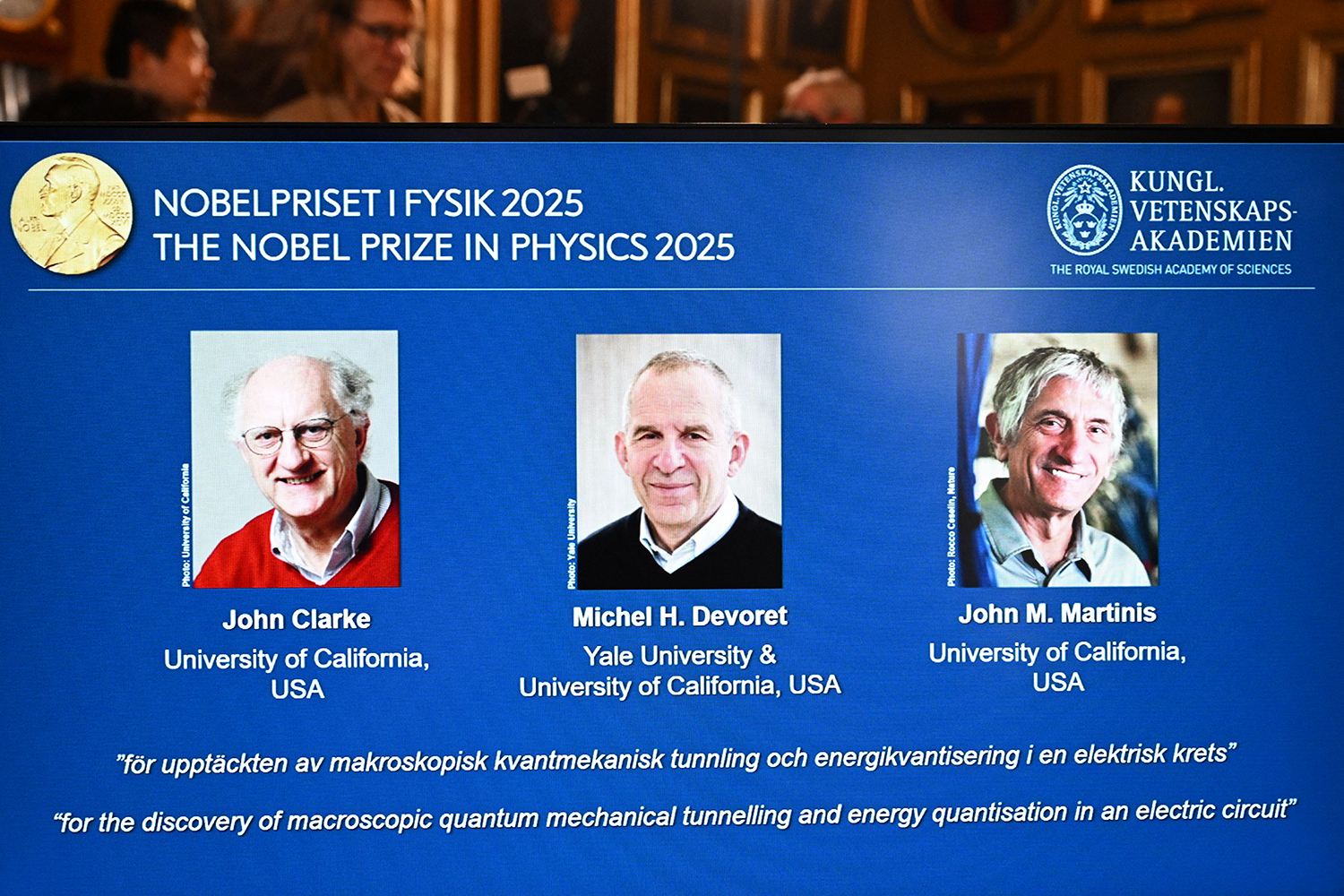
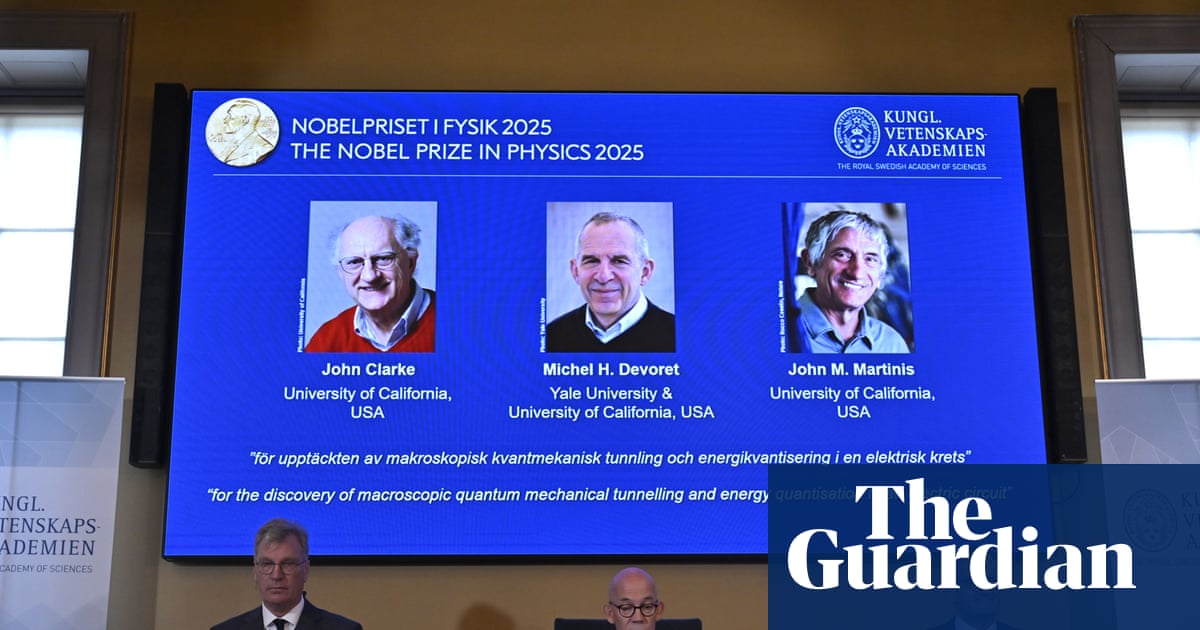
The Royal Swedish Academy of Sciences has awarded the 2025 Nobel Prize in Physics to John Clarke, Michel H. Devoret, and John M. Martinis for work on quantum mechanic tunnelling. The award, announced by the Royal Swedish Academy of Sciences on Tuesday, will be presented to the trio in December for the discovery of macroscopic quantum mechanical tunnelling and energy quantisation in an electric circuit.
Science
fromwww.npr.org
7 months agoThe Nobel Prize for physics is awarded for discoveries in quantum mechanical tunneling
John Clarke, Michel H. Devoret and John M. Martinis won the Nobel Prize in Physics on Tuesday for research into quantum mechanical tunneling. Clarke conducted his research at the University of California, Berkeley; Martinis at the University of California, Santa Barbara; and Devoret at Yale and also at the University of California, Santa Barbara. "To put it mildly, it was the surprise of my life," Clarke told reporters at the announcement by phone after being told of his win.
Science
fromNature
11 months agoDo our observations make reality happen?
...the textbook formulation of quantum mechanics has a 'measurement problem' - an unmanageable emphasis on the role of observers and their observations that makes it impossible to even begin to answer questions about the theory's connection to the structure of reality.
philosophy
[ Load more ]