Media industry
fromThe Motley Fool
13 hours agoThe S&P's New High Is Anything but Blah | The Motley Fool
Netflix's Q1 2026 results showed a beat largely due to a one-time $2.8 billion fee, but growth appears to be slowing.
Launching a fund used to be a real test of endurance, with timelines often stretching across many months. The process demanded patience that many ambitious founders found difficult to sustain.
U.S. equity markets delivered a strong performance over the past week, supported by improving geopolitical sentiment and renewed investor confidence, with all major indices recording gains exceeding 3%.
KLIP does not collect dividends from Chinese companies. The fund runs a 'covered call' or 'buy-write' strategy: it buys shares of the KraneShares CSI China Internet ETF (KWEB) and writes, or sells, corresponding call options on KWEB.
Ongoing conflict in the Middle East continues to disrupt global markets and oil prices, adding a persistent layer of uncertainty for UK firms. This geopolitical instability is driving higher cost pressures and intensifying concerns around supply chains and energy security, all of which are critical factors in strategic business decision making.
Drivers will feel some short-term relief as petrol and diesel prices edge lower, and markets are reacting strongly to the pause. But oil remains elevated, and that continues to feed through the entire economy, into prices, business costs and investment decisions.
Financial markets were firmly in the red as investors reacted to the Middle East conflict intensifying, with stocks down across Asia and Europe. Gold also fell, which suggests investors are once again liquidating assets that have previously served them well, or they are reacting to a further strengthening in the US dollar.
Energy prices remain the main driver of investor sentiment. Brent Crude is still trading above $85 a barrel-approximately 20% higher than before the latest flare-up in regional tensions-raising fresh concerns about the inflationary impact of prolonged instability.
U.S. financial markets experienced a volatile week, largely influenced by geopolitical developments in the Middle East and fluctuations in energy prices. Investor sentiment was driven primarily by external events rather than domestic fundamentals.
Shares surged 40.6 per cent to 27.2 pence as the company defied the challenging backdrop for advertising groups, but reported a fall in revenue. The company anticipates full year net revenue of roughly £664m, representing a like for like drop of 8.5 per cent. But operating profit is expected to jump 12 per cent to £75m, beating initial forecast and buoying the share price after it declined 18.5 per cent over the last twelve months after a succession of profit warnings.
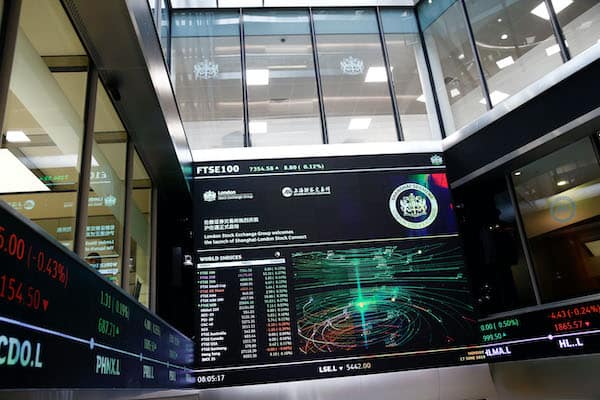
London's Footsie is in a footloose mood again, with higher metals prices buoying mining stocks and corporate results from financial giants surprising on the upside. The index has scaled fresh heights in early trade, with investors showing enthusiasm for London-listed stocks amid global uncertainty.
EWU tracks the MSCI United Kingdom Index, holding large- and mid-cap UK-listed equities. Income flows entirely from dividends paid by those underlying companies, which are then passed through to fund shareholders twice per year. The UK market has long been known for generous corporate dividend cultures, particularly in financials, energy, and consumer staples.
According to BRC-Opinium data, consumer expectations over the next three months the state of the economy improved to -32 in January, up from -38 in December. Consumers personal financial situation improved to -8 in January, up from -10 in December and their personal spending on retail fell to -6 in January, down from +6 in December. Consumers personal spending overall fell to +5 in January, down from +17 in December,
The VIX index, often referred to as Wall Street's "fear gauge," rose by 23%, indicating a sharp uptick in investor anxiety and concerns about market stability. A higher VIX suggests that investors anticipate potential volatility and seek protection against market downturns.
Global stocks hit a new record in Asian trade, led by a three-day rally in Tokyo where the Nikkei jumped to a fresh peak, after Japan's conservative governing coalition strengthened its grip on power. Sanae Takaichi's Liberal Democratic party (LDP) secured a comprehensive victory in Sunday's election. The Nikkei jumped 2.3% to a new all-time high, and the yen rose for a second day.
For the second month, low payment rates (33.4%) and high pre-Christmas spending led to rising average balances. These trends signal continued financial stress for consumers, with balances continuing their persistent upward trend seen in recent years. It is expected that payment rates will increase in January as consumers traditionally focus on paying off Christmas spend in the New Year. December typically sees the number of customers missing one payment increase and 2025 was no exception, as consumers prioritised new spending over repaying balances.
The US dollar held steady on Friday, hovering near two-week highs and on track to close the week in positive territory. The currency strengthened in recent sessions, supported by the nomination of Kevin Warsh as the next Federal Reserve chair, a series of upside surprises in manufacturing and services PMIs, and cautious rhetoric from some Fed officials. However, the supportive backdrop has been challenged by a deterioration in labour market indicators.
Market volatility is high, with the VIX index up 5% in today's session. The latest inflation data came in better than expected, offering what should become relief for markets. Consumer prices rose 2.4% year over year last month, a cooler reading that brings inflation back toward levels last seen in mid-2025. As the gauge edges closer to the Federal Reserve's 2% target, expectations for an eventual rate cut are likely to gain momentum, even as this week's labor market data reflected strength.