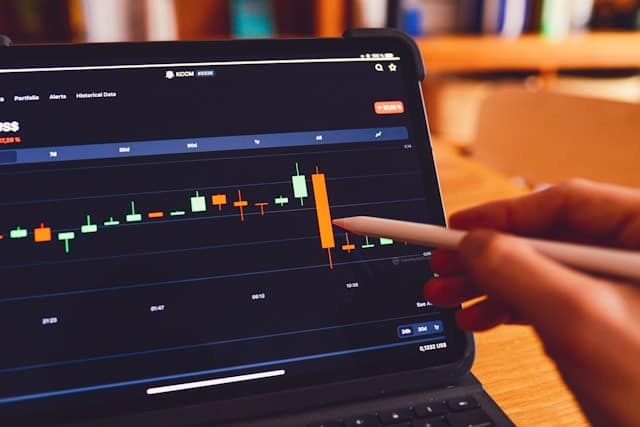
"A backtest is a simulation showing the performance your strategy attained on the historical price data, eventually allowing you to assess the risk of whether an edge you recognize is real and validate the behaviour of your implemented strategy before deploying it with live trading capital. If done correctly, a well-planned backtest can help you to find and understand the strengths and weaknesses of your trading strategies and signals and get more confident in your approach to active trading."
"Before you start analysing charts, get the rules around your strategy as clear as possible. What has to happen to generate a buy or sell signal? Is it based on technical indicators, price action, or a combination of the two? For example, traders may include conditions that focus on how the price action moves, or use a volatility indicator. If you're focused on the price action, and you need to understand this over very small timeframes,"
Backtesting simulates a trading strategy's performance on historical price data to assess whether an observed edge is real and to validate implemented strategy behaviour before live deployment. A rigorous backtest reveals strengths and weaknesses of strategies and signals, helping to quantify risk and build trading confidence. Traders should first define explicit rules for buy and sell signals, specifying indicators, price-action conditions, or volatility filters and considering tick-level and high-frequency implications for very small timeframes. Gathering sufficient historical price data and experimentally testing strategies before activating automated bots is essential to avoid premature live execution.
Read at London Business News | Londonlovesbusiness.com
Unable to calculate read time
Collection
[
|
...
]