#economic-concentration
#economic-concentration
[ follow ]
#wealth-inequality #income-inequality #k-shaped-economy #tariffs #billionaires #artificial-intelligence
fromThe Atlantic
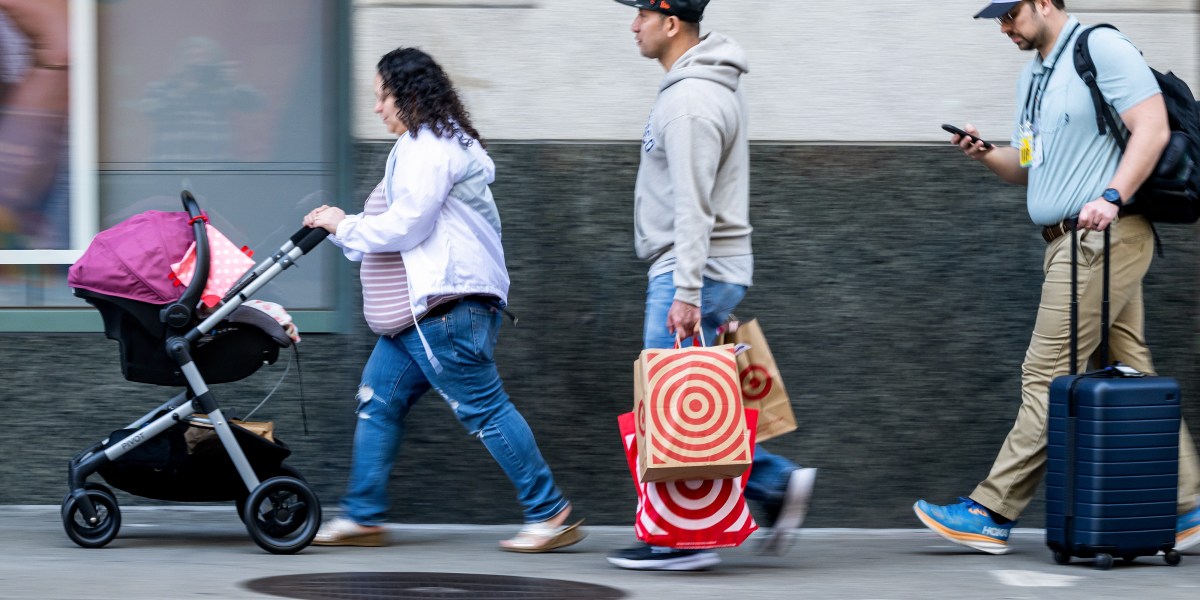
6 days agoA Pillar of the Economics Establishment Admits That It Was Wrong
The World Bank's recent report argues that government intervention, when done right, can actually be an essential ingredient of economic success, reversing decades of opposition to industrial policy.
World politics
fromThe New Yorker
6 days agoCory Doctorow on the High Cost of Living with the Ultra-Rich
Billionaireism describes both the pathology that affects you when you are so wealthy that you're effectively above consequences and above moral consideration for others, and the pathologies that having a society dominated by such people inflicts on the rest of us.
Philosophy
fromwww.theguardian.com
4 days agoCentral bank bosses enlist for war game to gauge threat of Lehman-style bust
The most senior officials from the US Federal Reserve, the European Central Bank, and the Bank of England are expected to take part in a desktop stress test to respond to another Lehman Brothers-style collapse.
World news
fromFuturism
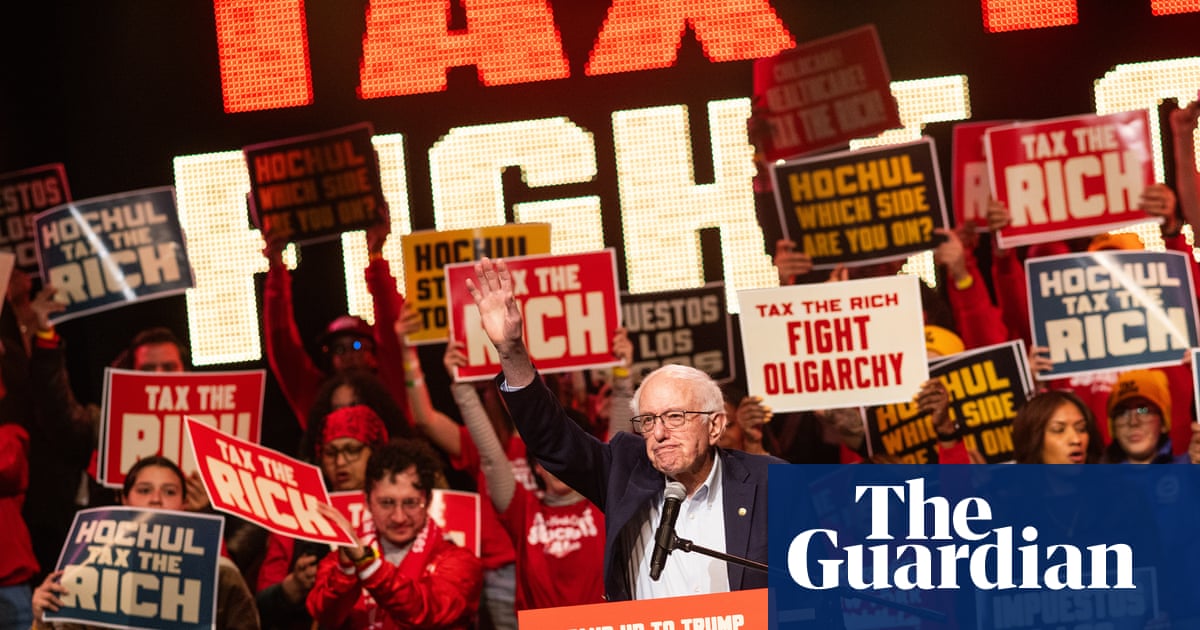
1 week agoBillionaire Says Insider Trading Should Be Fully Legalized
"I'm in favor of not having any rules against insider trading. I would like all the information out there as soon as it's available. Because look, as a society, we are better off knowing as soon as possible anything that is knowable."
Business
Right-wing politics
fromFortune
1 month agoEconomists agree: You're not crazy for feeling like the rich get richer, and the poor are doing worse. Welcome to the 'K-shaped economy' | Fortune
The K recovery illustrates a growing economic divide where the wealthy prosper while the poor struggle, echoing historical patterns of inequality.

fromApaonline
1 month agoGood Work and Economic Democracy
Within the workplace, the content and conditions of work are largely controlled by employers who often have an interest in degrading the quality of work, both to increase productivity and to increase their control over employees in the workplace. Outside the workplace, employers have both an incentive and the power to undermine measures that would improve the quality of work through the political process.
Philosophy
Left-wing politics
fromwww.theguardian.com
1 month agoAmerica needs a movement to curb billionaires' power | Steven Greenhouse
Over 900 US billionaires wield excessive influence over elections, economy, government policies, and media, threatening democracy and economic fairness, requiring urgent grassroots action to curb their power.
European startups
fromwww.dw.com
1 month agoUS trade probes could lead to new tariffs for EU, China
The US launched two trade investigations targeting excess industrial capacity and forced labor imports, potentially leading to new tariffs on major trading partners after the Supreme Court limited Trump's tariff authority.
#wealth-inequality

Business
fromFortune
4 weeks agoBillionaire Larry Fink says you're wrong to think that AI stealing your job is the big problem-it's really about what it's doing for his class | Fortune
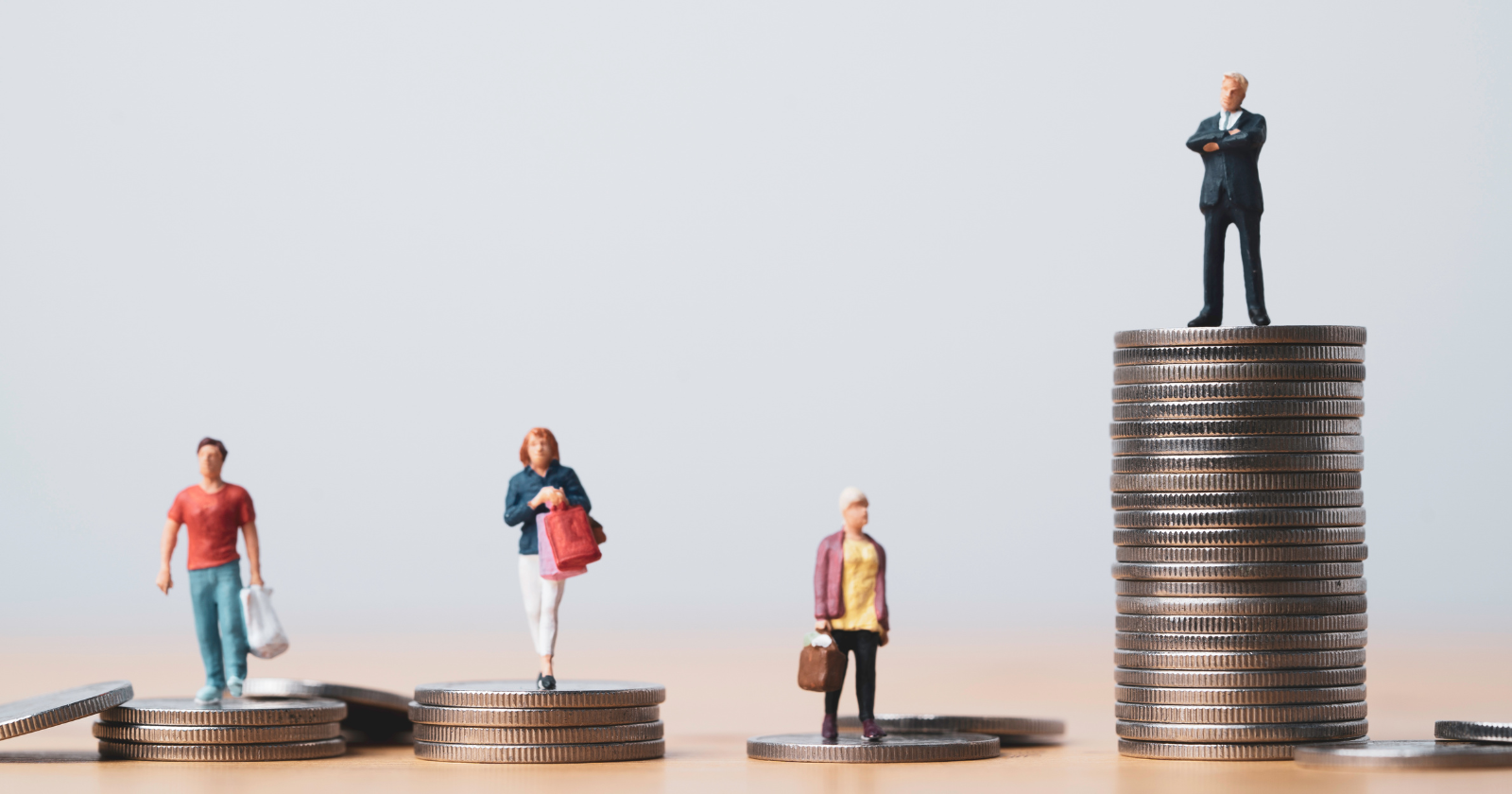
Wealth inequality, exacerbated by AI, poses a significant threat to the economy, concentrating wealth among asset owners and technology users.
World politics
fromwww.theguardian.com
1 month agoWe can tell you who will really get rich from this oil crisis and how we can stop them | Isabella Weber and Gregor Semieniuk
Strait of Hormuz disruptions from Middle East conflict drive oil prices above $100 per barrel, generating record profits for oil and gas companies while governments struggle with economic fallout.
#k-shaped-economy
Business
fromFortune
1 month agoThe K-shaped economy has left many six-figure earners 'on thin ice' as housing costs, lifestyle creep, and the job market put them at risk | Fortune
High earners are financially vulnerable despite their income, with many at risk due to overspending and economic fluctuations.

Business
fromFortune
1 month agoThe K-shaped economy has left many six-figure earners 'on thin ice' as housing costs, lifestyle creep, and the job market put them at risk | Fortune
High earners are financially vulnerable despite their income, with many at risk due to overspending and economic fluctuations.
History
fromFortune
2 months agoWhy your boss loves AI and you hate it: corporate profits are capturing your extra productivity, and your salary isn't | Fortune
Technological revolutions boost productivity but often leave worker pay stagnant for decades, risking a repeat of Engels' pause amid today's AI-driven transformation.
fromFast Company
1 month agoSmart businesses don't adapt to crony capitalism
Defense Secretary Pete Hegseth took the unprecedented step of designating a U.S. firm-Anthropic-as a supply chain risk. Anthropic's crime? It refused to violate industry-wide protocols against using AI for mass surveillance or autonomous weapons. Hegseth's designation, which has until now been reserved for foreign firms, bars U.S. military contractors from doing business with the company.
US politics
fromThe Globe and Mail
2 months agoBusiness Brief: Heralding the age of Western decline
U.S. President Donald Trump, with his lust for Greenland and hectoring of Europe, thinks the world is at his mercy,and thatthe U.S. is invincible. He's right on the first point. But he discovered this week that he's wrong about the second one. In Davos at the World Economic Forum, Trump climbed down on his Greenland threats after his actions caused chaos in the markets.
World news
fromTruthout
1 month agoTrump's Economy Is Hurting Americans - and Setting Us Up for Long-Term Collapse
Typical of Trump, he is boasting about the performance of the U.S. economy in the most hyperbolic terms. He even declared that his economy is 'the greatest ever in history' in a recent interview on Fox Business Network. He points to the stock market and allegedly low inflation to back his claim.
US politics
fromFortune
2 months agoThe great power gap: Billionaires are 4,000 times more likely to hold office than you are, and Oxfam warns it's ruining democracy | Fortune
According to Oxfam International's "Resisting the Rule of the Rich: Protecting Freedom from Billionaire Power" report this week, a billionaire boom has coincided with the rise of the richest exerting political influence, with billionaires 4,000 times more likely to hold office than less wealthy people globally. And if those billionaires aren't running for office, they're pouring money into campaigns. Per Oxfam, one in six dollars spent by all U.S. candidates, parties, and committees in the 2024 elections came from 100 billionaire families.
US politics
US politics
fromBusiness Insider
2 months agoTrump's former chief economic advisor says workers are 'suffering' in America's K-shaped economy
The US economy shows robust overall growth while many Americans face acute affordability struggles, widening wealth gaps and shifting political focus ahead of midterm elections.
fromFortune
2 months agoTrump's economy is the 'least conservative' in a lifetime, top economist warns. 'Our kids will feel it in a set of lost opportunities' | Fortune
"It's the least conservative government of my lifetime." Wolfers, who the IMF once named one of 25 young economists in the world "shaping the way we think about the global economy," said that Trump's undermining of federal institutions' independence and propensity to insert himself in private sector decisions is reorienting the economy away from a productive and predictable path. The result, Wolfers warned, could be a generation of missed opportunities and lost growth.
US politics
Business
fromFortune
2 months agoThe economy isn't K-shaped. For 87 million, people, it's desperate and for another 46 million it's elite | Fortune
A split in consumer confidence across income groups threatens stability as millions facing affordability-driven strain begin abandoning long-term planning and exiting upward mobility.
[ Load more ]