#vulnerability-management
#vulnerability-management
[ follow ]
#cybersecurity #application-security #ai #privilege-escalation #ai-security #cve #security-automation #devsecops
Information security
fromtheregister
2 days agoWelcome to the vulnpocalypse, as vendors use AI to find bugs and patches multiply like rabbits
AI-based code scanning is rapidly increasing vulnerability discovery, driving more patches and greater administrative workload while raising risks if patches break systems.
#ai-cybersecurity
London startup
fromTNW | Security
6 days agoIntruder launches AI pentesting agents as GCHQ-backed startup automates $50K manual security tests
AI pentesting agents replicate human methodology to validate scanner findings and deliver vulnerability results in minutes at far lower cost than manual testing.








#application-security
Software development
fromTechzine Global
1 month agoCheckmarx Focuses AppSec on AI Development
Checkmarx One integrates AI-driven security with autonomous agents to continuously monitor code throughout development, shifting security from a separate step to an embedded process that addresses vulnerabilities earlier in the cycle.
fromtheregister
4 days agoTaiwan's train cyber-trauma reveals a global system that's coming off the tracks
There are three little words to make the heart beat faster in anyone who knows what they mean: critical infrastructure resilience. If you run that infrastructure or a country dependent on it, you need energy, communication and transport to be impregnable to cyber attacks. This is doubly so if that country is five minutes by incoming missile from an implacable hyper-competent enemy sworn to invade you.
Information security
fromThe Hacker News
6 days agocPanel, WHM Patch 3 New Vulnerabilities After Zero-Day Exploitation
cPanel has released updates to address three vulnerabilities in cPanel and Web Host Manager (WHM) that could be exploited to achieve privilege escalation, code execution, and denial-of-service. The list of vulnerabilities is as follows - CVE-2026-29201 (CVSS score: 4.3) - An insufficient input validation of the feature file name in the "feature::LOADFEATUREFILE" adminbin call that could result in an arbitrary file read. CVE-2026-29202 (CVSS score: 8.8) - An insufficient input validation of the "plugin" parameter in the "create_user API" call that could result in arbitrary Perl code execution on behalf of the already authenticated account's system user. CVE-2026-29203 (CVSS score: 8.8) - An unsafe symlink handling vulnerability that allows a user to modify access permissions of an arbitrary file using chmod, resulting in denial-of-service or possible privilege escalation.
Information security
Software development
fromDevOps.com
1 week agoVercel's deepsec Brings AI-Powered Security Scanning Into the Development Workflow - DevOps.com
Deepsec automates early, agent-driven security review by scanning, investigating, revalidating, enriching, and exporting findings from large codebases on your infrastructure.
Information security
fromThe Hacker News
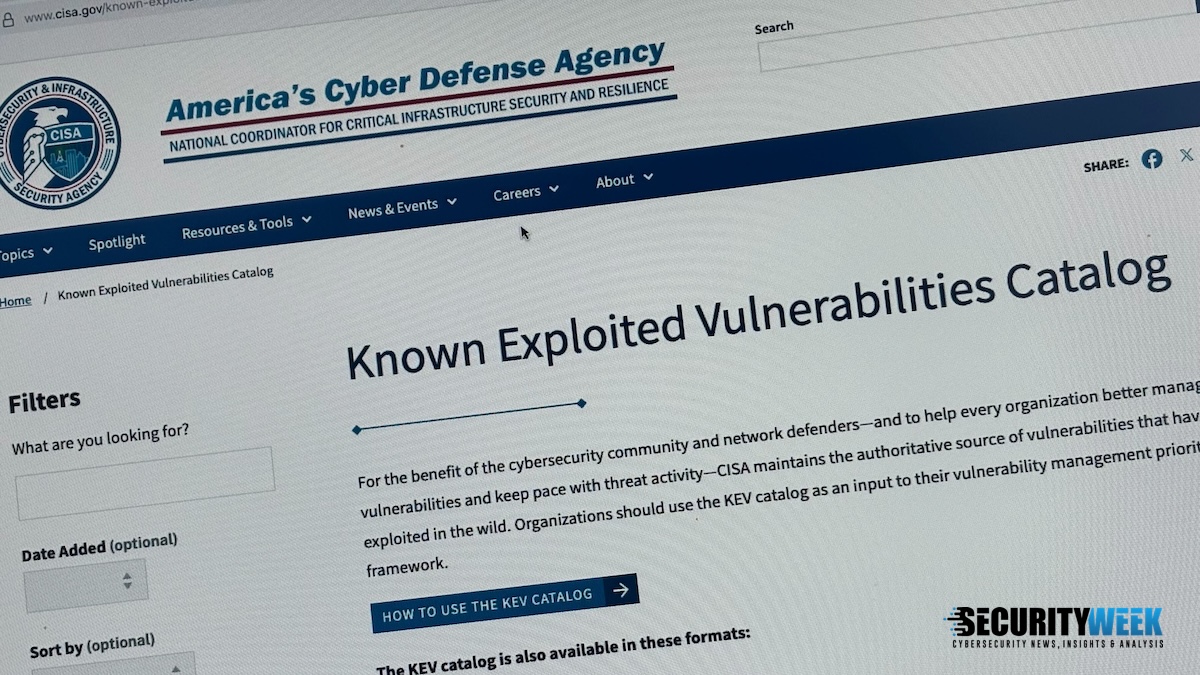
1 week agoThreatsDay Bulletin: Edge Plaintext Passwords, ICS 0-Days, Patch-or-Die Alerts and 25+ New Stories
Basic attack methods like compromised packages, fake apps, and stolen credentials remain the most effective hacking techniques in 2026, while AI accelerates exploit discovery and defenders struggle to patch faster than attackers automate.





Information security
fromDevOps.com
1 month agoMallory Launches AI-Native Threat Intelligence Platform, Turning Global Threat Data Into Prioritized Action - DevOps.com
Mallory provides an AI-native threat intelligence platform that delivers actionable insights for enterprise security teams, focusing on real threats and vulnerabilities.



Information security
fromSecurityWeek
1 month agoCritical ScreenConnect Vulnerability Exposes Machine Keys
ConnectWise released a security update for ScreenConnect addressing CVE-2026-3564, a critical vulnerability allowing attackers to access cryptographic machine keys by encrypting previously exposed cryptographic material in server configuration files.
Privacy professionals
fromSecurityWeek
1 month agoHacker Conversations: Ben Harris, from Unintentional Young Hacker to Intentional Adult CEO
Ben Harris evolved from a mischievous school hacker into a legitimate cybersecurity entrepreneur, founding WatchTowr to identify and validate exploitable vulnerabilities in real-time.
fromMedium
1 month agoTruRisk : Qualys' Approach for Prioritizing Asset for Patch Management
TruRisk is designed to aggregate vulnerability data at the asset level and convert it into a measurable, business-aligned cyber risk score. Rather than evaluating vulnerabilities in isolation, TruRisk calculates a consolidated risk value per asset by helping security teams understand which systems pose the greatest operational and strategic risk.
Business intelligence
DevOps
fromTechzine Global
1 month agoNinjaOne launches Vulnerability Management for detection and remediation
NinjaOne's Vulnerability Management solution enables real-time vulnerability detection and automated remediation integrated into a single workflow, eliminating delays from traditional periodic scanning approaches.
Information security
fromThe Hacker News
2 months agoWhat Boards Must Demand in the Age of AI-Automated Exploitation
AI-powered exploitation has eliminated the time constraints that previously made large vulnerability backlogs survivable, forcing organizations to immediately address security gaps or face rapid compromise.
fromThe Hacker News
2 months agoMicrosoft Patches 84 Flaws in March Patch Tuesday, Including Two Public Zero-Days
This month, over half (55%) of all Patch Tuesday CVEs were privilege escalation bugs, and of those, six were rated exploitation more likely across Windows Graphics Component, Windows Accessibility Infrastructure, Windows Kernel, Windows SMB Server, and Winlogon. We know these bugs are typically used by threat actors as part of post-compromise activity, once they get onto systems through other means (social engineering, exploitation of another vulnerability).
Information security
fromSecurityWeek
2 months agoAdobe Patches 80 Vulnerabilities Across Eight Products
The company rolled out fixes for 19 flaws in Adobe Commerce and Magento Open Source, urging users to apply the patches within the next 30 days, based on these products being a known target for threat actors. The update resolves six high-severity bugs, five of which could lead to privilege escalation: CVE-2026-21290, CVE-2026-21361, CVE-2026-21284, CVE-2026-21311, and CVE-2026-21309.
Information security

Information security
fromThe Hacker News
2 months agoCISA Flags SolarWinds, Ivanti, and Workspace One Vulnerabilities as Actively Exploited
CISA added three actively exploited vulnerabilities to its KEV catalog, including critical flaws in SolarWinds Web Help Desk, Omnissa Workspace One UEM, and Ivanti Endpoint Manager, with federal agencies required to patch by mid-to-late March 2026.
Information security
fromThe Hacker News
2 months agoHikvision and Rockwell Automation CVSS 9.8 Flaws Added to CISA KEV Catalog
CISA added two critical vulnerabilities affecting Hikvision and Rockwell Automation products to its Known Exploited Vulnerabilities catalog due to active exploitation evidence.
fromTheregister
2 months agoRapid AI-driven development makes security unattainable
Security debt as 'known vulnerabilities left unresolved for more than a year' now affects 82 percent of companies, up from 74 percent a year ago. High-risk vulnerabilities, meaning flaws that are both severe and likely to be exploited, have risen from 8.3 percent to 11.3 percent.
Information security

Information security
fromThe Hacker News
3 months agoThreatsDay Bulletin: New RCEs, Darknet Busts, Kernel Bugs & 25+ More Stories
Small, quiet shifts across systems—abused trusted tools and unnoticed vulnerabilities—are causing privilege escalation, cryptomining infections, and broader erosion of access, data, and trust.

Information security
fromThe Hacker News
3 months agoExposure Assessment Platforms Signal a Shift in Focus
Exposure Assessment Platforms replace traditional Vulnerability Management by providing continuous, risk‑prioritized, cross‑layer visibility to reduce alert fatigue and address “dead‑end” exposures.
fromAzure DevOps Blog
4 months agoWork item linking for Advanced Security alerts now available - Azure DevOps Blog
Security vulnerabilities don't fix themselves. Someone needs to track them, prioritize them, and actually ship the fix. If you've ever tried to manage security alerts alongside your regular sprint work, though, you know the friction: you're looking at an alert in one tab, switching to your backlog in another, trying to remember which vulnerability you were supposed to file a bug for.
Information security
Information security
fromComputerworld
5 months agoWhy security needs a step change to thwart cyber attacks amid surging innovation
Enterprises must implement comprehensive vulnerability management—including automated scanning, prompt patching, and scalable penetration testing—to prevent preventable breaches and reduce attack surfaces from AI adoption.
fromNew Relic
5 months agoHow to Keep a Secure Environment with New Relic: Your Observability Shield
However, this change has come with some difficulties, since all our business information is stored online there has also been a spike in criminals who want to get profit out of stealing said information or preventing business operations. Just in 2024, the FBI has reported over $16.6 billion in losses related to cybercrime, and this value is only increasing year over year making that an "observable" environment must also be a "secure" one.
Information security
Information security
fromThe Hacker News
6 months agoWhen Attacks Come Faster Than Patches: Why 2026 Will be the Year of Machine-Speed Security
Newly disclosed vulnerabilities are frequently weaponized within 48 hours, forcing defenders to outpace automated, AI-enhanced attacker workflows and abandon slow patch cadences.
Information security
fromThe Hacker News
6 months agoBridging the Remediation Gap: Introducing Pentera Resolve
Operational gaps, not visibility, prevent timely remediation of vulnerabilities detected across fragmented security tools; continuous, validated, and automated remediation workflows are required.
fromSecurityWeek
7 months agoVirtual Event Today: Attack Surface Management Summit
SecurityWeek's Attack Surface Management Virtual Summit is now LIVE and runs today from 11AM - 4PM ET. Join the online event where cybersecurity leaders and practitioners will dive into the strategies, tools, and innovations shaping the future of ASM. As digital assets and cloud services continue to expand, defenders are shifting tactics to continuously discover, inventory, classify, prioritize, and monitor their attack surfaces.
Information security
[ Load more ]