#urban-infrastructure
#urban-infrastructure
[ follow ]
#new-york-city #traffic-safety #san-francisco #pedestrian-safety #new-york-city-policy #public-health
Canada news
fromwww.cbc.ca
5 days agoToronto ramps up cleanup efforts ahead of World Cup but some question what 'cleanup' entails | CBC News
Toronto’s Keep Toronto Beautiful campaign accelerates spring cleaning to prepare public spaces and infrastructure for the FIFA World Cup, while concerns remain about displacement and environmental impacts.
Miscellaneous
fromArchDaily
1 week agoAfter Corbusier: How Southeast Asia Turned the Satellite City Into a Transit Megaproject
Southeast Asia's architectural legacy centers on planning systems and infrastructural frameworks that enable high-density urban growth, rather than individual iconic buildings.

#traffic-safety
San Francisco
fromStreetsblog San Francisco
1 month agoThe Kirkham Neck-Down Worked for Safety, So San Francisco Removed it - Streetsblog San Francisco
SFMTA removed the neck-down safety feature on Kirkham, replacing it with speed humps and median islands despite evidence of its effectiveness in slowing traffic.




fromGothamist
1 month agoNYC's 'trash revolution' gets new general as Mamdani names his sanitation chief
As commissioner, Gregory will carry forward the transformative projects he helped build, from waste containerization and curbside composting to commercial waste reform... I look forward to working with Gregory to keep pushing forward to build a cleaner, healthier and more just city for all New Yorkers.
New York City
#pothole-repair


New York City
fromNew York Post
1 month agoExclusive | 23-year-old mechanic rakes in $2,200 a night off single NYC pothole: 'One man's misfortune is another man's blessing'
A Brooklyn mechanic earns $2,200 nightly by repairing tires damaged by a massive pothole, exploiting the city's inadequate road maintenance.



fromArchDaily
2 months agoMobility Justice: Urban Equity in an Era of Innovation
Every city contains two transportation systems. One is the visible network of roads, rail lines, sidewalks, and bus routes mapped in planning documents. The other is the invisible geography of privilege and exclusion embedded within it: the neighborhoods that received highways instead of parks, the communities whose bus routes were cut, the sidewalks that abruptly end at the edge of a district.
Alternative transportation
San Francisco
fromStreetsblog
2 months agoOp-ed: Double Parking Likely Contributed to Inner Sunset Tragedy - Streetsblog San Francisco
Double-parked vehicles force cyclists into dangerous traffic situations, causing serious injuries and deaths that could be prevented through enforcement of parking violations.


New York City
fromTime Out New York
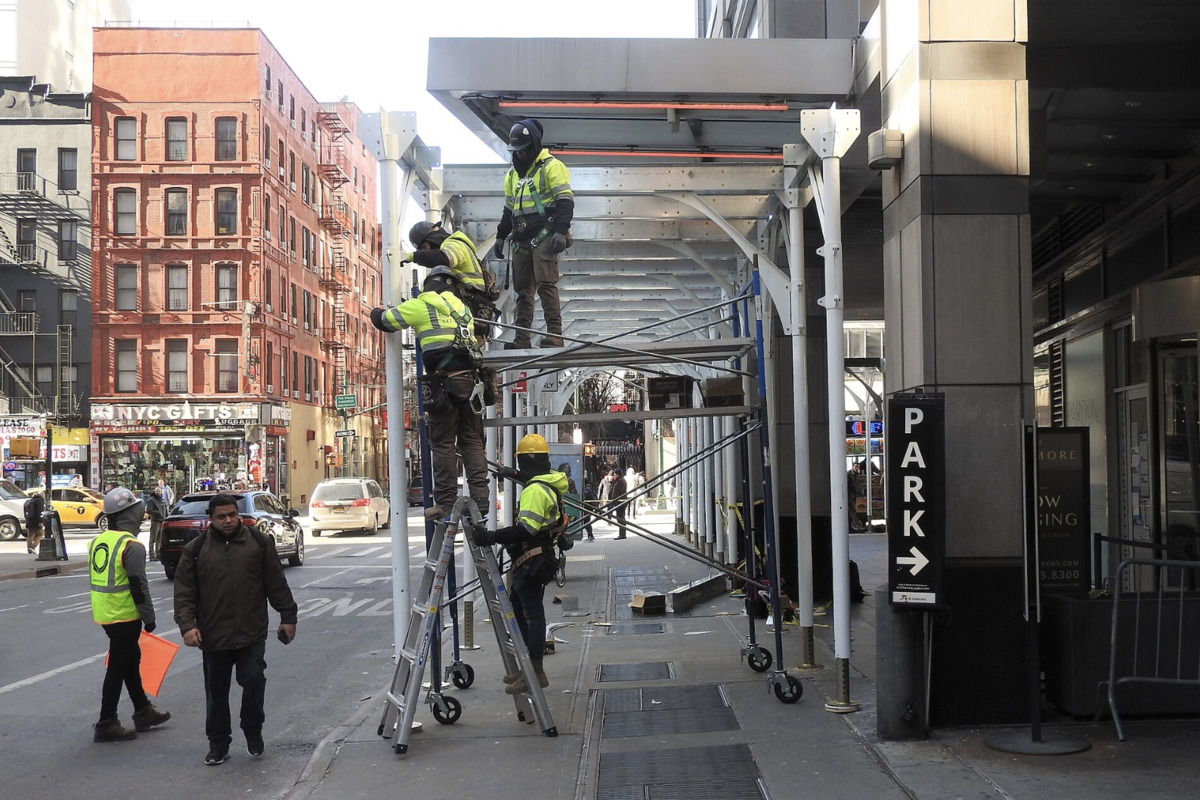
2 months agoNYC finally moves to crack down on endless scaffolding
New York City is implementing new scaffolding regulations to reduce sidewalk sheds covering 380 miles of streets and shorten their duration, targeting structures that have remained in place for years or decades.
New York City
fromGothamist
2 months agoMamdani eyes fewer, shorter-lived NYC sidewalk sheds with new scaffolding rules
New York City is implementing new sidewalk shed regulations to limit extension to 40 feet maximum and increase enforcement against indefinite installations covering over 380 miles of streets.
New York City
fromwww.amny.com
2 months agoMAMDANI'S FIRST 100 DAYS: Mayor announces plan to take down sidewalk sheds at 40 NYCHA sites in new scaffolding plan | amNewYork
Mayor Mamdani announced a citywide plan to reduce New York City's 7,859 sidewalk sheds through regulatory changes, enforcement, and accelerated repairs, with immediate removal beginning at NYCHA properties.
New York City
fromCity Limits
2 months agoCity to Relocate 'Front Door' of the Men's Shelter System, And What Else Happened This Week in Housing
New York City will close the 30th Street Shelter in May 2024, relocating its intake operations to two East Village locations, displacing 250 residents and raising concerns about accessibility and service continuity.
Canada news
fromwww.cbc.ca
2 months agoFord muses about filling in part of Toronto waterfront for new convention centre | CBC News
Ontario Premier Doug Ford is considering filling part of Toronto's waterfront to build a massive new convention centre, citing the current Metro Toronto Convention Centre as inadequate for the city's needs.
Alternative transportation
fromFast Company
2 months agoWe need to rethink our love affair with big vehicles
Larger vehicles like SUVs and pickup trucks pose significantly greater safety risks to pedestrians and cyclists than standard passenger cars, with research showing they are 45% deadlier and children are eight times more likely to be killed by them.
Canada news
fromwww.cbc.ca
2 months agoCity snow-clearing crews let down the visually impaired this winter, advocates say | CBC News
Toronto failed to adequately clear snow from tactile pavers critical for visually impaired navigation, prompting disability advocates to demand better winter maintenance protocols.
New York City
fromwww.amny.com
2 months agoGreen glow-up: 10 NYC parks are getting a makeover thanks to new community investment initiative
NYC allocated $50 million to upgrade 10 parks across all five boroughs with new play equipment, recreation amenities, and landscaping to benefit over 116,500 residents.
#protected-bike-lanes
New York City
fromStreetsblog
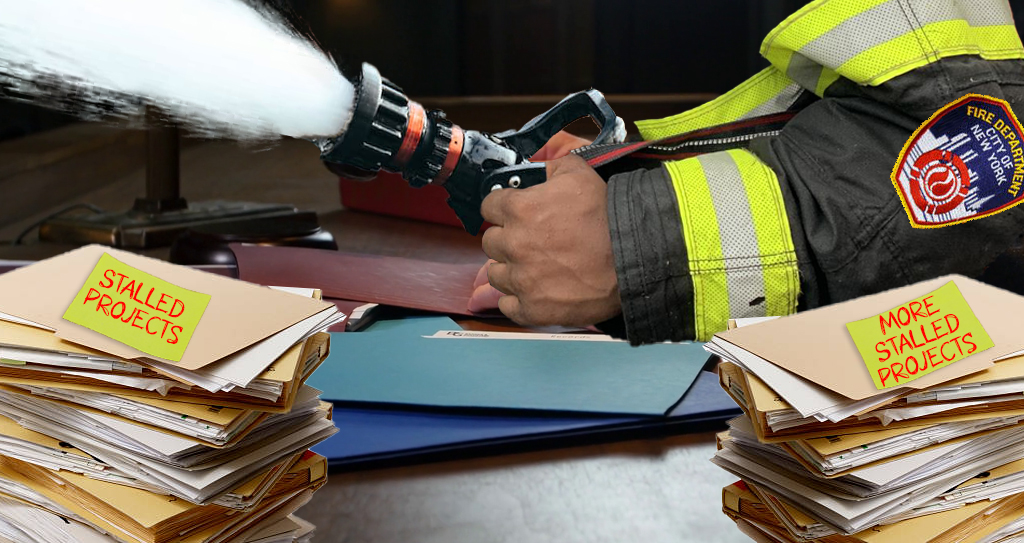
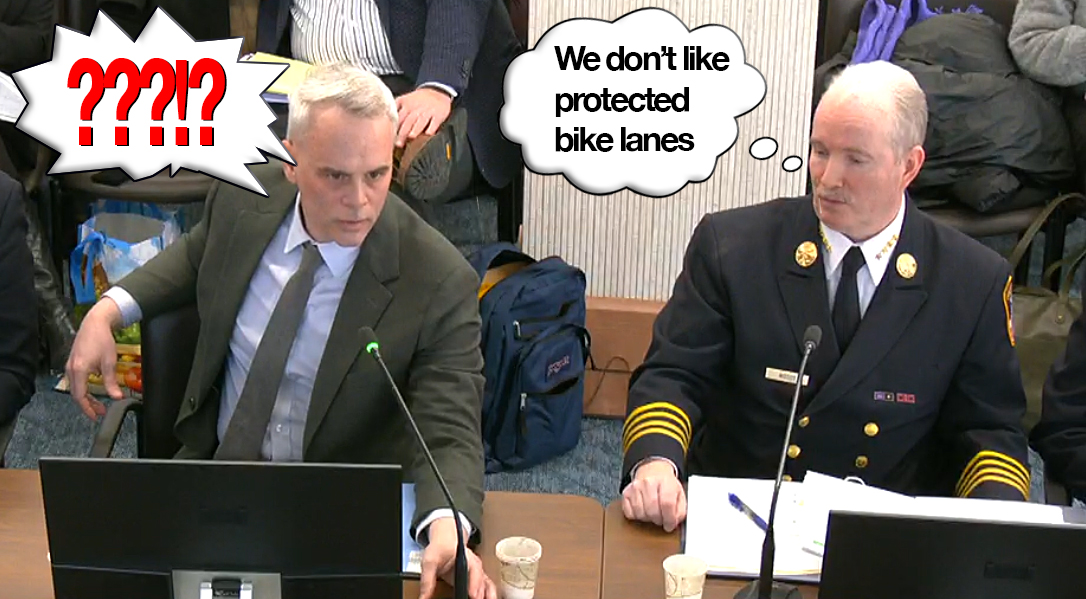
2 months agoLawmaker Pushes FDNY To Get On Board With Protected Bike Lanes - Streetsblog New York City
A Brooklyn council member demands the Fire Department accelerate reviews of protected bike lane projects to support the mayor's street safety agenda and prevent opposition from undermining cycling infrastructure.
London politics
fromLondon On The Inside
2 months agoNorth vs South London | Ten Reasons Why Each Side Is Better
North London claims superiority through Roman history, the Barbican, anti-fascist heritage, major protest movements, and superior underground transport infrastructure compared to South London.
NYC politics
fromStreetsblog
2 months agoToday's Headlines: Super Bowl Tuesday Edition - Streetsblog New York City
The Transportation Committee will review whether the Mamdani administration will implement the Streets Master Plan or continue previous failures, while considering multiple bills on outdoor dining, bike parking, curb extensions, traffic-calming, street signs, and pedestrian space.
NYC real estate
fromCity & State NY
2 months agoCould the Sunnyside Yard project, once rejected by AOC and local elected officials, be revived?
NYC Mayor Zohran Mamdani pitched Trump a $21 billion federal grant proposal to build 12,000 affordable apartments over Sunnyside Yard in Queens, with Trump expressing initial interest in the transformative project.
NYC real estate
fromtherealdeal.com
2 months agoMamdani asks Trump for $21B for Sunnyside Yard megadevelopment
Mayor Mamdani secured a meeting with President Trump to request $21 billion in federal grants for building 12,000 affordable housing units over Sunnyside Yard in Queens through a platform construction project.

fromdesignboom | architecture & design magazine
2 months agorootstudio's oaxaca bus stops feature cut metal panels inspired by local histories
RootStudio proposes an alternative, where the waiting period becomes a spatial condition worthy of design attention. Each intervention is organized around a continuous roof supported by a rhythmic structural frame. The canopy provides shade and shelter from rain while defining a perimeter for waiting without enclosing it. The architecture reads as a measured gesture within an intense urban setting.
Miscellaneous
New York City
fromGothamist
2 months agoTimber! Snowstorm knocked down dozens of trees across NYC.
A major blizzard toppled 47 trees across New York City, including a decades-old honeylocust in Crown Heights, prompting 1,800 citizen reports and raising concerns about tree maintenance and inspection needs.
fromwww.eastbaytimes.com
2 months agoBerkeley, a Look Back: Officials consider building height limits in 1926
Although towering buildings may advertise to the world the wealth and industry of a city, they also present health and safety menaces and are not conducive to the City Beautiful' idea, according to members of the City Planning Commission the Berkeley Daily Gazette reported a century ago on Feb. 20, 1926. The commission was discussing a limit on building height in Berkeley. Whether permits should be granted for any more 12-story buildings was discussed, and it seemed to be the general consensus of opinion that
East Bay real estate
National Football League
fromDefector
3 months agoTwo Sourpusses Missing Out On The Hall Of Fame Is The Most Uplifting Story Of Super Bowl Week | Defector
Major sporting events overwhelm local infrastructure and residents, concentrating costs and chaos in limited areas and exposing the NFL's performative rituals and organizational eccentricities.
Travel
fromTravel + Leisure
4 months agoThis Vibrant Asian City Was Just Named the Most-visited in the World-and No, It's Not in Japan
Bangkok is the world's most visited city in 2025 with 30 million arrivals, driven by affordability, connectivity, infrastructure, cultural attractions, and hospitality growth.


fromwww.dw.com
5 months agoBrazil: What COP30 means for the people of Belem DW 11/14/2025
It's not just the noise and the smell of the site that angers him. Soon, a pumping station will begin operation at the site, spewing wastewater from surrounding rich neighborhoods directly into Vila da Barca, from where it will then be pumped to Belem's first large-scale wastewater treatment facility. Wastewater from Vila da Barca, however, will continue to flow directly into the estuary.
Environment
Arts
fromThe Art Newspaper - International art news and events
8 months agoAntony Gormley: 'Everything I make now is a surprise to me'
Antony Gormley explores the human body's relationship to space, urban infrastructure, and time through public sculptures, site-specific installations, collaborations, and digital-based human-form experiments.
fromStreetsblog
9 months agoDOT's Uptown Greenway Connector is 'Useless' and 'Ridiculous' - And Forces Cyclists to Cross a Highway! - Streetsblog New York City
The new plan has been criticized for moving cyclists into the path of fast-moving cars, increasing danger without adequately addressing existing safety issues.
Bicycling
fromStreetsblog
10 months agoAmsterdam Leads the Way on E-Bike Regulation - Should New York Follow Suit? - Streetsblog New York City
The recent laws in Amsterdam to license e-bikes exist in a transportation context that positions bikes and cars on more equal footing, emphasizing safe mixed-use streets.
Bicycling


fromwww.newsshopper.co.uk
11 months agoTwo months of the Silvertown tunnel - has it made traffic better or worse?
"The Silvertown tunnel campaigners argue that it is worsening traffic around South London, especially the A102, despite claims from TfL about reduced congestion at Blackwall."
London politics
[ Load more ]