The vast gravity hole, known as the Antarctic Geoid Low (AGL), is the product of incredibly slow rock movements, according to the experts. Starting 70 million years ago - a time while dinosaurs still roamed the Earth - less-dense rock built up beneath the frozen continent and weakened the pull of gravity. The gravity hole started small before rapidly growing in strength between 50 and 30 million years ago - creating the strange ocean dip that we see today.
Earthquakes usually strike without warning. But sometimes they come in clusters dozens or even hundreds of small quakes concentrated in one area over days or weeks. Geologists call these clusters earthquake swarms, and while they can be unsettling, scientists say they rarely signal that a major quake is imminent. Unlike the familiar pattern of a single large earthquake followed by aftershocks, swarms consist of many small quakes without a clear mainshock.
On January 1, 2008, at 1:59 AM in Calipatria, California, an earthquake happened. You haven't heard of this earthquake; even if you had been living in Calipatria, you wouldn't have felt anything. It was magnitude -0.53, about the same amount of shaking as a truck passing by. Still, this earthquake is notable, not because it was large but because it was small-and yet we know about it.
Carmen Chavez has a clear answer for those wondering why she and her partner chose to get married on Sept. 19 the anniversary of two deadly earthquakes that struck Mexico 32 years apart. This was a tragic date for me, said Chavez, who remembers how buildings collapsed in downtown Mexico City 40 years ago. So I want to give this day a new meaning. From now on, it will mark the beginning of our life together.
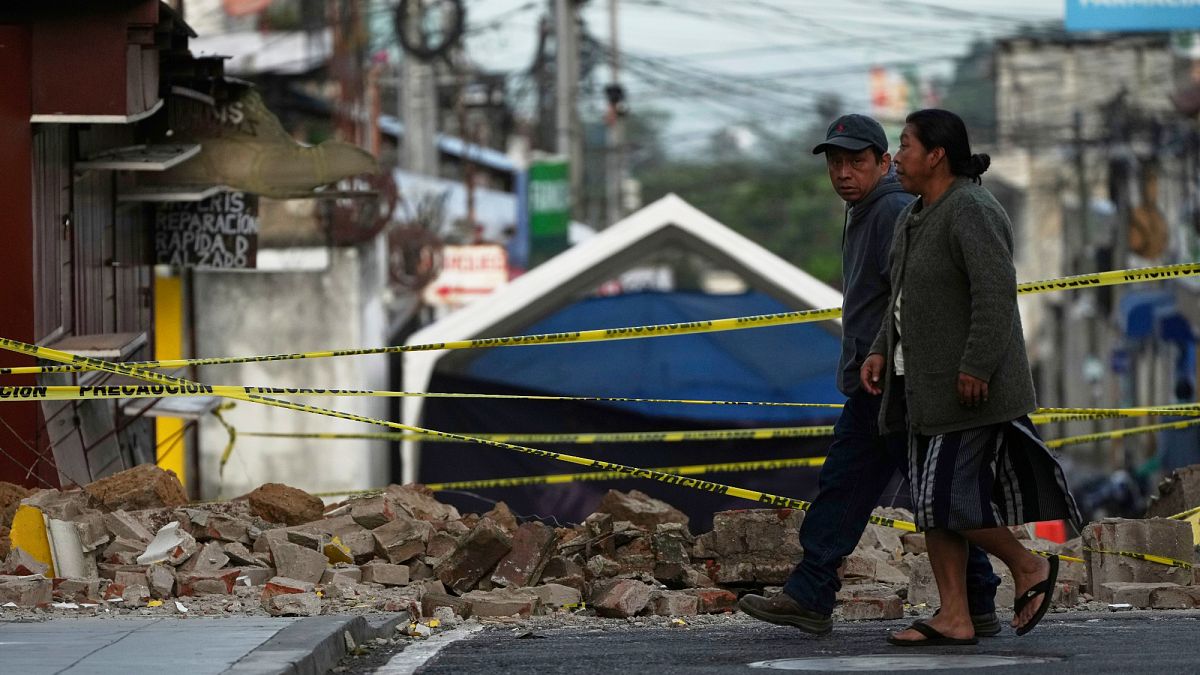
A magnitude 6 earthquake struck eastern Afghanistan near the border with Pakistan just before midnight local time on Sunday, according to the United States Geological Survey. Several aftershocks followed. At least 800 people were killed and 2,500 were injured. The epicentre of the earthquake was at a depth of about 8km (5 miles), which seismologists consider shallow, making the ground shaking more intense and destructive, particularly for fragile homes and communities.