#kyle-newacheck
#kyle-newacheck
[ follow ]
#comedy #saturday-night-live #documentary #lorne-michaels #stand-up-comedy #stand-up #television #san-francisco
fromConsequence
17 hours agoThe Cast and Creator of The Audacity on Silicon Valley Satire, Power, and Narcissism: Podcast
"How can you not land on Silicon Valley?" he says, pointing out that most of us are already living inside its influence every time we pick up our phones. That constant presence makes it fertile ground for satire, even if the show leans hard into drama.
Podcast
#lorne-michaels

Independent films
fromIndieWire
5 days ago'Lorne' Review: Morgan Neville's Lightweight Documentary Sees Lorne Michaels as the Last True Guardian of Show Business as We Know It
Morgan Neville's documentary 'Lorne' explores the challenges of capturing the elusive Lorne Michaels, revealing the complexities of his character and career.
Independent films
fromIndieWire
5 days ago'Lorne' Review: Morgan Neville's Lightweight Documentary Sees Lorne Michaels as the Last True Guardian of Show Business as We Know It
Morgan Neville's documentary 'Lorne' explores the challenges of capturing the elusive Lorne Michaels, revealing the complexities of his character and career.
fromwww.theguardian.com
3 days agoKevin review Aubrey Plaza's new cat comedy is so irretrievably bad it must never be allowed to happen again
The script is so blunderingly crude, so sluggish in its attempts at emotional depth, and so mean-spirited in its approach that it leaves viewers feeling deflated.
Humor


fromThe New Yorker
3 days agoHow the Creator of "Beef" Graduated from Petty Feuds to Class Warfare
The show, which traced the depths into which two Angelenos descend after a road-rage incident, reintroduced Ali Wong as a dramatic lead, gave Steven Yeun a chance to go darkly comic, and shined a rare light on the issue of Asian American mental health.
Television



fromEntrepreneur
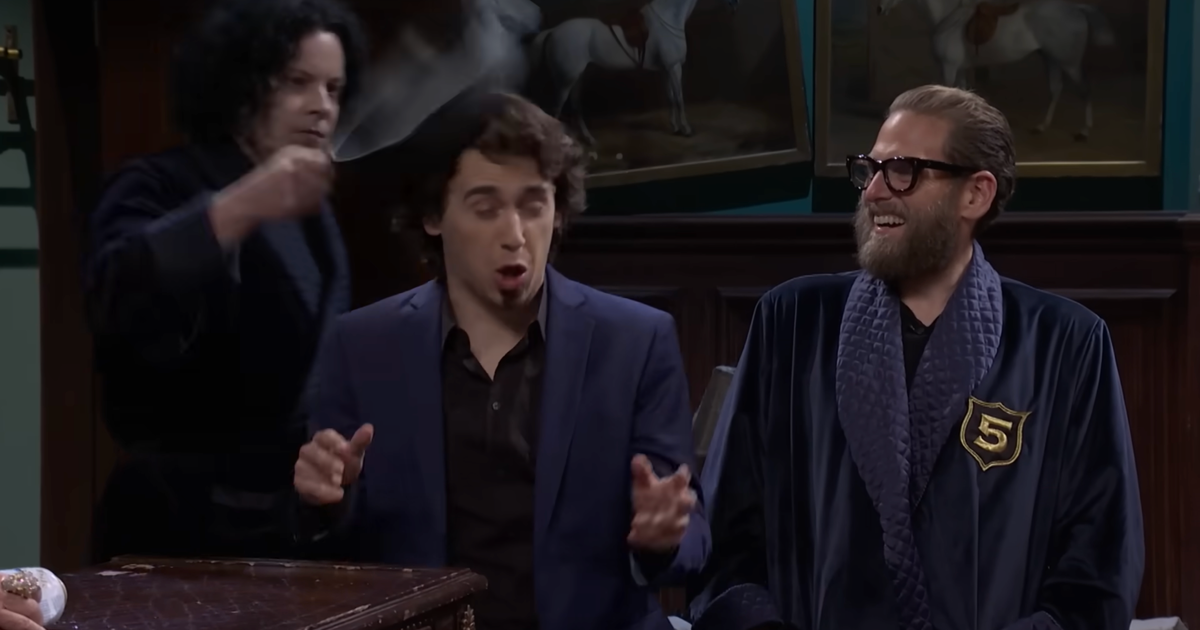
1 week agoFrom Getting Paid in Chipotle Gift Cards to Making $100 Million Movies: The Wild Ride of the Comedy Writing Team Behind 'The Naked Gun'
Dan and Doug didn't wait for anyone to 'pick' them—they built their own stage. They started with the Hammerkatz sketch group at NYU, then hustled their way into the legendary Upright Citizens Brigade. The first time they remember getting paid to be funny, they earned a bunch of Chipotle gift cards and some Rolling Rocks. 'We felt like we were rich,' laughs Dan.
Humor
fromDefector
1 month agoNetflix Has Trapped Pete Davidson In His Garage | Defector
The discoverability problem is that the medium still hasn't figured out a reliable, easily reproducible way to capture and hold a listener's attention. It's easier to stumble upon video curated and served via algorithm than it is to click several buttons in a dedicated app in order to listen to a piece of audio.
Podcast
fromThe Drum
2 months agoNorthrop Grumman on creating the first serialized comedy for LinkedIn
Since 2020, Northrop Grumman (NG) has been on a journey to establish their new brand ethos and mantra: "Defining Possible." OBJECTIVES Research showed that there was a barrier: perception. To many, the bureaucratic "black box" that is Aerospace and Defense (A&D) could never be innovative. The truth is, some of the most innovative technologies were sparked in the A&D industry. Our goal: increase positive perception of Northrop Grumman, despite the stereotypes we faced.
fromVulture
3 weeks agoFact-Checking Chris Fleming Won Late Night This Week
ARMY Twitter was aflutter with accusations that the warm-up comic for The Tonight Show Starring Jimmy Fallon made a racist joke. He said, 'Anybody here from the North? No? Nobody?' Fans interpreted that as being directed at the band, implying that one of them was from North Korea.
Humor
US politics
fromAbove the Law
2 months agoWhat Is This, A Louis C.K. Bit? - See Also - Above the Law
Recent developments span prosecutorial minimization of alleged sexual conduct, Defense Department limits on elite law school tuition aid, judicial restraints on ICE, and financial threats to law schools and students.
Careers
fromBusiness Insider
2 months agoI got laid off from Amazon 3 years ago, and it changed the entire trajectory of my life - I couldn't be happier
Ricci Armani used his Amazon severance to pursue stand-up comedy, supplementing income with part-time retail and accepting uncertainty while chasing his dream.
fromConsequence
1 month agoHow The Whitest Kids U' Know's Animated Space Movie Survived a Brutal Tragedy
Trying to navigate [production] while listening to the voice of your dead best friend is brutal. It changed everything. It went from being this fun capricious lark to this beautiful and sad process. It was very tough.
Film
fromThe Atlantic
1 month agoConnor Storrie Knew What 'SNL' Viewers Wanted to See
It's a show that's taught a lot of people about hockey, and it's taught a lot of straight women that their sexuality is 'gay guy.' The studio audience, seemingly stuffed with Heated Rivalry viewers, chortled back in approval. From the jump, Storrie knowingly winked at those who had likely tuned in because of his role on the show: as an athlete with a rippling physique, who often appears naked on-screen.
NYC LGBT
Careers
fromBusiness Insider
1 month agoSomeone asked to switch our business seats on a plane. I said yes, and got to take photos with one of my favorite celebrities.
A fashion designer switched business class seats with a woman to sit next to her husband, who turned out to be actor Keegan-Michael Key, resulting in a positive encounter with the gracious celebrity.
fromVulture
2 months agoIs That a Podcast or Just Cheap TV?
Davidson's debut episode, featuring Machine Gun Kelly, is assembled from the rough, requisite symbols of podcasting: host and guest sunk into plush, beat-up chairs vaguely facing each other, chatting and smoking cigarettes in a space that's presented as Davidson's garage, Benjamin Moore paint tubs doubling as an ashtray stand. Good pals, their conversation is loose and circuitous; their discussion drifts from adventures while getting high, stints in rehab, and - because this is the first episode - what a podcast even is.
Television
fromKqed
1 year ago'The Studio' on Apple TV+ Explains How Good Artists Make Bad Movies
Unfortunately, Matt's love of film is inconsistent with his real assignment, which is to make the most money possible while taking the fewest risks. And he believes in that, too, because he wants to keep his job and he loves the life it gives him. So in this world, the desire to make art and the desire to make money are in tension, but not because they put pure artists and mercenary suits on opposite sides. They are competing desires that exist inside the hearts and minds of many, if not most, of the people in the industry, just in different proportions.
Television

fromPsychology Today
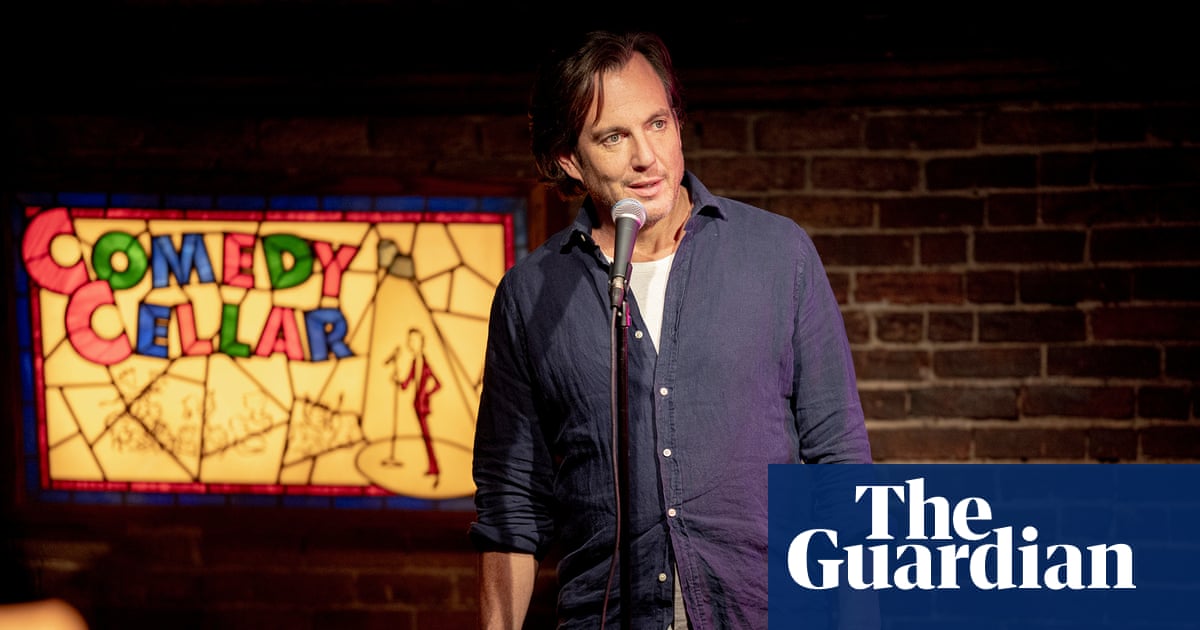
2 months agoThe "Ins" and "Outs" of Comedy: Dealing With the Outflow
Readers who saw my previous post will recall its focus on a recurring pattern of laughter and humor found during my deep dive into the humor of the Seinfeld series. I wondered why we tend to laugh at various things going into our bodies and tried to explain why we might be so inclined using the Mutual Vulnerability Theory of Laughter.
Humor
fromwww.theguardian.com
2 months agoComedians pick on me for my loud laugh but nothing will make me stop | Jane Howard
He had already picked on me several times for laughing too loud, too readily (that wasn't even a joke, he chastised me at one point). I was trying hard to suppress my laughter to hold it in, to hold it back, to not fully express the joy I was feeling. I was being somewhat successful. And then I wasn't. Everyone in the audience was laughing but I was laughing too much.
Humor
fromBusiness Insider
1 month agoHe found out his brother - and best friend - died while sitting on 37B. Now KevOnStage has a stand-up about grief.
It was the only ticket available at such short notice," he told Business Insider. He joked that, if his sibling were going to pass, he could at least have waited until he wasn't packed like a sardine. It would have been more thoughtful of him, Fredericks said, if he hadn't learned of the tragedy while sandwiched "in 37B" between two strangers.
Humor
[ Load more ]