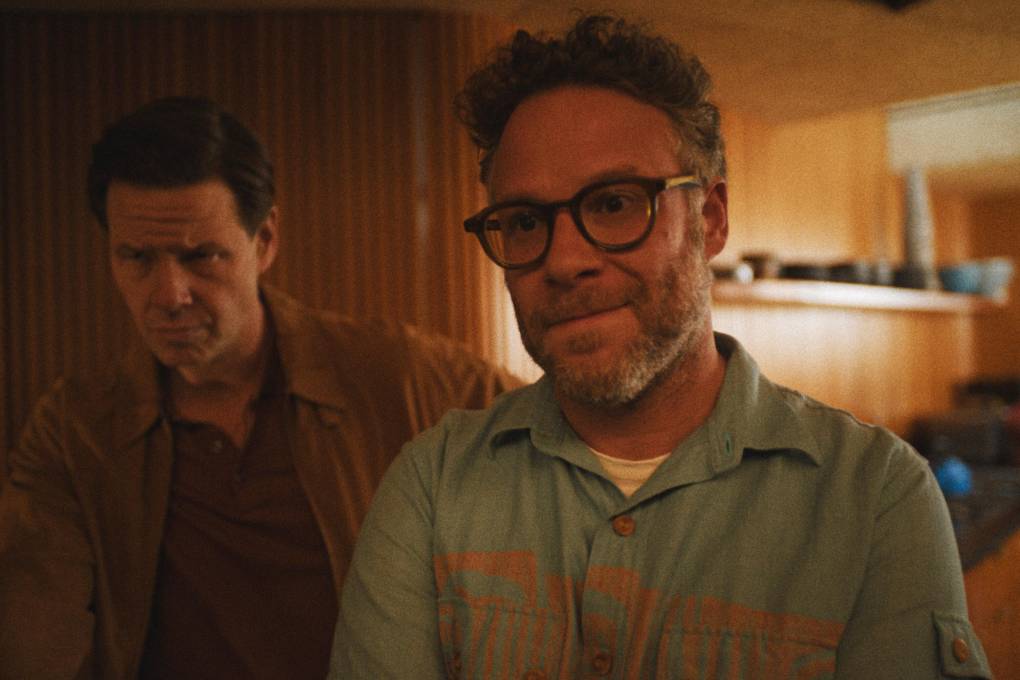
"Unfortunately, Matt's love of film is inconsistent with his real assignment, which is to make the most money possible while taking the fewest risks. And he believes in that, too, because he wants to keep his job and he loves the life it gives him. So in this world, the desire to make art and the desire to make money are in tension, but not because they put pure artists and mercenary suits on opposite sides. They are competing desires that exist inside the hearts and minds of many, if not most, of the people in the industry, just in different proportions."
"Many of the episodes have a common structure, which is that Matt starts out with a challenge, which he tries to tackle in a way that turns it into a larger and larger problem, until it eventually becomes a catastrophe. This is true in both of the first two episodes. In the first, he has to nail down a director for the Kool-Aid movie, and the minute you see the wheels turning in his head about a very (oh so very) ill-advised way he might approach this problem and land a major director, you cover your eyes in horror. And then it gets so much worse."
"The secret, perhaps, is that the show is brutal about the system, but understanding about individuals. All of these people are stuck in a film industry much bigger than any of them that is, often, indifferent to art if not overtly hostile to it. They can use their gifts, they can try to elevate the best work, and they can try to support actors and directors and writers. But they cannot, with individual choices in individual meetings, change the nature of the industry, and so they keep hoping that they can make compromises and still get a good result. These compromises, of course, also prot"
Matt is a studio executive whose job prioritizes maximizing profit and minimizing risk, creating tension with his personal love of film. His attempts to reconcile art and commerce repeatedly escalate small problems into catastrophes. Episodes typically introduce a challenge that Matt addresses in increasingly ill-advised ways, leading to larger failures. The series critiques an indifferent, often hostile industry while showing empathy for individuals who try to support good work. People in the industry make compromises hoping for acceptable results, but those compromises frequently produce worse outcomes and cannot change the industry's fundamental nature.
Read at Kqed
Unable to calculate read time
Collection
[
|
...
]