#industrial-policy
#industrial-policy
[ follow ]
#semiconductors #intel #supply-chains #quantum-computing #government-equity-stakes #supply-chain-resilience


UK politics
fromwww.theguardian.com
1 week agoThe king's speech: what is the government's legislative agenda for the next 12 months?
A legislative package targets EU reset, industrial intervention, growth pilots, faster competition reviews, late-payment penalties, NHS reform, and a ban on conversion practices.
fromTNW | Eu
1 week agoEurope's cumulative EV investment passes 200bn
New AutoMotive's data tracker, reported by Reuters on Sunday, marks the threshold and puts the question to industrial policy: how much of the headline number will end up producing cells at scale, given that roughly 600 GWh of announced European battery capacity has already been delayed or cancelled. Europe has now invested cumulatively €200bn into its electric-vehicle supply chain, according to New AutoMotive data reported by Reuters.
Europe news

fromThe Atlantic
1 month agoA Pillar of the Economics Establishment Admits That It Was Wrong
The World Bank's recent report argues that government intervention, when done right, can actually be an essential ingredient of economic success, reversing decades of opposition to industrial policy.
World politics
fromBusiness Matters
2 months agoUK sets 50% domestic steel target as tariffs ramp up on imports
Under the plans, import quotas will be reduced by 60 per cent from July, with any steel brought into the UK above those limits facing a punitive 50 per cent tariff. The move represents one of the most assertive steps taken by ministers in recent years to bolster domestic manufacturing capacity amid intensifying global competition.
UK politics
UK politics
fromwww.theguardian.com
2 months agoBritish politics is hooked on flashy fake numbers and the AI investment debacle proves it | Jonathan Portes
UK government announcements about investment and job creation often conflate existing commitments with aspirational future plans, inflating headline figures disconnected from actual economic impact.
Europe politics
fromwww.theguardian.com
2 months agoEuropean Commission proposes Buy EU' plan to compete against China
The European Commission proposes the Industrial Accelerator Act to prioritize EU-made and low-carbon products in public procurement, marking a shift toward protectionism to compete with China and strengthen European industrial autonomy.
Europe politics
fromTheregister
2 months agoEurope's EV battery cost gap with China could shrink to 30%
Europe's EV battery cost gap with China could narrow from 90% to 30% by 2030 through proper government support, factory scaling, and manufacturing improvements, requiring a €500 sovereignty premium per vehicle.
UK politics
fromwww.theguardian.com
3 months agoMade in Europe' EU industrial strategy could hit supply chains, UK minister warns
Proposed EU rules favouring European-made products risk disrupting integrated UK–EU supply chains, raising costs and creating trade barriers that could harm UK–Spain economic links.
fromThe Local France
3 months ago'Made in Europe': New Push to buy European causes splits in bloc
The European Commission, the EU's executive arm, will next week propose new rules that are expected to include a requirement for companies in strategic sectors to produce in Europe if they want to receive public money. But the definition of "European preference" has triggered debate, with calls especially from France for more "Made in Europe", while other EU states such as Germany call for "Made with Europe".
France news
fromwww.theguardian.com
3 months agoEU urged not to roll back green agenda in effort to revive faltering economy
Campaigners from the Climate Action Network, a pan-European group of NGOs, said European industry was under real pressure from high energy prices, ageing assets, global overcapacity and delayed investments, but these issues could not be solved by watering down climate and environmental policies. Deregulation is not an industrial strategy, the group wrote in an open letter, which argued that the problems facing energy-intensive industries, including steel, cement and chemicals, were driven by prices of fossil fuel-derived energy and global market dynamics, rather than environmental regulation.
Europe politics
fromIPWatchdog.com | Patents & Intellectual Property Law
2 years agoMaking Licensing Harder Doesn't Boost U.S. Manufacturing
While it's appropriate to lament the lack of bipartisan cooperation in Washington, just because something's bipartisan doesn't mean it's a good idea. Exhibit A could be Senator Tammy Baldwin (D-WI) and Senator J.D. Vance's (R-OH) "Invent It Here, Make It Here" bill. Despite the name and its good intentions, it condemns promising federally funded inventions to waste away without doing a thing to build our domestic manufacturing base. It's scheduled to be considered this Thursday in the Senate Commerce, Science and Transportation Committee.
US politics
fromThe Walrus
3 months agoWhat Canada Gets Wrong in Its Reset with China | The Walrus
During his recent delegation to Beijing-the first by a Canadian prime minister since relations between the two countries became strained in 2018-Mark Carney agreed to allow 49,000 Chinese electric vehicles into the Canadian market at a reduced tariff rate. The move was presented as a pragmatic reset that could draw joint-venture capital back into Canada's auto corridor and offer relief to an industry squeezed by United States president Donald Trump's trade war.
Canada news
UK politics
fromwww.theguardian.com
4 months agoI'm picking winners': UK business secretary takes activist approach to economic growth
The UK government is actively investing in scale-up companies, taking direct equity stakes and 'picking winners' to accelerate growth, create jobs, and generate wealth.
fromFortune
4 months agoGeoeconomics is the new geopolitics: Playing offense in the new economy | Fortune
We have entered a new world economy shaped by two fundamental forces: geoeconomic fragmentation and exponential innovation. In this environment, established cooperative and diplomatic frameworks are under pressure, requiring much more dialogue, imagination and entrepreneurship to regain forward momentum. At the same time, technology and innovation are being deployed at unprecedented speed, with companies playing an ever-greater role. These shifts are transforming how businesses operate across geographies.
World news
Canada news
fromwww.cbc.ca
4 months agoArcelorMittal Dofasco quietly extends 'green' steel timeline by decades, gets $50M more from Ottawa | CBC News
ArcelorMittal Dofasco postponed coal phase-out until 2050 and received an extra $50 million federal funding, extending decommissioning timeline from 2028.
US politics
fromBreaking Defense
4 months ago'BEWARE': Trump order demands some defense firms halt paying dividends, buying back stock - Breaking Defense
President Trump issued an executive order banning defense contractors from dividends and stock buybacks and restricting executive pay unless they modernize weapons production facilities.
fromwww.theguardian.com
4 months agoHere's why Labour is struggling to deliver: the British state is immense, but pull the levers and nothing happens | Larry Elliott
The reason for that is simple: the British state is big and getting bigger but as an agent of change it is not up to the job. This is true at both central and local levels. Over the years, the capacity of government to intervene has been pared back and professional expertise has been lost as council services have been outsourced.
UK politics

fromThe Atlantic
4 months agoThe Race for Global Domination in AI
Government officials in Hangzhou have grand ambitions to make their city in eastern China a global center for artificial intelligence-and the funds to try to make it happen. In June, they pledged $140 million to subsidize AI firms that operate in town. Not to be outdone, Shanghai promptly followed in July with its own $140 million subsidy program, and inaugurated an "AI innovation town" two months later with low-cost office space for start-ups in the sector.
Artificial intelligence
UK news
fromwww.theguardian.com
4 months agoHelp UK ceramics industry or lose piece of national identity', government told
The UK ceramics industry faces a critical crisis from high energy costs, unfair imports and underinvestment, threatening jobs and national identity without urgent government support.
France news
fromwww.theguardian.com
5 months agoThe second China shock is coming and the UK's response is too timid | George Magnus
China is executing state-directed industrial policies to dominate advanced technologies, creating a looming second China shock with significant domestic and global economic impacts.
UK politics
fromwww.theguardian.com
5 months agoIneos chemicals plant is saved but what is the strategy for the rest of heavy industry? | Nils Pratley
Government intervention in heavy industry is uneven, rescuing select facilities like Grangemouth while similar plants face closure without a clear, consistent strategy.

fromAxios
6 months agoExclusive: Bipartisan panel calls for more government intervention to support tech sector
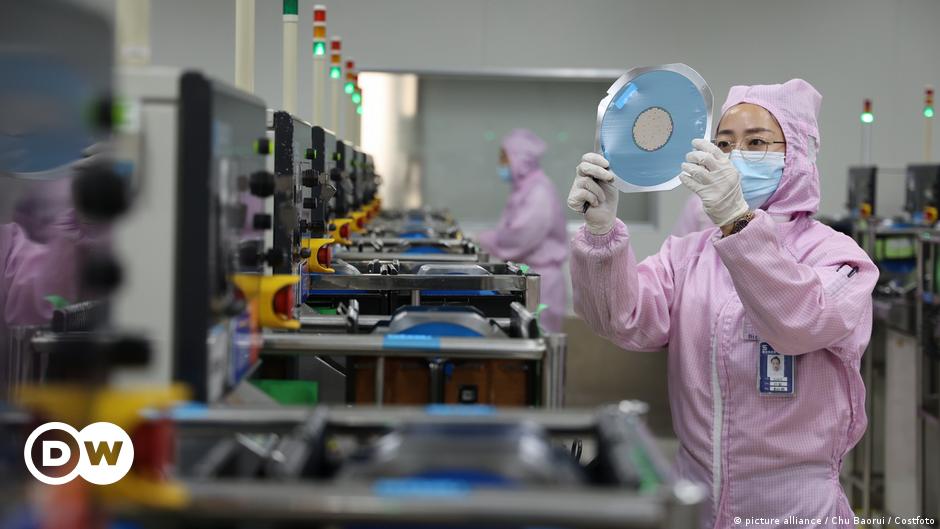
"Government intervention in the economy in the name of national security is most clearly warranted in cases of market failure," a new report from a bipartisan task force organized by the Council on Foreign Relations says. "Today, the market failures that loom largest for U.S. national security are shortfalls of private capital in strategically important areas and over-concentration of critical supply chains in unfriendly countries," the report adds.
US politics
US politics
fromThe Cipher Brief
6 months agoWinning the Innovation Race: Why America's Allies Are the Key to Beating Beijing
The U.S. must build allied networks of investors, customers, and collaborators to accelerate technological innovation and outpace rivals in AI, quantum, semiconductors, and robotics.
Venture
fromFortune
6 months agoWith two new funds to trumpet, Sequoia's Roelof Botha opens up about the state of the VC market-and about the firm's controversial partner | Fortune
Sequoia launched $200M seed and $750M venture funds; founders not needing funding for 12 months should build, and targeted industrial policy can protect national interests.


fromwww.mediaite.com
7 months agoScott Bessent Introduces 'Price Floors' To Combat China
When you are facing a nonmarket economy like China, then you have to exercise industrial policy, Bessent said. The Treasury Secretary explained that China has put rare earth mineral companies out of business by massively dropping their own prices. We're going to set price floors and the forward buying to make sure that this doesn't happen again, and we're going to do it across a range of industries, he said.
US politics
UK politics
fromLondon Business News | Londonlovesbusiness.com
7 months agoStarmer has 'totally failed' the steel industry as the EU threatens 80,000 UK jobs - London Business News | Londonlovesbusiness.com
EU plans to raise steel tariffs to 50% threaten roughly 80,000 UK steel-related jobs, prompting urgent calls for domestic protections and government action.

Health
fromIndependent
8 months agoIreland's pharma sector is world class, but why don't we have a Novo Nordisk to take our success to the next level?
Ireland lacks a domestic pharmaceutical giant despite an 80,000-strong workforce; government, industry and universities should collaborate to build a global pharma player.
Startup companies
fromTechCrunch
8 months agoNatron's liquidation shows why the US isn't ready to make its own batteries | TechCrunch
Natron ceased operations after failing to obtain UL certification and additional investor funding, prompting liquidation and abandonment of planned sodium-ion battery factory projects.
fromwww.dw.com
9 months agoWhy the US government seeks a stake in chipmaker Intel DW 08/21/2025
The White House has confirmed that the Trump administration is in talks with Intel about acquiring a stake of up to 10% in the chipmaker. "The president wants to put America's needs first, both from a national security and economic perspective," White House Press Secretary Karoline Leavitt confirmed on Tuesday after days of media speculation over a possible deal. Although it would be unusual for the US government to take a stake in such a large company, it would align with President Donald Trump's trend of intervening in the free market during his second term.
US politics
[ Load more ]