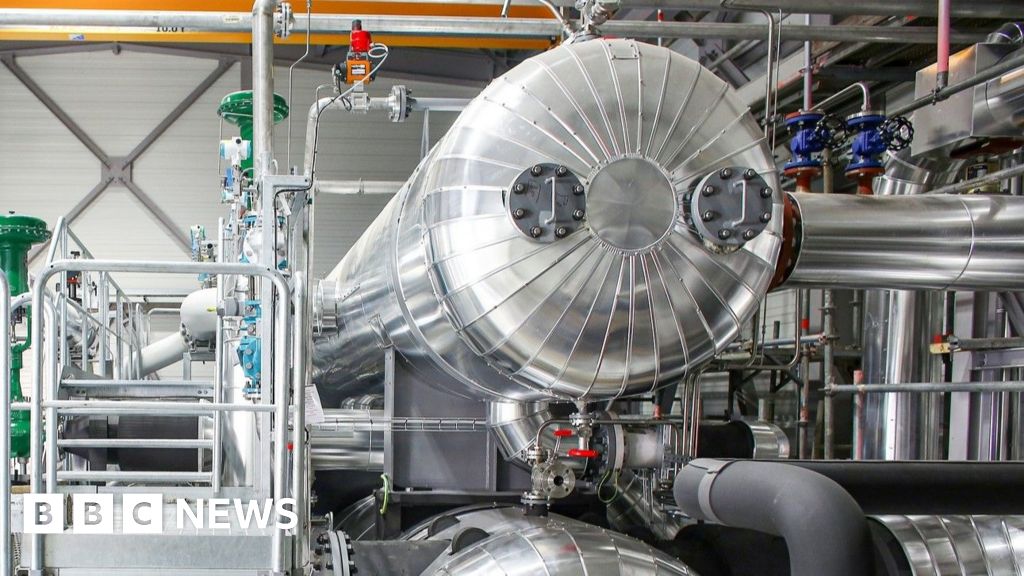
The plan - hatched by Troy's economic-development office to revitalize the downtown area and now driven by regional utility company National Grid - is to combine the buildings' heating and cooling systems in a single high-efficiency, low-carbon network. The hope is that more buildings will join the scheme before the thermal network begins operating in 2027. Ultimately, it might wean all of the Central Troy Historic District off natural gas.
Being at the southern end of a small peninsula of land with the two rivers on three sides and a railway line to the north, it's quite limited for access. Although there are pedestrian and cycle routes in and out of the site, the only road access to the estate is via the Bridgewater Road Bridge (E48 Bridge) which crosses the Waterworks River.
A small town in Finland is experimenting with a new type of infrastructure: the world's largest sand battery. The battery-a 42-foot-tall, nearly 50-foot-wide silo filled with 2,000 tons of crushed stone-sits on the edge of a parking lot. When there's extra renewable electricity on the grid and power is cheap, the system uses electricity to heat up the crushed stone. That heat is stored in the battery until nearby buildings need to use it.