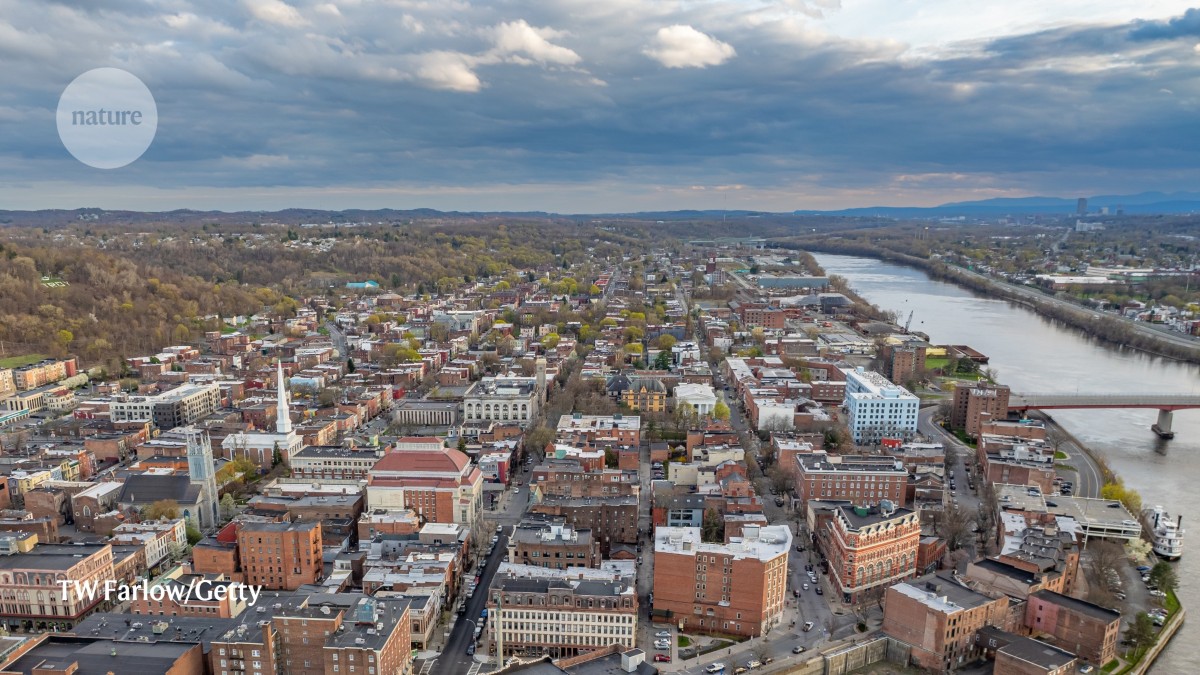
Half-a-dozen nineteenth-century commercial buildings beside the Hudson, an across-the-street apartment building, and a nearby department-store-turned-technology hub will share a high-efficiency, low-carbon heating-and-cooling network. The economic-development office and National Grid plan to combine building systems into a single thermal energy network, with hopes of additional buildings joining before operations begin in 2027. Heat pumps will perform most heating and cooling work, but will operate by exchanging heat with deep ground boreholes rather than ambient air. Dozens of 150-metre boreholes tap a steady 13°C subsurface, allowing summer heat rejection and winter heat extraction, potentially replacing natural gas across the historic district.
"The plan - hatched by Troy's economic-development office to revitalize the downtown area and now driven by regional utility company National Grid - is to combine the buildings' heating and cooling systems in a single high-efficiency, low-carbon network. The hope is that more buildings will join the scheme before the thermal network begins operating in 2027. Ultimately, it might wean all of the Central Troy Historic District off natural gas."
"Heat pumps installed in the buildings will do most of the work. But these are not the same heat pumps commonly used to maintain the temperature of individual homes and businesses. Those devices warm indoor spaces by extracting heat from cold air, and cool them by pushing heat out into already hot air. In Troy, a once-prosperous industrial city about 200 kilometres north of New York City whose manufacturing economy collapsed, the new heating and cooling system will work quite differently."
"Behind the Arts Center of the Capital Region, dozens of boreholes are set to be drilled 150 metres into the ground, where the average temperature is 13 °C all year round. In the Hudson Valley's increasingly scorching summers, the network's heat pumps can dump heat into the cooler bore holes. And on freezing winter nights, the pumps will keep residents warm by drawing heat from the relatively warm ground."
Read at Nature
Unable to calculate read time
Collection
[
|
...
]