#decarbonisation
#decarbonisation
[ follow ]
#public-transport #sustainability #electric-buses #zero-emission-buses #heat-pumps #renewable-energy #net-zero
Alternative transportation
fromLondon Business News | Londonlovesbusiness.com
3 weeks agoTruck industry urges technology-open transition as ZEV uptake stalls - London Business News | Londonlovesbusiness.com
The government must ensure HGV operators access technologies to cut carbon emissions amid declining zero-emission vehicle adoption.
#net-zero
UK politics
fromLondon Business News | Londonlovesbusiness.com
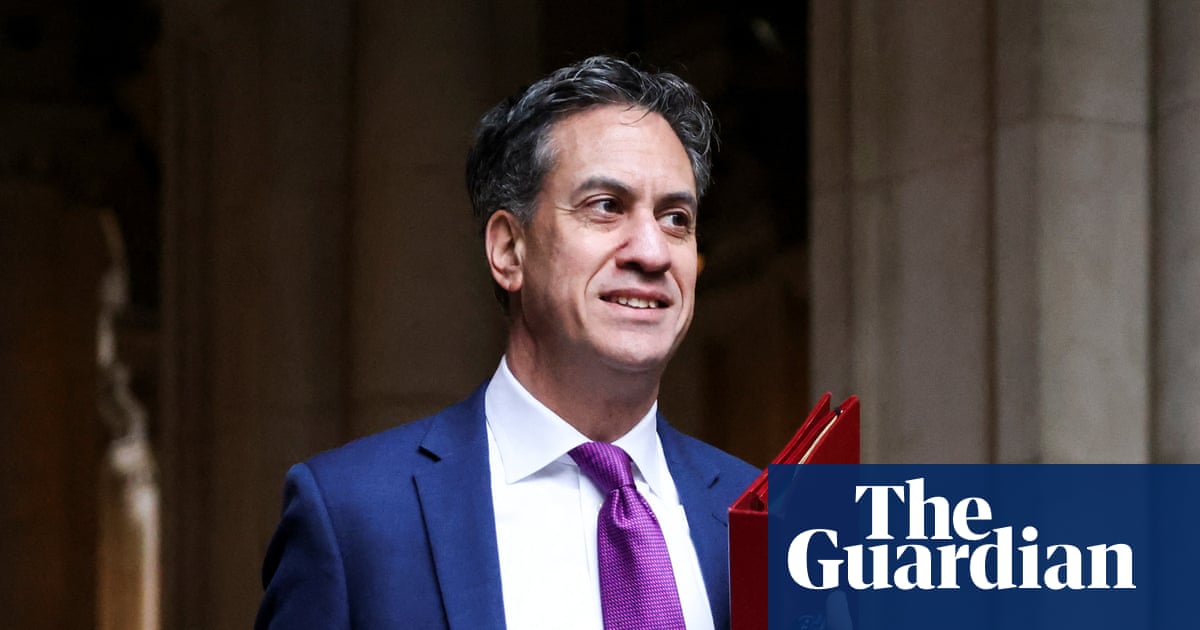
1 month agoBusiness leaders stay committed to net zero despite political headwinds - London Business News | Londonlovesbusiness.com
UK business leaders remain committed to net zero targets despite political uncertainty, focusing on commercial benefits and climate resilience.

UK politics
fromLondon Business News | Londonlovesbusiness.com
1 month agoBusiness leaders stay committed to net zero despite political headwinds - London Business News | Londonlovesbusiness.com
UK business leaders remain committed to net zero targets despite political uncertainty, focusing on commercial benefits and climate resilience.
Environment
fromLondon Business News | Londonlovesbusiness.com
1 month agoWhat decarbonisation means for the unseen machinery of trade - London Business News | Londonlovesbusiness.com
Decarbonisation in shipping relies on improving existing vessels' efficiency through retrofits, maintenance, and performance data rather than solely on new technologies.
fromBusiness Matters
1 month agoZevero raises $7m as demand for carbon data platforms accelerates globally
Businesses are increasingly being asked to manage sustainability the way they manage finance. Yet many are still treating it as an annual project rather than a continuous system. Our goal is to make climate data actionable, reliable and embedded in decision-making.
Business intelligence
#public-transport
Alternative transportation
fromSustainable Bus
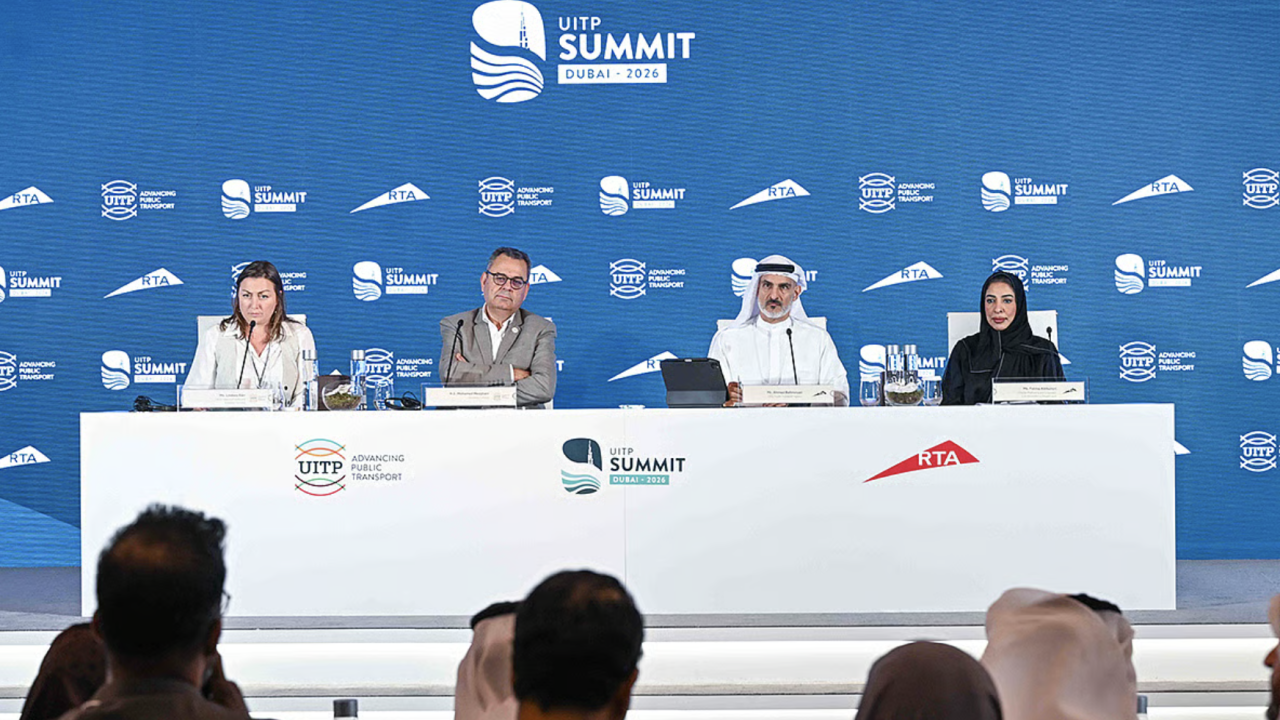
1 month agoBEV buses to dominate, delivery capability to decide market shares. Martin Schmitz outlines VDV's view - Sustainable Bus
Decarbonisation of public transport and integration of autonomous technologies are key challenges for the industry in Germany.
Marketing tech
fromThedrum
3 months agoInMobi Forges Global Partnership with Ad Net Zero to Further its Commitment to Sustainable Advertising Practices
InMobi partners with Ad Net Zero to decarbonise advertising, reduce carbon footprint, and align ad tech operations with sustainability and science-based targets.
Environment
fromLondon Business News | Londonlovesbusiness.com
3 months ago43 million boost for green aviation to drive growth, jobs and cleaner flights - London Business News | Londonlovesbusiness.com
Government commits £43 million to green aviation projects to decarbonise aviation, support skilled jobs, and attract private investment alongside airport expansion.
fromwww.theguardian.com
4 months agoEU's new green tariff' rules on high-carbon goods come into force
The biggest shake-up of green trade rules for decades comes into force today, as companies selling steel, cement and other high-carbon goods into the EU will have to prove they comply with low-carbon regulations or face fines. But a lack of clarity on how the rules will be applied, and the failure of the UK government to strike a deal with Brussels over the issue, could lead to confusion in the early stages, experts warned.
Europe politics
fromComputerWeekly.com
5 months agoIT Sustainability Think Tank: Progess in decarbonisation made in 2025, but gaps remain | Computer Weekly
More businesses understand the environmental impact of new technologies and there is a more concerted effort to convene capabilities to mitigate environmental consequences and improve the resilience of energy supply chains. Artificial Intelligence (AI) is still the centre of the conversation, but the question remains as to how we can maximise the benefits of AI while mitigating the environmental consequences of increased dependence on the technology. This is where enabling deep tech companies to scale will be key.
Artificial intelligence
Science
fromSustainable Bus
5 months agoInside Cummins' multi-energy strategy for the bus market: from LFP batteries to Euro VII, gas and hydrogen engines - Sustainable Bus
Cummins advances parallel decarbonisation pathways by developing LFP battery packs and continuing investment in advanced combustion, hydrogen, and natural gas technologies.
Environment
fromBusiness Matters
6 months agoSix million small firms urge COP leaders to unlock finance and incentives for green growth
Urgent coordinated government policies and support are required to include SMEs in green finance, procurement, and national strategies to prevent stalling the net-zero transition.
fromLondon Business News | Londonlovesbusiness.com
6 months agoWhy grid-interactive buildings will define the future of real estate - London Business News | Londonlovesbusiness.com
Grid-interactive buildings represent the next evolution in sustainable real estate. These buildings communicate dynamically with the electricity grid, adjusting energy consumption and generation to optimise efficiency, cost, and environmental impact. How grid-interactive buildings operate Using advanced sensors, building management systems, and AI-driven controls, grid-interactive buildings monitor both internal energy demand and grid conditions. They can shift consumption to off-peak periods, store excess renewable energy in batteries, or feed energy back to the grid when appropriate.
Real estate
Business
fromSustainable Bus
6 months agoPrivate equity firm TPG to acquire 70% stake in Australasian largest public transport operator Kinetic - Sustainable Bus
TPG will acquire 70% of Kinetic, becoming majority shareholder to accelerate its net-zero transition across bus and rail operations in Australasia and international markets.
Environment
fromComputerWeekly.com
7 months agoGovernment urged to scrutinise datacentre developers' environmental claims | Computer Weekly
Planned datacentre construction could significantly raise UK electricity demand and carbon emissions, potentially negating emissions savings from electric vehicle adoption.
Environment
fromLondon Business News | Londonlovesbusiness.com
10 months agoThe engineer-turned-entrepreneur turning academic research into industrial decarbonisation - London Business News | Londonlovesbusiness.com
Decarbonisation in manufacturing and energy is slow; organizations need more efficient pathways to reduce emissions.
fromwww.independent.co.uk
11 months agoRolls-Royce to build UK's first small nuclear reactors after government backing
Britain's decision to utilize Rolls-Royce SMR for its first small modular nuclear reactors represents a transformative step towards achieving a decarbonised power network by the mid-2030s.
UK news
fromSustainable Bus
11 months agoREV Bus&Truck acquires GreenMot's retrofit operations - Sustainable Bus
The acquisition secures a multi-million-euro investment aimed at supporting industrial process development, expanding the retrofit product range, and building a reliable long-term supply chain.
Alternative transportation
fromLondon Business News | Londonlovesbusiness.com
11 months agoSurging excess capacity threatens steel market stability, employment and decarbonisation plans - London Business News | Londonlovesbusiness.com
The findings of the OECD Steel Outlook 2025 show there is an urgent need to address growing excess capacity, and the distortionary policies driving it, to ensure well-functioning global steel markets.
Europe politics
fromSilicon Canals
11 months agoUK's Converge raises 20M from Amsterdam's Move Energy, ABN AMRO, others to clean up concrete's carbon footprint - Silicon Canals
At Converge, we aim to decarbonise the construction sector by using AI to optimise concrete production, helping the industry build a net-zero future.
London startup
[ Load more ]