#celebrity-directors
#celebrity-directors
[ follow ]
#film-industry #film-history #martin-scorsese #academy-awards #ai-in-filmmaking #steven-spielberg #sofia-coppola
fromwww.nytimes.com
3 days agoHow Technology Has Transformed Cinematography
The small, lightweight, inexpensive camcorder was a great liberator for filmmaking. Not only did it mark a significant leap in accessibility, it also made it easier for filmmakers to achieve the kind of raw, immediate visual language that had been established by directors like Spike Jonze in Video Days (1991).
Photography
fromInside Higher Ed | Higher Education News, Events and Jobs
5 days agoFaculty Consulted on Blockbusters Like "The Pitt," "Sinners"
Wendy Ross suggested a scene in which the doctor communicated with a patient who was autistic more effectively than another non-autistic doctor had. She emphasized that the portrayal of autism should be subtle, especially for female characters, as many women may not even realize they are autistic.
Medicine
fromFast Company
6 days agoAdam McKay's new movie offers a glimpse at advertising's final frontier: your dreams
Publicly traded companies are by legal definition and requirement completely amoral. They want only one thing, to raise their stock price, and the public good and common decency are just obstacles to be overcome or spun in that quest.
Marketing
fromwww.theguardian.com
4 days agoI'll make you a whopper you can't refuse! Why do we love to believe cinema's best lines were improvised?
In the history of cinema, there has never been a single script. It is a pervasive myth that film-making requires screenplays; in fact, most scenes are made up on the spot.
Film
fromThe New Yorker
1 day agoThe Action-Film Director Who's Taking On Michael Jackson
"Michael" was designed to be an international crowd-pleaser—the kind of film that executives hope will drag audiences away from their small screens and deposit them in front of big ones, where they can watch and sing along and even dance, if theatres permit it.
Independent films
Social media marketing
fromForbes
1 month agoOscars 2026: Why The Best Creators Build Around Pop Culture
Successful creators now build content around cultural moments and events rather than staying confined to single niches, as algorithm saturation makes niche-focused content interchangeable and undiscoverable.
fromThe Independent
1 week agoScorsese tried to recommend his films to a 10-year-old co-star - then had to rethink
I knew he was a legendary director and he was giving me a list of his movies like Raging Bull, Taxi Driver. Then he was like, 'You probably can't watch any of those quite yet, but there is this one movie I directed called Hugo.' A couple days later, in the mail, I received a copy of Hugo on Blu-ray from his office, which is really crazy.
Independent films
fromRaymondcamden
3 weeks agoChecking if a Movie has a Post or Mid Credit Scene
The app is incredibly simple. I made use of the wonderful SimpleCSS for my design and then made use of the TMDB API. The TMDB APIs are pretty easy to use, but finding out how to get this information did take a bit of digging.
Film
Film
fromIndieWire
1 month agoSofia Coppola and Marc Jacobs on 'Marc by Sofia,' Anxiety and Influence, and 30 Years of Friendship
Sofia Coppola makes her documentary debut with 'Marc by Sofia,' a visually sophisticated portrait of fashion designer Marc Jacobs that eschews conventional talking-head formats in favor of intimate environmental framing and archival materials documenting 35 years of New York cultural history.
Film
fromFast Company
1 month agoAre you in a competitive creative career? Oscar-winning director Barry Jenkins has advice on what it takes to find success
Even Academy Award-winning filmmakers like Barry Jenkins worked survival jobs while building their careers, emphasizing that persistence and flexibility are essential for sustaining a creative career in film.
#academy-awards


Film
fromDefector
1 month agoPaul Thomas Anderson Finally Gets His Coronation | Defector
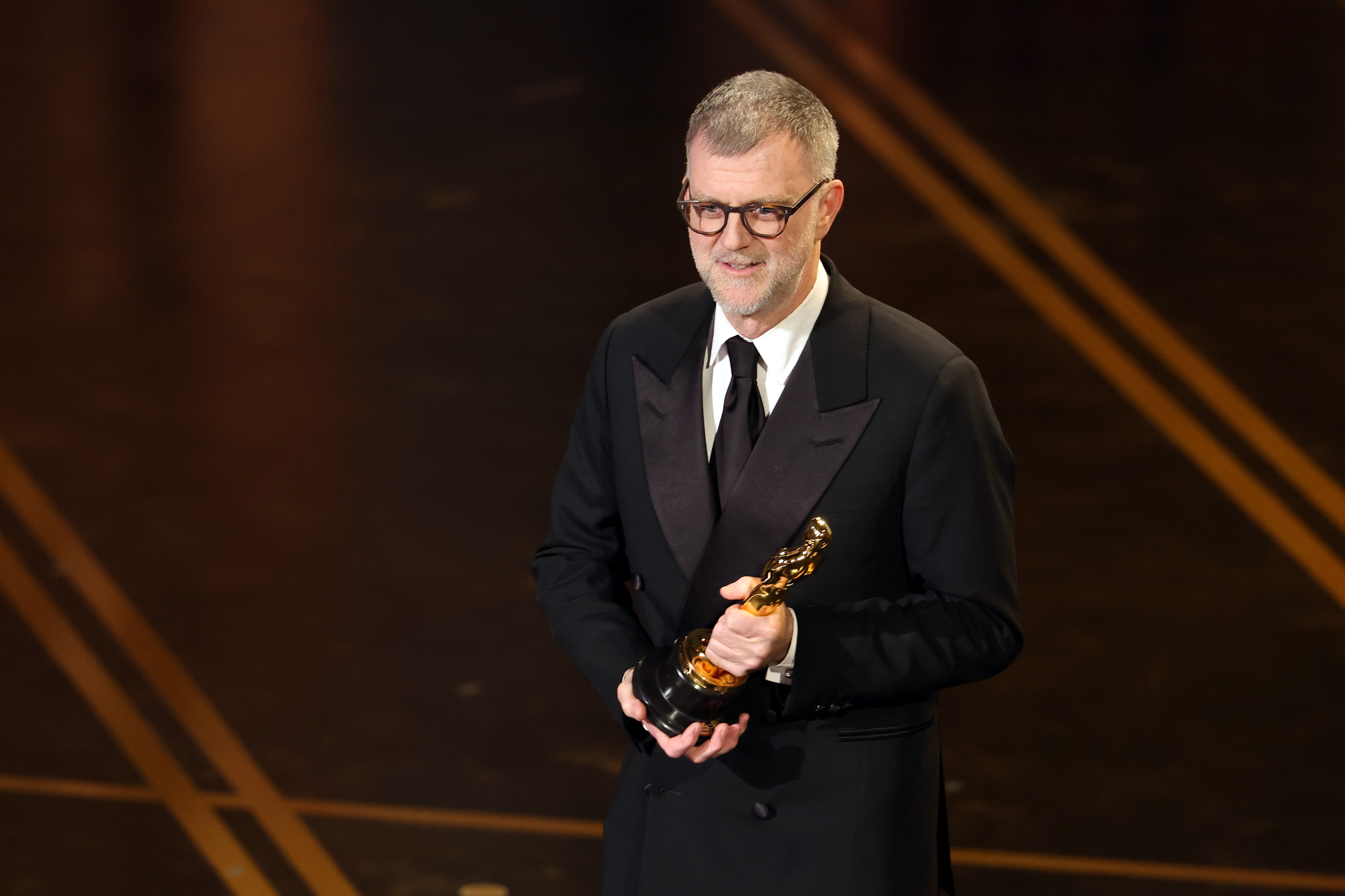
Paul Thomas Anderson won the Best Director Oscar for One Battle After Another as a pseudo lifetime achievement award, recognizing his decades of critically acclaimed work that the Academy had previously overlooked.
Film
fromSlate Magazine
1 month agoHe Was the Losingest Filmmaker in Oscars History. To Finally Triumph, He Changed Something.
Paul Thomas Anderson ended his record 0-11 Oscar losing streak by winning three awards for One Battle After Another, including Best Director, after years of nominations without victories.
fromwww.theguardian.com
1 month agoWhy Marty Supreme should win the best picture Oscar
If we're talking cinema (not marketing campaigns or merch drops, however captivating), then Josh Safdie has created a movie that has captured something of the world in 2026. Set as it may be in the 1950s, Marty Supreme could only have been made now. If we want to celebrate art that reflects the world we live in, then this is the one.
Film
fromVulture
1 month agoYeah, It's Probably a Good Time to Hear From Quentin Tarantino
Rosanna Arquette spoke about her time on the film in an interview with the Sunday Times in which she said she's "over" the "use of the N-word," adding that she cannot stand that Tarantino "has been given a hall pass. It's not art, it's just racist and creepy."
Film
fromThe Independent
1 month agoWhy Marty Supreme should win Best Picture
Loosely based on the life of table tennis champion Marty Reisman, Josh Safdie's Marty Supreme is set over eight months of mayhem. It's 1952, and 23-year-old Marty is working in a shoe shop in New York. The film begins with a tryst in the stockroom and ends with the birth of a child. For Marty (Chalamet), his job as a salesman is beneath him.
Film
Film
fromEntrepreneur
1 month agoThis Cult Filmmaker Learned Something About Audiences Every Entrepreneur Needs to Know'Make Them Feel Something'
Kevin Smith built a personal brand by connecting directly with fans, which created lasting career opportunities beyond individual film projects in an unpredictable industry.
fromVulture
1 month ago17 Movies With Exclamation-Point Titles, Ranked!
During a junket interview with OutNow, Gyllenhaal explained that the punctuation mark was included to represent the "whole lot of energy" that comes out when the historically muted Bride of Frankenstein is finally allowed to speak. That's all well and good, but to viewers the titular exclamation point is less of a metaphor and more of a golden arrow saying, "This movie is going to be crazy."
Film
fromThe Independent
1 month agoSpielberg, Coppola and Lucas: The toxic friendship that built modern Hollywood
George Lucas should have died. It was 1962; the 17-year-old had just crashed his yellow Autobianchi convertible into a walnut tree, in Modesto, California. The car rolled, bounced and came to rest - it was "beyond mangled, flipped upside down and twisted like a crushed Coke can against the tree". When the teenager woke in hospital two weeks later, his heart having nearly stopped, he had a new philosophy: "Maybe there's a reason I survived this accident that nobody should have survived."
Film
fromwww.theguardian.com
1 month agoThe Last Kings of Hollywood by Paul Fischer review the rise and reign of Spielberg, Lucas and Coppola
Using the diary recollections of Coppola's wife, the late Eleanor Coppola, who was also disconsolately aboard and feeling thoroughly shut out of the alpha male chatting and joshing, Fischer shows our three dishevelled deities dizzied and stunned and even weirdly depressed by their staggering global acclaim.
Film
fromEntrepreneur
2 months agoHow Steven Spielberg Transformed My Career
In fact, I've made a conscious habit of seeking out successful individuals so I can learn from their experiences. But the man often nicknamed the "King of the Hollywood Blockbuster" continues to elude me. And yet, despite never meeting face to face, Spielberg taught me one of the most important lessons of my entire career. It's a lesson I've learned through engaging with his work.
Film
Film
fromwww.theguardian.com
2 months agoGuillermo del Toro's jazz hands' at Oscar lunch a recreation of Shining photo, director says
Guillermo del Toro and Paul Thomas Anderson recreated The Shining's group shot at an Oscar luncheon; Jack Nicholson's famous image was an edit of a 1921 London dance photograph.
fromThe New Yorker
2 months agoThe Brazilian Director Who's Up for Multiple Oscars
For Kleber Mendonça Filho, filmmaking is an act of both provocation and preservation. Mendonça was born in 1968, in the early years of a ruthless military dictatorship-a time when cinema, like much else, was harshly constrained. His mother, Joselice Jucá, was a historian who studied Brazil's abolitionist movement, and she taught him that filling gaps in the cultural memory was a way to expose concealed truths. In Mendonça's work, memory functions as a tool of defiance.
Film
fromConsequence
2 months agoThe Adventures of Cliff Booth Gets Super Bowl Trailer
Starring Brad Pitt as the titular Cliff Booth along with Elizabeth Debicki, Scott Caan, Carla Gugino, and more, the trailer depicts Booth after the events of Once Upon a Time in Hollywood. "So you helped rick subdue those hippie intruders, huh?," he's asked before replying "Something like that." The teaser then shows various scenes and scenarios from the film, but with minimal dialogue; though each time a character cusses or flips someone off, it's bleeped and censored.
Film
fromwww.theguardian.com
2 months agoTop of the props: meet the unsung heroes behind the memorable objects in your favourite films
It's nice that you are asking about props, because they're not really acknowledged, says Jode Mann, a TV prop master in Los Angeles. When Mann worked on the children's comedy show Pee-wee's Playhouse in the 1980s, she got a call from its star, Paul Reubens, who said he was nominating her for an Emmy. It was only after Mann told her mother and promised to thank her if she won that Reubens called back to say he couldn't nominate her because there's no category for you.
Film
Film
fromArchitectural Digest
1 month agoMarty Supreme's Legendary Production Designer Shares 5 Secrets From the Film's Sets
Production designer Jack Fisk's meticulous recreation of 1950s New York in Marty Supreme may finally earn him an Oscar after three previous nominations for period-specific production design.
[ Load more ]