#asean
#asean
[ follow ]
#southeast-asia #cambodia #thailand #china #tariffs #ceasefire #energy-security #trade #border-clashes


fromState of the Planet
1 month agoFrom Classrooms to Climate Impact: Two Careers Flourish in Singapore
"Singapore is in a very unique position because they face a lot of land constraints, so there are few ways for them to generate their own renewable energy. Singapore is pushing for integrated energy systems throughout ASEAN, so that renewable energy produced in other countries can be brought back to Singapore. There's a very distinct, coordinated effort for countries to come together to work on climate change and energy security in a way that I haven't really seen."
Environment
European startups
fromFortune
2 months agoChina is becoming a 'factory to the factories,' powering global manufacturing in places like Southeast Asia even as U.S. trade declines | Fortune
China is increasing exports of industrial components while consumer goods exports decline, reshaping global supply chains.
World news
fromFortune
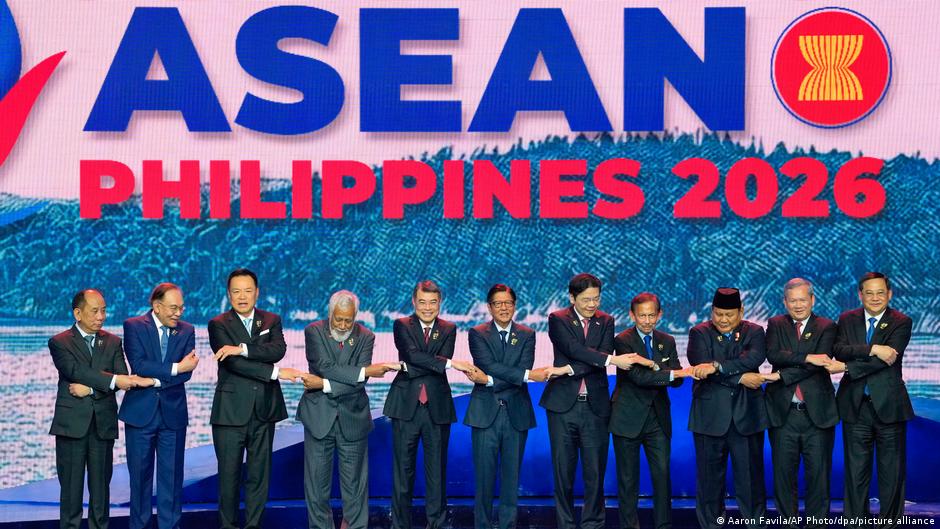
4 months agoThe Philippines, ASEAN's new chair, starts 2026 on a 'weaker footing' after trade tensions and a $2 billion corruption scandal | Fortune
Corruption-linked missing funds, typhoon damage and trade pressures have weakened the Philippines' economic footing and eroded investor confidence ahead of ASEAN chairmanship.
fromwww.aljazeera.com
6 months agoCan Southeast Asia turn its economic weight into real power?
As global trade tensions rise, ASEAN faces a challenge: how to benefit from the US and China without picking sides. It is the world's fifth-largest economy, with a combined gross domestic product of more than $3.6 trillion dollars. The Association of Southeast Asian Nations (ASEAN) brings together 11 states, representing nearly 700 million people. As a fast-growing hub for trade, manufacturing and supply chains, ASEAN is a vital partner for both China and the United States.
World politics
fromwww.theguardian.com
6 months agoWhat if anything did Asian countries get out of Donald Trump's whirlwind tour?
The 11 member nations collectively export more to the US than China, making them an important trading partner and also highly vulnerable to Trump's tariff regime. The US president secured pledges from Vietnam to dramatically increase its US purchases, and signed deals with Malaysia and Thailand on a framework to diversify critical minerals supply chains. The four countries also pledged to remove trade barriers and provide preferential market access to various US goods.
World news




fromwww.theguardian.com
10 months agoRubio in bind as he seeks to reassure Asia, even as region faces punishing Trump tariffs
"Even as they face among the most punitive tariffs globally, US secretary of state Marco Rubio has sought to reassure southeast Asian nations of Washington's commitment to the region."
US politics


[ Load more ]