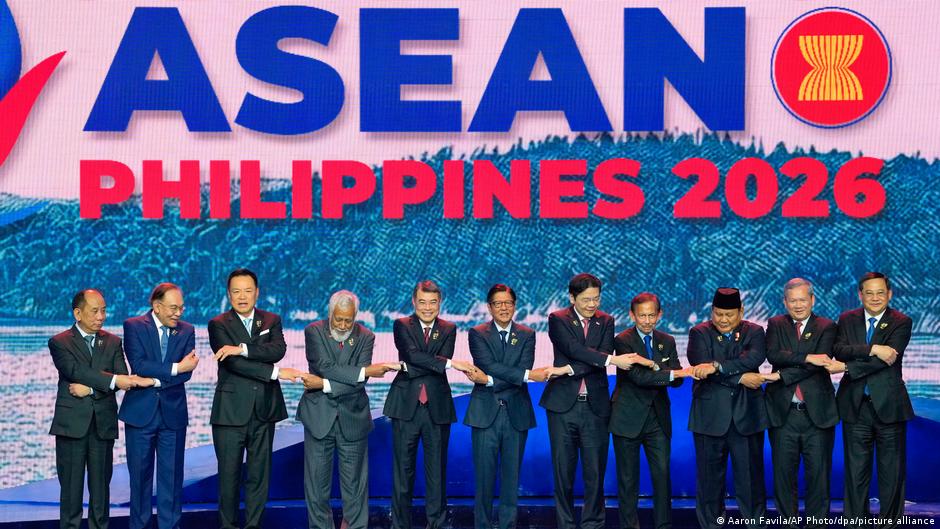
"Leaders from Southeast Asia were meeting in the Philippines on Friday for an annual summit, which this year is focused on addressing the damaging impacts of the war in the Middle East. The US-Israeli war with Iran and Iran's regional retaliation have caused major disruptions to energy markets and global oil supplies. Southeast Asian nations are particularly reliant on oil and LNG imports via the Strait of Hormuz, which has been blockaded by both Iran and the US for weeks."
"The disruption has caused fuel and electricity prices to soar, while rising fertilizer costs are impacting food prices. Higher jet fuel costs have also made commercial air travel more expensive, reducing tourism demand in the region. Philippines' president calls for 'collective' approach to safeguard energy supplies The summit is being held on the central Philippines island of Cebu."
"In his opening remarks, Ferdinand “Bongbong” Marcos Jr., the Filipino president and the current chair of the Association of Southeast Asian Nations (ASEAN), said the group needed to demonstrate unity and resolve while remaining flexible to the unpredictable situation in the Middle East. “We must ensure regional energy security and resilience,” Marcos Jr. said. “At a time of heightened volatility, ASEAN must strengthen coordination and reinforce preparedness, pursue practical collective measures to safeguard a stable energy supply and improve interconnectivity.”"
"The Philippines was one of the first countries to declare an energy emergency in the wake of the war, and is pushing for an ASEAN-wide oil-sharing pact. In addition to emergency fuel sharing, a contingency plan outlined in a draft joint declaration calls for plans for a regional power grid, diversifying crude oil sources, boosting the use of electric vehicles and of renewables, including civilian nu"
Leaders from Southeast Asia met in the Philippines for an annual summit focused on the damaging impacts of the war in the Middle East. The US-Israeli conflict with Iran and Iran’s regional retaliation have disrupted energy markets and global oil supplies. Southeast Asian economies rely heavily on oil and LNG imports that pass through the Strait of Hormuz, which has been blockaded by Iran and the US for weeks. Fuel and electricity prices have risen, fertilizer costs have increased, and food prices have followed. Higher jet fuel costs have also made air travel more expensive, reducing tourism demand. The Philippines is pushing for an ASEAN-wide oil-sharing pact and contingency plans including regional power grid cooperation, diversified crude sources, and greater use of electric vehicles and renewables.
Read at www.dw.com
Unable to calculate read time
Collection
[
|
...
]