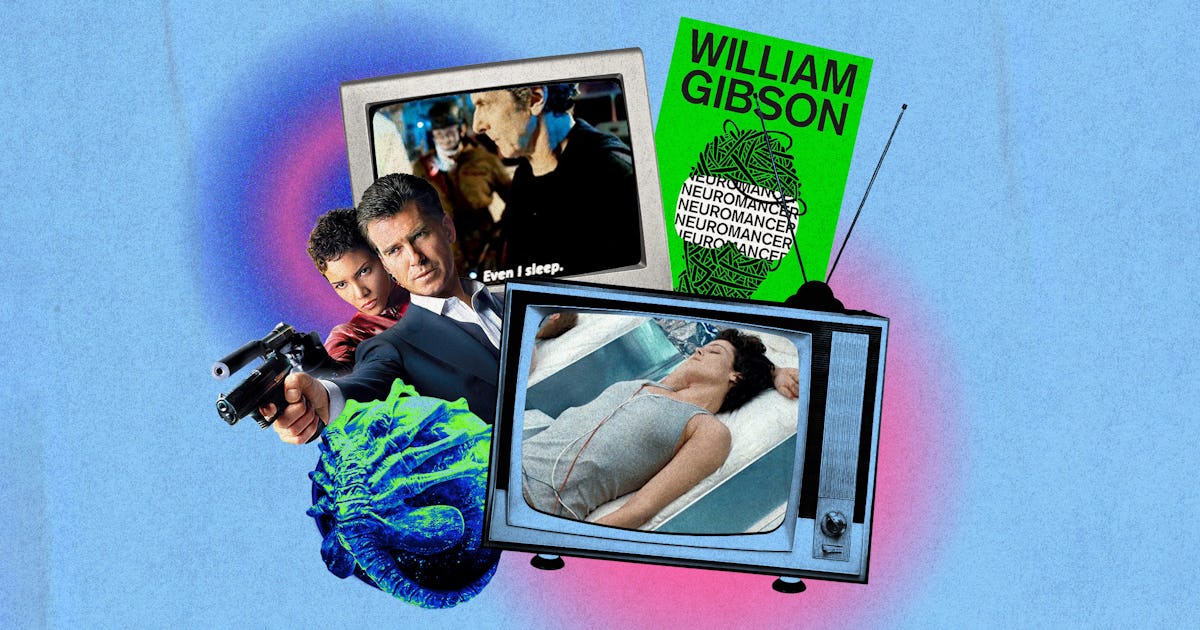
"We spend one-third of our lives asleep. This biological fact is something that, with time and technology, is less and less taken for granted. In many science fiction stories, the future of sleep is cozy and idyllic - an elevated state living within dream world. In others, sleep is more of an evolutionary shackle that gets in the way of productivity. The latter focuses on questions that haunt anyone who feels there are not enough hours in the day. What if we didn't have to sleep?"
"Graves sleeps in a pod for just minutes out of the day in order to mitigate the side effects of a bizarre gene resequencing procedure. But, because Graves is an evil Bond villain, he tries to make his not-sleeping into a productivity-centered superpower. "One of the virtues of never sleeping, Mr. Bond. I have to live my dreams," he says glibly. "Besides, plenty of time to sleep when you're dead.""
"The Doctor (Peter Capaldi) and Clara (Jenna Coleman) encounter the horrors of future sleep in Doctor Who's 2015 low-key masterpiece, "Sleep No More." BBC "Sleep subsists as one of the great human affronts to the voraciousness of contemporary capitalism, wrote Jonathan Crary in his 2013 book, 24/7: Late Capitalism and the Ends of Sleep."
Humans spend roughly one-third of their lives asleep, a biological fact increasingly questioned by technological and cultural change. Science fiction imagines divergent futures for sleep: some portray sleep as an idyllic, dreamlike realm, while others treat sleep as an evolutionary impediment to productivity. Fictional examples present technological or genetic means to minimize sleep, turning wakefulness into a productivity advantage. The portrayal of sleeplessness often intersects with critiques of capitalism, linking reduced sleep to intensified work and ultracapitalist ambitions. Cultural references, including Bond and Doctor Who, dramatize the tensions between rest, technology, and economic imperatives.
Read at Inverse
Unable to calculate read time
Collection
[
|
...
]