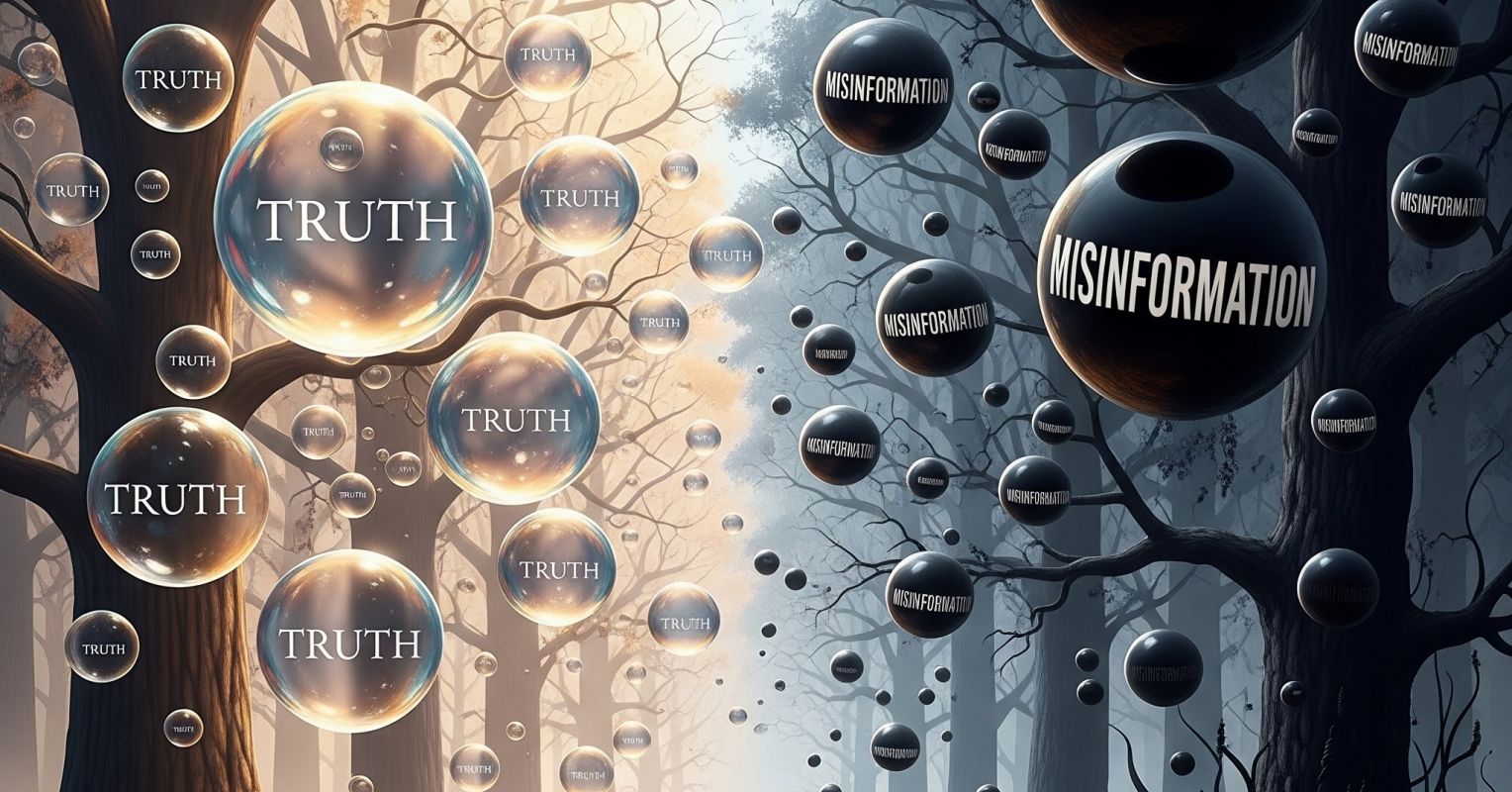
"They were pretty good at making this distinction, even when the statements were written with an LLM. People found true statements more persuasive than untrue statements. This finding held even when the statements were designed to be attention-grabbing."
"The researchers did four studies that were focused on differences in reactions people have to true and false information. The first two studies focused on persuasion. In one study, they started by having a group of people generate social media messages designed to be persuasive about a set of topics. Some participants were asked to generate only messages they believed to be true. Others were asked to generate messages they believed to be untrue."
"The second study used a large language model to generate messages on the same topics using the same three sets of instructions. Then, a second group of participants encountered some of the statements generated by humans and/or a large language model. They started by rating their degree of belief in the topics about which the statements were made. Then, they saw one of the statements and rated it along several dimensions such as whether they thought the messages were true or untrue."
People can distinguish true from untrue social media statements, including statements generated by a large language model. Across four studies, participants showed stronger persuasion responses to true information than to false information. In one study, participants generated messages they believed were true or untrue, and later evaluators rated those messages. In another study, a large language model generated messages using the same instructions, and evaluators assessed them. Evaluations included beliefs about the topic and judgments about whether each message was true or untrue, along with persuasion-related ratings. The advantage for true statements persisted even when messages were designed to be attention-grabbing.
Read at Psychology Today
Unable to calculate read time
Collection
[
|
...
]