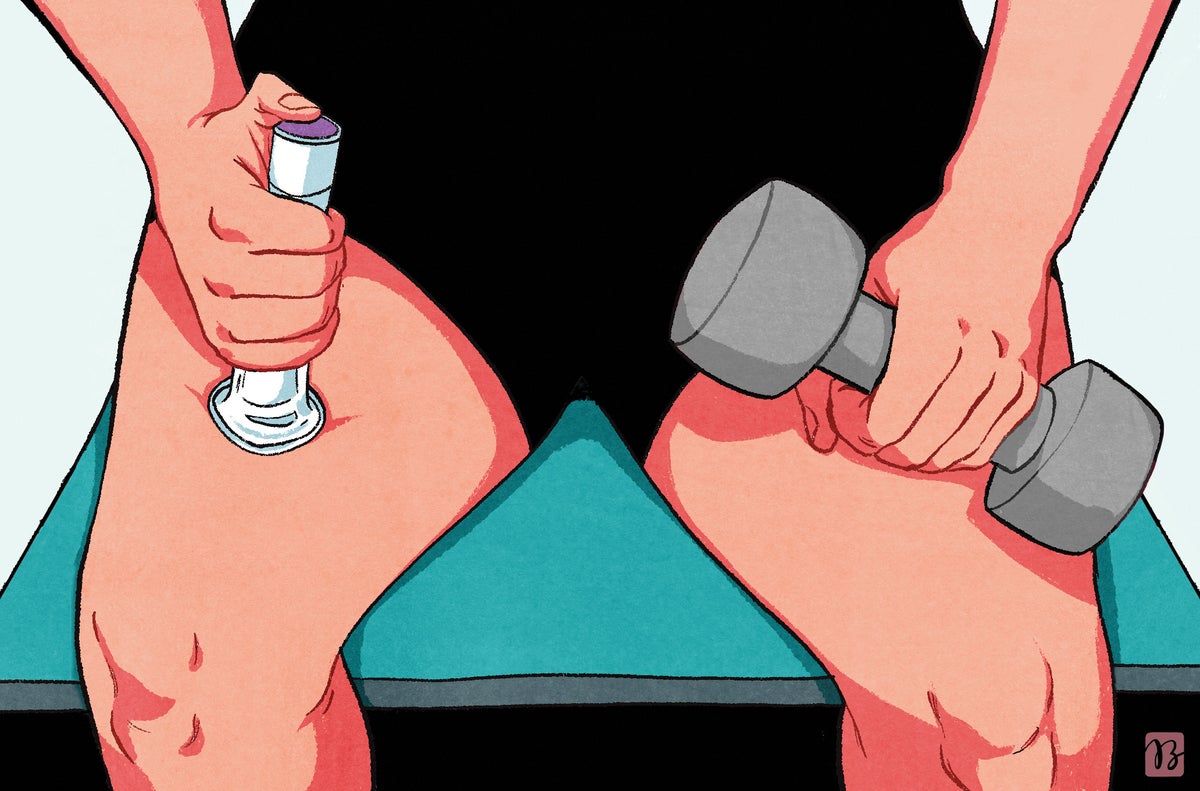
Wegovy and Ozempic can cause substantial weight loss, but a significant portion of lost weight is lean body mass, including muscle. This is concerning for older adults who already face age-related muscle loss linked to falls and bone fractures. Muscle preservation also matters for younger adults because higher muscle in the 30s supports greater retention in later decades. Weight-loss interventions, including diets, bariatric surgery, and GLP-1 receptor agonist medicines, can reduce muscle alongside fat. Muscle helps store and metabolize glucose and supports mobility later in life. People lose about 30% of muscle from their 20s to 80s, and GLP-1 drugs may accelerate this decline. Trials suggest semaglutide and tirzepatide could lead to muscle loss comparable to 20 years of age-related decline within a few years. Older adults already have reduced muscle and high GLP-1 use, which could compound the effect.
"About 25 to 40 percent of the pounds shed through these treatments is lean body mass, and that includes muscle. This undesired effect has troubled older adults who are already worried about age-related muscle loss tied to falls and bone fractures. Preserving muscle matters for young adults as well: the more you have in your 30s, the more you will retain in your 60s. Losing any amount of muscle can amplify the risk of various health issues, such as declines in physical and metabolic function."
"Every weight-loss interventionincluding diets, bariatric surgery and glucagonlike peptide 1 (GLP-1) receptor agonist medicine such as Wegovymelts muscle alongside fat to some degree. Now the widespread use of GLP-1 drugs is spurring scientists to work on experimental medications that could enable weight loss that barely affects muscle at all. Muscle offers more than physical strength. These bands of fibrous tissue are important sites for storing and metabolizing glucose or for burning it for energy."
"A person's muscle mass is also a strong predictor of their mobility later in life. Between our 20s and 80s we gradually lose around 30 percent of our muscle. Research suggests that GLP-1 drugs may speed up this process. Clinical trials on semaglutide (the GLP-1 sold as Wegovy and Ozempic, for example) and tirzepatide (sold as Zepbound and Mounjaro) estimate that within a few years of starting treatment, people may experience a loss of muscle mass equal to 20 years of age-related decline."
"Older people already have diminished muscle and have a high rate of GLP-1 prescriptions. The two factors could add up"
Read at www.scientificamerican.com
Unable to calculate read time
Collection
[
|
...
]