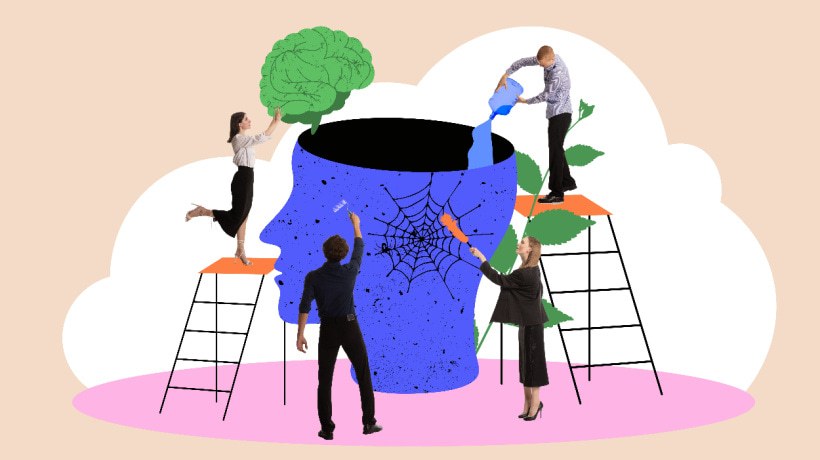
"While organizations are all about "continuous learning" through skill acquisition and development, research shows that one of the major barriers to learning isn't the lack of information but the persistence of old mental models and habits that filter or block new input. Holding onto past beliefs basically creates cognitive interference through entrenched cognitive biases (simply put, patterns of thinking). One example is confirmation bias, which makes us favor familiar frameworks even when they are no longer valid."
"Now, a common misconception is that unlearning means deleting memories or knowledge, just like erasing a file from your computer. But cognitive science and neuroscience show this is not how the brain works. Our neural networks don't have a "reset" or a "delete" button. And sometimes, old connections remain present despite our best efforts. So yes, you can't deliberately delete outdated models, but you can weaken or overshadow them by cultivating stronger, newly relevant pathways. That's because"
Learning and development frequently emphasizes acquiring new knowledge and skills while neglecting deliberate shedding of outdated assumptions, habits, and mental models. Persistent prior beliefs create cognitive interference and entrenched biases like confirmation bias, which filter or block new input and hinder organizational change, learning adoption, and creative problem solving. Unlearning does not erase memories; neural networks lack a reset or delete button. Old connections can persist, but their influence can be weakened by cultivating stronger, newly relevant neural pathways. Effective L&D design should prioritize both the decay of outdated patterns and the deliberate emergence of new capabilities.
Read at eLearning Industry
Unable to calculate read time
Collection
[
|
...
]