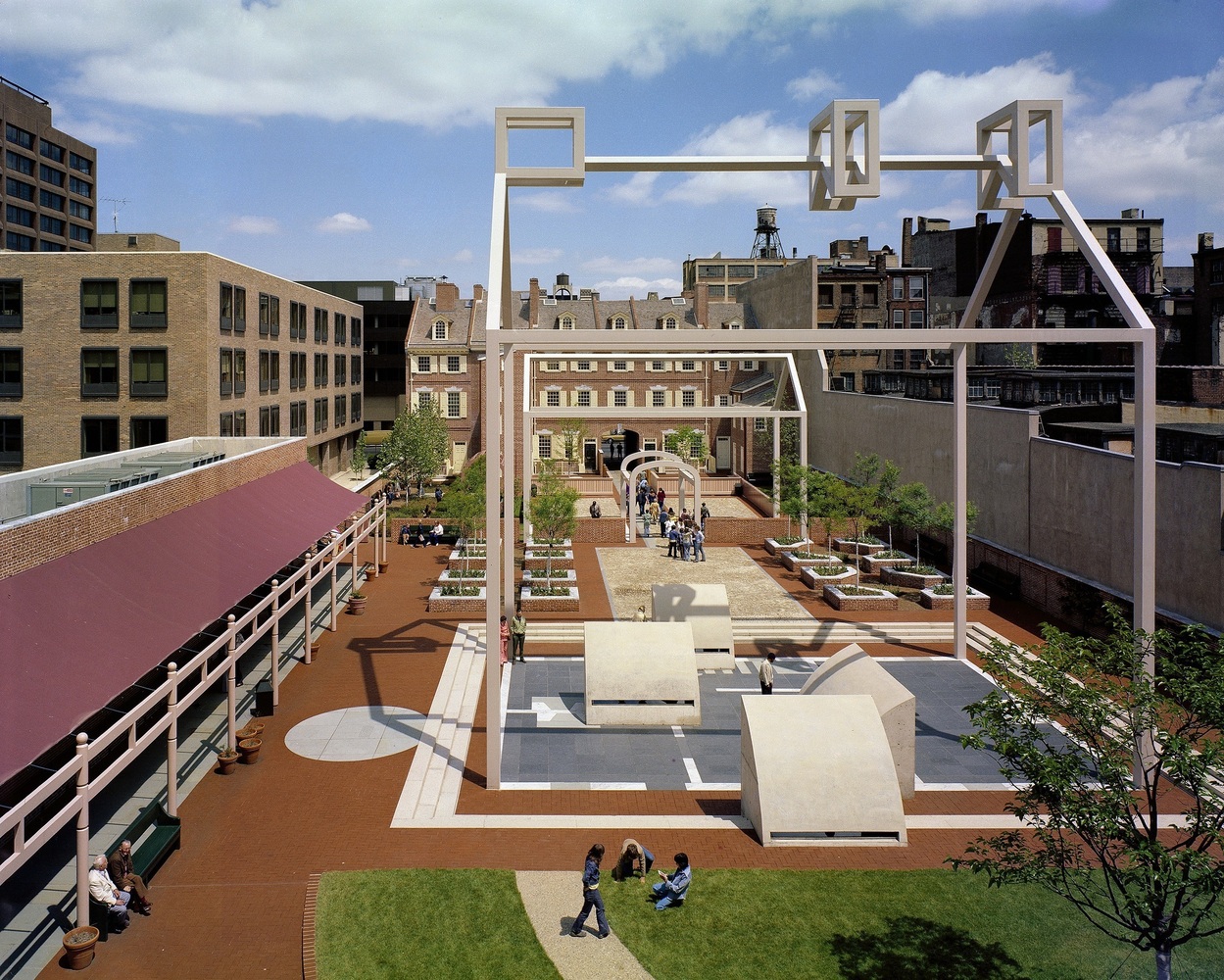
"Postmodernism began as a critique of modernism's exhausted promises. By the late 1960s and early 1970s, many designers no longer treated modernism as radical or socially redemptive. Urban renewal projects accelerated the demolition of historic neighborhoods, and landmark preservation battles raised urgent questions about what the United States valued and, ultimately, protected. The loss of major civic icons, including New York's Penn Station, sharpened public awareness that progress often arrives through erasure."
"In Chicago, architect and provocateur Stanley Tigerman captured this sense of rupture in his 1978 photomontage The Titanic, which depicts Mies van der Rohe's Crown Hall sinking into Lake Michigan, a blunt image of modernism's symbolic collapse. Postmodern architects worked inside this turbulence, shaped by economic shocks, corporate excess, shifting cultural production, and a growing skepticism toward grand architectural solutions."
Postmodernism transformed architecture into a stage for cultural memory, irony, and heritage as the built environment became less civic and more commercial and curated. Late-twentieth-century investment shifted away from monumental public institutions and shared federal commitment toward private development, corporate expansion, and consumer environments. Buildings increasingly functioned as cultural images expected to communicate identity and meaning in addition to use. Postmodernism arose as a critique of modernism’s exhausted promises amid urban renewal, demolition of historic neighborhoods, and preservation battles. Losses like Penn Station underscored erasure as a form of progress, while theorists emphasized symbolism, context, and richness of meaning.
Read at ArchDaily
Unable to calculate read time
Collection
[
|
...
]