#postmodernism
#postmodernism
[ follow ]
#architecture #jh-prynne #british-poetry #literary-legacy #influential-poets #paul-auster #siri-hustvedt
Renovation
fromThe Nation
2 months agoThe Neoliberalism of Robert A.M. Stern
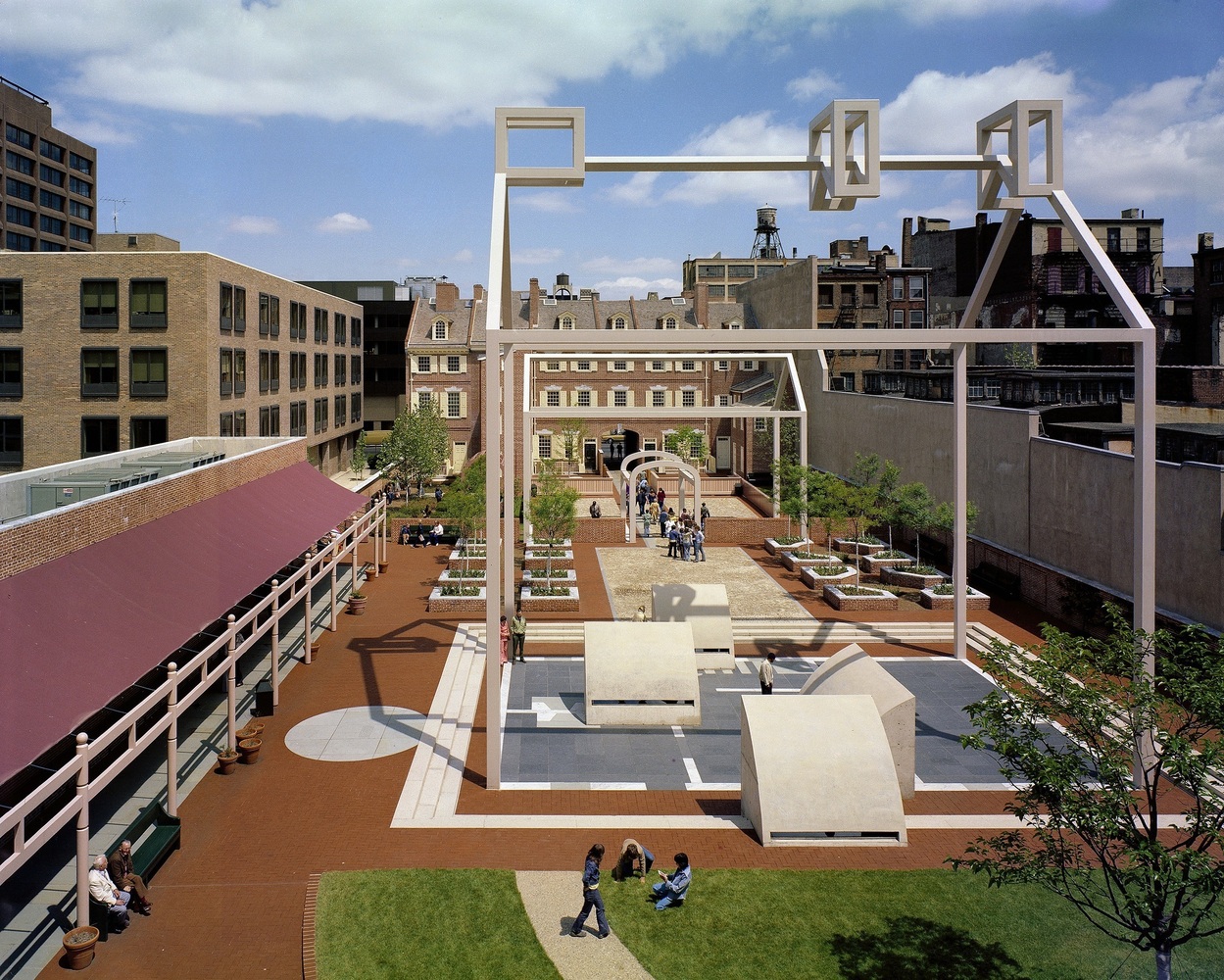
Robert A.M. Stern's neoliberal architecture primarily served elite clients and institutions, using postmodern irony and historical references to design luxury penthouses, estates, and iconic buildings like 15 Central Park West.
fromPitchfork
2 months agoScritti Politti: Cupid & Psyche 85
You could say that the songs on Scritti Politti's Cupid & Psyche '85 are informed by Robert Rauschenberg. You could say they interrogate the very creative act that yielded them. You could say that they rebel against the notion of private language in abstract art, taking the position that meaning can only be constructed in terms that have been agreed upon implicitly or explicitly by artist and audience alike.
Music
fromItsnicethat
3 months agoAldon Chen's exploded infographics challenge our "assumptions of sight"
In his graphic design work, Aldon transforms periodic tables and dense masses of information into maximalist pieces of design, expressing information whilst also challenging the impossibility of taking it all in. Data sprawls across screens and pages, overlapping in overloads and feedback loops, communicating more the aesthetic of information rather than its substance, playing with images we have all seen in science classes or colour palettes. These are exploded infographics.
Design
fromKALTBLUT Magazine
6 months ago4 faces, 6 wings - KALTBLUT Magazine
In collaboration with Milan-based artist Arisha, this editorial explores the contrast between spiritual depth and urban surface. The series presents cleaner, dreamlike visuals that resist melancholy while reaching toward a heightened sense of presence, creating tension between sacred motifs and the everyday surroundings of Milan. The cinematic postproduction process included 3D sculpture creation and particle simulations in TouchDesigner and After Effects, with carefully crafted transitions using distortion and glitch techniques.
Design
fromThe Art Newspaper - International art news and events
6 months agoExhibition explores two transformative decades of innovative art created in Japan, for the world
Framed between two decisive historical thresholds-the death of Emperor Hirohito in 1989 and the 2011 Tohoku earthquake, tsunami and Fukushima nuclear disaster- Prism of the Real: Making Art in Japan 1989-2010 re-examines two transformative decades in Japanese art. The exhibition challenges the idea of "Japan" as a fixed national entity, instead situating artistic practice within the fluid global exchanges of late capitalism.
Arts
fromThe Wire Magazine - Adventures In Modern Music
8 months agoAgainst The Grain: Mattie Colquhoun on Mark Fisher's cultural pessimism - The Wire
For Fredric Jameson, for instance, while modernism "thought compulsively about the New and tries to watch its coming into being", postmodernism "looks for breaks, for events rather than new worlds". The latter definition, encapsulating the cultural logic of late capitalism, is all the more intriguing in the context of music culture, since it has found so many breaks to play around with.
Philosophy
Relationships
fromPsychology Today
10 months agoHow to Build Bridges in a Polarized World
Polarization strains trust and fuels anxiety.
Humility, empathy, and open dialogue are tools for bridging divides and creating connection.
Finding the middle ground within polarizing debates helps build bridges to other people and groups.
fromYanko Design - Modern Industrial Design News
1 year agoWhat If Chairs Had Souls? This Designer Thinks They Do - Yanko Design
Muddycap's Soul Chair conceptually imagines what a chair's soul might look like, embodying the philosophical exploration of existence and visual creativity in furniture design.
UX design
[ Load more ]